

Mastering Furniture Statement Pieces: Home Style

A lot of homes look finished before they feel finished. The sofa fits. The table works. The bed does its job. But the room still feels flat, like every piece showed up on time and none of them took charge.
That's usually a statement-piece problem.
More furniture isn't the solution. Instead, a single piece with enough presence is needed to organize the room, reflect the household's style, and hold up to daily life. In West Texas and Southeastern New Mexico, that matters even more. Rooms work hard. Kids sprawl across sectionals, guests gather around dining tables, pets claim corners, and dust has a way of reminding everyone that delicate choices aren't always smart choices. A good statement piece has to earn its place.
Table of Contents
- What Makes a Piece of Furniture a Statement
- The Role of a Statement Piece in Your Home
- Choosing Your Statement Piece Scale Color and Texture
- Statement Piece Ideas for Every Room
- Budgeting and Caring for Your Statement Furniture
- Bringing Your Vision to Life with Miller Waldrop
What Makes a Piece of Furniture a Statement
A statement piece is the item that fixes a room that feels polite, functional, and forgettable. It's the piece people notice first when they walk in. It gives the eye somewhere to land and the rest of the room something to follow.
Design guidance consistently describes a statement piece as the item that draws the eye first and anchors the space, often the sofa in a living room, the table in a dining room, or the bed and headboard in a bedroom. A practical styling rule is the 80/20 approach, where about 20% of the room carries the bold move and the other 80% stays quieter, as explained in this statement piece design guide.
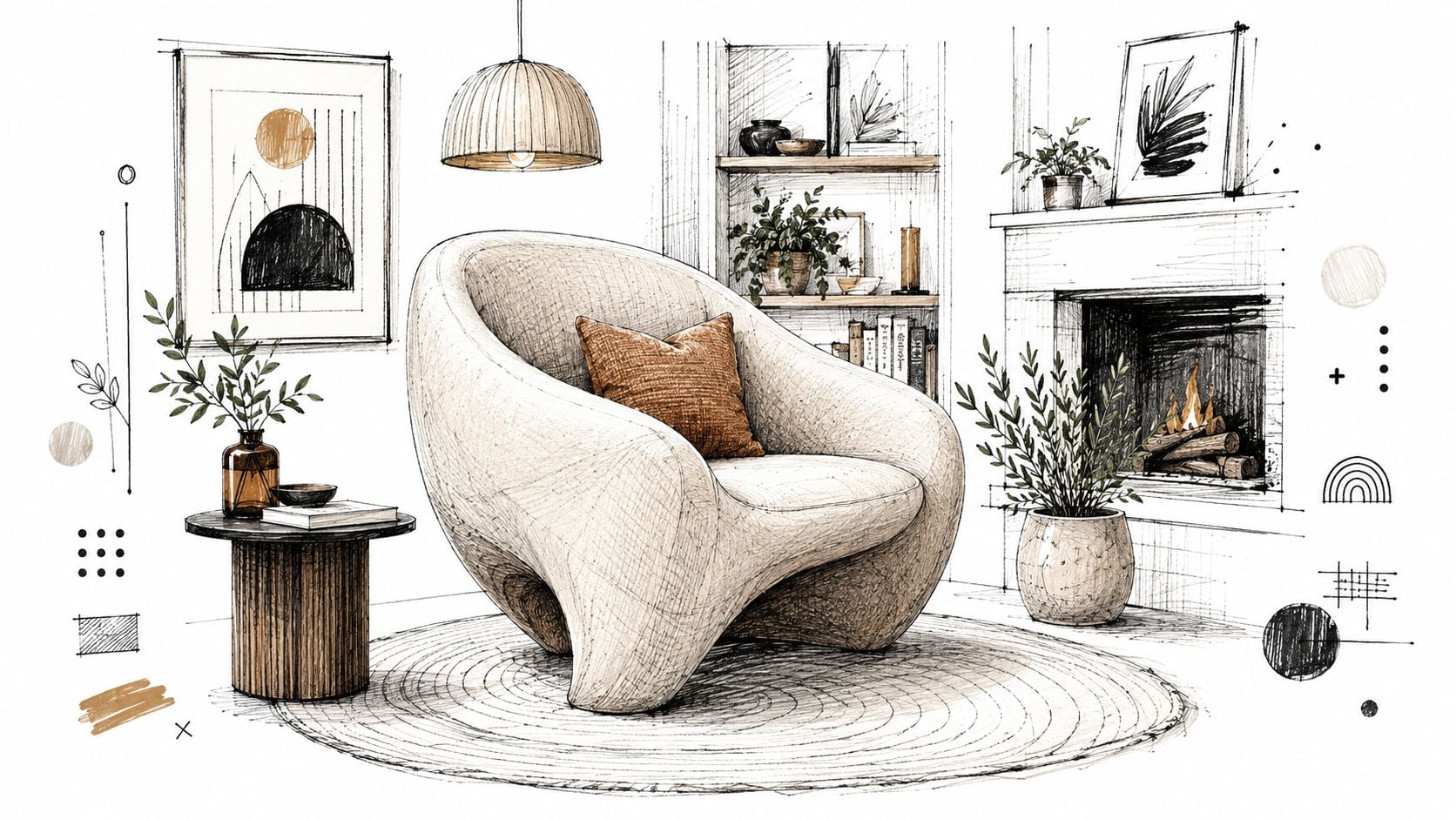
That rule matters because too many people confuse “statement” with “loud.” A furniture statement piece doesn't have to scream. It can stand out through shape, scale, craftsmanship, upholstery, or even a rich wood finish. A curved chair in a room full of straight lines makes a statement. A long dining table with a strong silhouette does too. So does a bed with a tall upholstered headboard in an otherwise simple bedroom.
The hero piece sets the tone
A room without a focal point often feels like a collection of separate decisions. A room with a hero piece feels intentional.
Practical rule: If every item in the room is trying to be interesting, none of them wins.
That's why many well-designed rooms start with one lead item and build outward. Once that anchor is in place, side tables, rugs, lamps, and art become easier to choose. For readers pairing furniture with wall decor, this practical wall art advice can help keep the room balanced instead of busy.
A statement piece also doesn't have to be oversized. In a smaller space, one smart accent can carry the room better than a bulky sofa. A reader browsing living room accent furniture options should look for the piece that changes the room's personality, not just fills an empty spot.
What qualifies and what doesn't
A good test is simple:
- It leads the room: the eye goes there first.
- It has authority: surrounding pieces look better because it's there.
- It reflects the household: the piece feels personal, not random.
- It can stand alone: even without styling, it still has presence.
That's the difference between a true statement piece and a trendy purchase that loses steam after a month.
The Role of a Statement Piece in Your Home
A statement piece isn't a luxury add-on. It's a design shortcut that solves several problems at once.
First, it creates order. Many rooms feel unsettled because nothing tells the eye where to start. A strong sofa, dining table, or bed acts like a visual anchor. Once that anchor is in place, decorating gets easier because every supporting choice has a reference point.
Second, it gives a home personality without requiring constant styling. That matters for families and busy households. No one wants to redo shelves every weekend just to make the room feel complete. One strong piece can carry that weight.
Why shoppers keep choosing quality first
The case for investing in one meaningful piece is stronger when buying behavior is taken seriously. Furniture shoppers consistently prioritize durability and trust. According to furniture industry and consumer purchase data, 81% of consumers ranked quality as the top furniture-purchase factor, 31% said they will pay above budget for the right item, and 84% prefer to buy furniture new. The same source notes that statement pieces tend to succeed when they combine visual impact with durability and brand trust.
That lines up with what works in real homes. A statement piece can't just photograph well. It has to survive movie nights, holiday guests, daily traffic, and the occasional spill.
The smartest statement piece usually does two jobs at once. It defines the room, and it handles the room's hardest use.
It makes the rest of the room easier
A strong focal piece cuts down on indecision. Without one, people tend to keep layering on smaller items to create interest. That usually leads to clutter, not style.
Consider the difference:
| Room without a statement piece | Room with a statement piece |
|---|---|
| Feels scattered | Feels grounded |
| Decor choices compete | Decor choices support |
| Personality comes from small accessories | Personality comes from one major anchor |
| Updates feel constant | Updates feel selective |
This is also where natural elements can help support the focal point instead of competing with it. For readers using plants to soften a room with strong furniture lines, this guide to explore large cactus varieties offers ideas that suit bold, clean interiors.
The main recommendation is simple. Choose one furniture item to lead. Let everything else support it. That approach saves money, reduces guesswork, and gives the room a clearer identity.
Choosing Your Statement Piece Scale Color and Texture
Most statement-piece mistakes happen before anyone talks about style. They happen when a piece is too big, too small, too matchy, or too fussy for the room around it.
Expert guidance on statement furniture puts the focus where it belongs: proportion and spacing. Bold pieces need visual breathing room, and the supporting furniture needs to stay simpler so the room keeps its flow, as noted in this guidance on statement furniture spacing and balance.
Start with scale, not color
People usually fall in love with color first. That's backwards. If the scale is wrong, the room never settles down.
A practical way to judge scale is to look at movement before appearance. Can people walk comfortably around the piece? Does it block sightlines? Does it crowd doors, windows, or nearby seating? If the answer is yes, it isn't a statement piece. It's an obstacle.
A useful comparison is lighting. The same way a chandelier has to fit the room before anyone debates finish or style, furniture has to fit the room first. This lighting fixture sizing guide is helpful because it reinforces the same design habit: proportion comes before decoration.
A statement piece should feel intentional and generous, not squeezed in.
Quick scale checks help:
- For sofas and sectionals: make sure traffic can move around them without a tight squeeze.
- For dining tables: leave enough room for chairs to slide and for people to pass behind them comfortably.
- For beds: choose a headboard and frame that suit the wall, not one that dominates every inch of it.
Use color with restraint
Color gives a statement piece energy, but restraint gives it staying power.
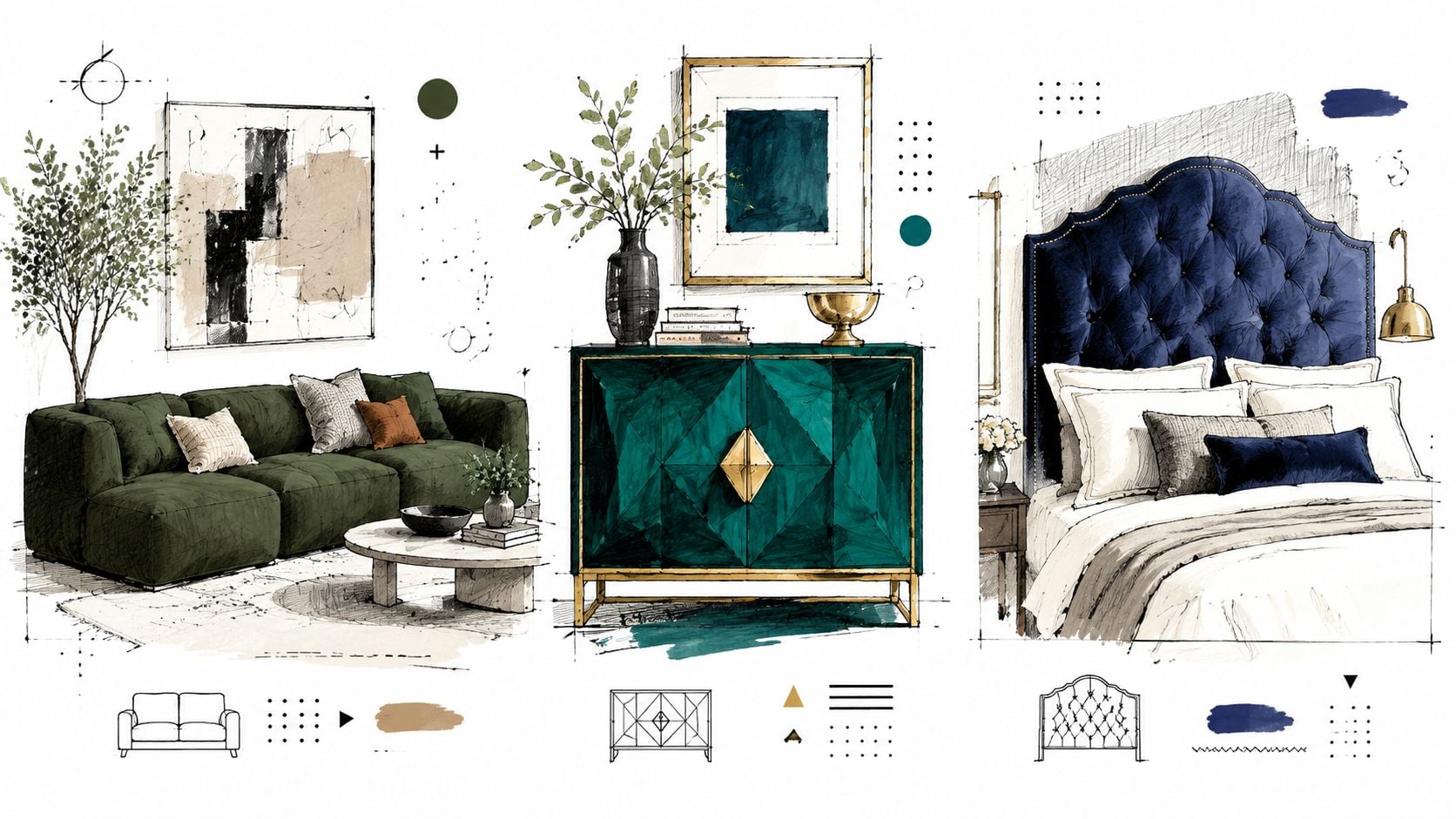
That doesn't mean every statement piece has to be neutral. It means the room needs contrast and support. A bold sofa works when nearby pieces calm things down. A dark wood table shines when the chairs, rug, and lighting don't all demand equal attention.
A good decision filter looks like this:
- Choose the mood first: warm, calm, dramatic, soft, refined.
- Decide whether color or shape will lead: if the silhouette is dramatic, the color can be quieter.
- Keep repetition loose: pull related tones into pillows, art, or drapery without matching everything exactly.
For upholstered pieces especially, fabric choice matters as much as color. Readers comparing durability, hand-feel, and maintenance can use this guide on how to choose upholstery fabric to narrow the options in a practical way.
Let texture do part of the work
Texture is often the difference between a room that feels flat and one that feels layered. It's also one of the smartest ways to create a furniture statement piece without relying on loud color.
Examples that work well include:
- Soft contrast: a nubby fabric chair in a smooth-finished room
- Natural weight: a substantial wood table with visible grain
- Refined elegance: leather or performance upholstery with clean lines
- Quiet drama: a bed with deep channeling or a shaped headboard in a calm color
Texture is especially useful in homes that need durability. A family may not want a bright sofa, but they may love a sofa with a strong shape and a fabric that hides daily wear.
The recommendation is direct. Choose one of the three to lead most strongly: scale, color, or texture. Two can work together. All three at full volume usually creates chaos.
Statement Piece Ideas for Every Room
The best furniture statement pieces aren't chosen in a vacuum. They're chosen based on how the room gets used on an ordinary Tuesday.
That practical filter matters. Design guidance often focuses on visual impact, but a more useful approach is to ask how the piece performs in small homes and multi-use spaces where storage, durability, traffic flow, and maintenance matter just as much as style. In those settings, the strongest statement piece is often the one that's memorable and adaptable, as discussed in this article on practical statement furniture choices.
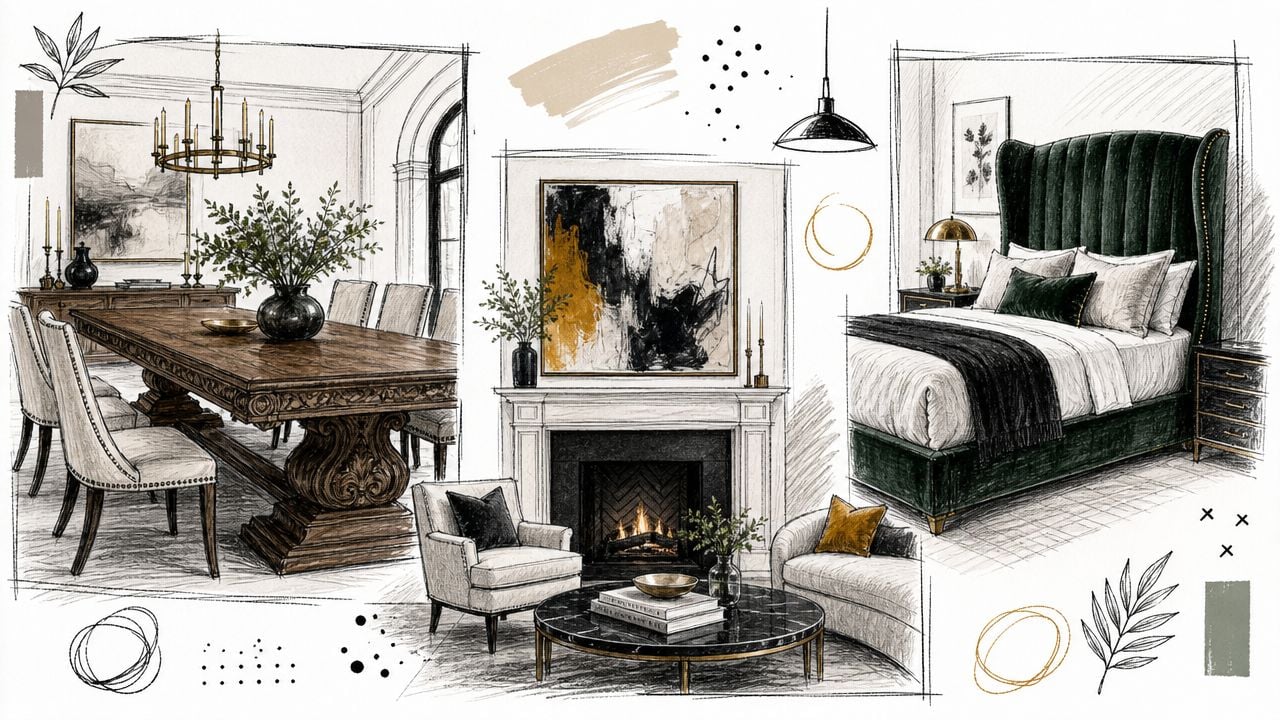
Living room anchors
In most homes, the living room statement piece is the sofa, sectional, or recliner group. That makes sense because it's usually the largest object in the room and the one people use most.
The right choice depends on the household:
- For families with kids: choose a sofa with a shape that feels distinct, then put the bold move into the silhouette or arm style rather than a fragile fabric.
- For open-concept rooms: a sectional can define the seating zone and provide the visual mass the room needs.
- For smaller living rooms: a standout chair or accent cabinet can lead better than an oversized sofa.
A statement living room piece should also support the way people gather. Deep seats are great if the family lounges. Upright cushions are better if the room doubles as a conversation space. Reclining comfort can still look polished if the profile stays clean.
Dining room centerpieces
Dining rooms are one of the easiest places to make a statement because the table naturally belongs at the center.
The strongest dining tables don't need fuss. They need confident scale, a finish that works with everyday use, and enough visual character to carry the room when the table is bare. A strong wood grain, pedestal base, mixed materials, or a bold rectangular silhouette can all do the job.
For homes that host often, practicality matters even more. The best table is one that looks substantial on an ordinary day and still functions when extra chairs come out. Easy-clean surfaces, durable finishes, and comfortable chair spacing matter more than trendy details.
Bedroom focal points
In bedrooms, the headboard usually does the heavy lifting. It gives the room height, softness, and identity all at once.
A good bedroom statement piece might be:
- An upholstered bed: ideal for softness and visual comfort
- A wood bed with strong lines: better for a grounded, refined look
- A bed with texture: helpful when the room's palette stays calm
Bedrooms benefit from restraint. One strong bed is enough. Matching every surface with bold nightstands, loud lamps, and busy bedding weakens the focal point. Let the bed lead, then simplify the rest.
A practical product path for readers shopping this category is to start with a single anchor piece rather than a whole room package. That usually leads to better decisions and a room that feels less staged.
Budgeting and Caring for Your Statement Furniture
The wrong way to budget for a statement piece is to treat it like a short-term style hit. The right way is to decide whether the piece will still make sense when the room changes around it.
That question matters because many shoppers are weighing style longevity against trend risk in a more value-conscious market. Current design coverage has raised that exact issue: whether it's smarter to buy one bold anchor now or stay neutral and rotate smaller accents as tastes change. This discussion of statement pieces and investment value captures that tension well.
How to think about the spend
A statement piece deserves a bigger share of the budget when it checks three boxes:
- It gets constant use: sofas, beds, and dining tables usually qualify.
- It can outlast trend shifts: shape, construction, and material matter more than novelty.
- It reduces future spending: one strong anchor often prevents a string of smaller “fix-it” purchases.
A smart budget decision doesn't mean choosing the most dramatic item in the showroom. It means choosing the piece with enough style to lead and enough durability to stay relevant.
Buy boldly when the piece is foundational. Stay restrained when the boldness comes from a passing trend.
For households balancing budget and performance, financing can also be a sensible tool when it helps secure the right quality level instead of settling for a replacement purchase later.
How to protect the piece once it's home
Care starts with placement. Don't cram a statement chair into a busy path. Don't place a dining table where constant scraping will damage the finish. Don't choose a pale, high-maintenance upholstery if the room handles snacks, pets, and everyday traffic.
Then keep the maintenance simple:
- Vacuum upholstery regularly: dust and grit wear fabric faster.
- Use the right cleaners: always match the care method to the material.
- Rotate use when possible: favorite seats wear first.
- Address spills quickly: waiting usually makes cleanup harder.
The goal isn't to preserve the piece like a museum object. The goal is to let it age well while it does real work.
Bringing Your Vision to Life with Miller Waldrop
It's easy to spot a piece one loves. The harder part is knowing whether it will work in their room, with their layout, and for the way their household lives.
That's where guidance matters. A statement piece has to do more than impress on the sales floor. It has to fit the scale of the room, support the home's daily routines, and still feel right after the excitement of the purchase wears off.

That's why custom options are often the smartest path. A family may love the scale of one sofa, the arm style of another, and a fabric that works better for pets or kids than either showroom sample. A shopper exploring custom fabric upholstery options can narrow those decisions in a practical way by focusing on performance, silhouette, and room fit together instead of separately.
A local store with design help, delivery support, and curated choices can also remove a lot of risk from a big purchase. Miller Waldrop Furniture & Decor offers that kind of support for shoppers who want to compare shapes, materials, room scale, and custom possibilities before committing.
The right statement piece shouldn't make a home harder to live in. It should make the home feel more complete.
That's the standard worth keeping. Not louder. Not trendier. Just clearer, more personal, and better suited to everyday life.
A strong room starts with one confident decision. If a home needs a sofa that anchors the family room, a dining table that can carry the whole space, or a bed that finally gives the bedroom some presence, Miller Waldrop Furniture & Decor offers the tools to make that decision with confidence. Explore the selection, ask for design guidance, and find a statement piece that looks right, lives well, and fits the way the home is used.