


Dark Wood Headboard Buying Guide for a Stylish Bedroom


The room looked finished until the bed went in. The walls were pale, the bedding was soft, and the lighting was warm, yet the space still felt unfinished. Then a tall walnut-toned headboard arrived, and suddenly the bed had direction. It grounded the room, gave the lighter textiles something to play against, and made the furniture feel deliberate rather than temporary.
That showroom reaction is valid, but appearance alone doesn't make a good purchase. A dark wood headboard can overwhelm a low-light bedroom, expose dust, complicate wall color, and respond badly to uncontrolled humidity. The right choice depends on the wood construction, finish system, dimensions, mounting method, and the room it will occupy.
Why a Dark Wood Headboard Might Be the Move
A bedroom can have the right bedding, lighting, and wall color yet still feel unfinished once the bed is in place. A dark walnut, espresso, or mahogany headboard gives that bed a clear visual center. It anchors warm white walls, oatmeal bedding, woven textiles, and lighter rugs, while making white sheets look cleaner and brass lamps appear richer. Natural fibers also show more texture against a deep wood surface.
That visual impact is backed by market data. One industry estimate places wooden headboards at 28.3% of market share, valued at about $1.19 billion in 2025. The same headboard market analysis places wood headboards in the 25% to 30% range of headboard value, with solid wood and premium veneer common in traditional and farmhouse interiors, and engineered wood prominent in ready-to-assemble furniture. Dark finishes belong to an established category, not a passing decorating idea.
The practical questions matter
Buy for the room you expect to have, not only the room you have today. Dark wood works across traditional, transitional, modern, and collected interiors, but a strongly red or nearly black finish narrows future choices. Neutral dark walnut gives you more flexibility than a glossy black surface or heavily red cherry stain.
Finish chemistry matters, too. A dark headboard with a poorly cured coating can bring noticeable VOC emissions into a small bedroom, while an unsuitable finish system may highlight dust, scratches, or uneven sheen. Ask how the surface was sealed and cured, not just which color was applied. The right finish protects the wood and keeps routine wear from becoming the room's focal point.
A durable headboard also earns its place through changing décor. Residential replacement and renovation account for roughly 70% to 75% of demand, while primary bedrooms commonly receive refreshes every 5 to 8 years, according to the cited market forecast. A well-built dark wood headboard can adapt through those updates more easily than upholstery with a highly specific pattern.
Practical rule: Choose dark wood for permanence and structure, not because a trend image made the room look dramatic.
The trade-off is straightforward. Dark surfaces absorb light, reveal dust streaks, and can make a small bedroom feel tighter. Control humidity, check the finish system, and plan lighting before you buy. Those decisions protect the headboard's appearance and its lifecycle value.
What Counts as a Dark Wood Headboard
A dark wood headboard is defined by two choices, the underlying material and the finish applied to it. A walnut headboard and oak stained to resemble walnut may look alike in a showroom, yet their grain, moisture response, repair options, and aging pattern differ. Identify both before comparing appearance or price.
Start with the tone family:
- Espresso and wenge produce deep brown surfaces that can approach black. They suit contemporary rooms, but glossy versions show dust, fingerprints, and scratches quickly.
- Dark walnut offers balanced brown depth with visible grain, so a broad panel avoids looking flat. It is the safest choice for a strong dark finish that still works with changing bedding and wall colors.
- Mahogany and cherry bring warmer red or russet undertones. They pair well with warm paint, aged brass, and traditional furnishings, but can fight blue-gray walls.
- Ebony-stained oak and ash retain a clear grain pattern beneath the dark color. You get a blackened appearance without losing the visual character of wood.
- Black oak and charcoal maple are commonly painted or heavily pigmented. They look crisp and architectural, while edge chips and wear appear differently from damage on a transparent stain.
Substrate changes the buying decision
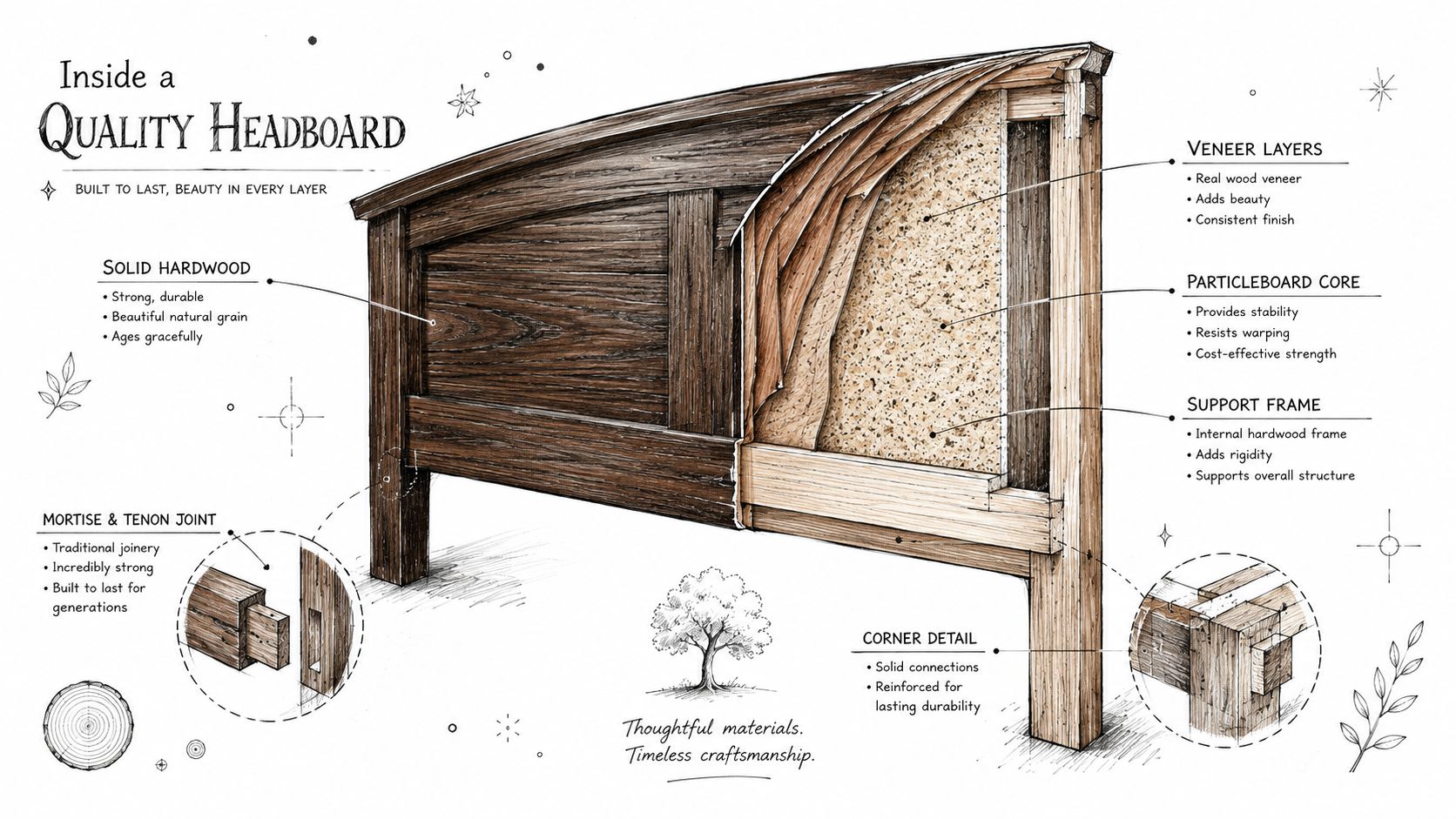
A solid-wood headboard uses wood through its main structure. It provides genuine grain and more substantial repair or refinishing potential, but wood continuously absorbs and releases moisture. That movement is normal. The quality of the construction and the room's humidity determine whether it remains controlled.
A veneer headboard places a thin real-wood layer over an engineered core, often MDF or particleboard. This approach can deliver consistent color and limit broad panel movement. It is not automatically a lower-quality choice, but inspect the edges, backing, and core. A poorly protected edge can swell after moisture exposure, and dark finish makes that raised seam or chipped corner especially visible.
A laminate or foil-wrapped headboard reproduces a wood pattern on a manufactured surface. It offers predictable color and simple cleaning, but it has little refinishing potential. Once the outer layer chips, the contrasting substrate shows through.
Finish chemistry deserves equal attention. Ask how the coating was sealed and cured, particularly if the headboard will sit in a small bedroom. A poorly cured finish can release noticeable VOC emissions, while an unsuitable finish system may exaggerate dust, scratches, or uneven sheen. Dark color is only the visible result. The coating system controls much of the daily experience.
Undertone completes the vocabulary. Brown and red undertones warm a room. Gray, blue, or green undertones cool it. Hold a finish sample beside the actual bedding and wall paint, because showroom lighting can hide those differences.
| Wood or Finish | Typical Tone | Dominant Undertone | Common Substrate |
|---|---|---|---|
| Espresso or wenge | Very deep brown to near-black | Brown, sometimes neutral | Solid wood, veneer, engineered core |
| Dark walnut | Rich medium-dark brown | Balanced brown | Solid wood or walnut veneer |
| Mahogany or cherry | Deep reddish brown | Red or russet | Solid wood or veneer |
| Ebony-stained oak or ash | Blackened wood with visible grain | Neutral, gray, or brown | Solid wood or veneer |
| Black oak or charcoal maple | Opaque charcoal to black | Gray or neutral | Painted solid wood, veneer, or engineered core |
Integrated storage changes the specification again. Drawers and compartments add weight, hardware, and depth, so confirm the mounting plan and available clearance before choosing the finish. Buyers comparing that format can review this guide to choosing a bed with storage headboard before making a final selection.
Construction Quality and Long-Term Durability
A dark wood headboard can look substantial from across the room and still be poorly built. Before buying, inspect the back, edges, joints, mounting points, and finish system. These areas reveal whether the piece can stay rigid and presentable through years of use.
Solid wood and veneer solve different problems
Solid hardwood provides natural grain, repair potential, and a weighty feel. It is also hygroscopic, so it responds to changes in humidity. Veneer over a stable engineered core limits broad panel movement and keeps the appearance more consistent. Exposed edges and damaged corners remain vulnerable, however, especially if moisture reaches the core.
Dark finishes conceal some grain variation. They expose careless edge work. Look for raised seams, chipped corners, uneven stain, or a coating that breaks around the perimeter. The back should be finished or sealed, particularly when the headboard will sit close to a wall. Raw material at the rear is a poor sign for a bedroom piece.
Joinery gives you practical evidence of construction quality:
- Mortise-and-tenon joints create strong mechanical engagement when fitted accurately and glued correctly.
- Dowel joints can perform well when the dowels align and the panels meet tightly.
- Pocket screws suit concealed assembly, but a heavy headboard should not depend on them for all structural support.
- Glue-and-nail construction may suit trim. Examine it more closely wherever the connection carries weight or resists movement.
The finish protects the look
Conversion varnish and durable lacquer generally resist moisture and staining better than a thin decorative coating. Oil finishes feel more natural and can be renewed, though water rings may penetrate more easily. Wax produces a soft sheen, but it needs attentive maintenance and can reveal handling marks quickly. For a dark headboard, choose the finish for its repair and wear behavior, not color alone.
Finish cure quality matters as well. A coating that has not cured properly can retain odor, mark easily, or develop an uneven sheen. Ask what finish system was used, how it was cured, and whether the surface is ready for bedroom installation.
A peer-reviewed review of wood and volatile organic compounds explains that species and processing influence formaldehyde emissions, so engineered components, adhesives, stains, and topcoats can matter more than wood color itself (peer-reviewed review of wood and VOC emissions). For a bedroom, specify solid hardwood or low-emitting construction with a no- or low-VOC finish, especially in a sensitive household.
Humidity also affects long-term stability. Keep the room within a steady, moderate range rather than allowing repeated swings. Finishes slow moisture exchange but do not stop it. Radiators, HVAC vents, exterior walls, heated rooms, and damp basements can increase movement, joint stress, cupping, or cracking.
Quality check: Run your hand across every visible edge, inspect the mounting hardware, and ask what protects the surface. A darker stain does not make a headboard stronger. The substrate, joinery, cure quality, and topcoat determine durability.
Sizing Your Dark Wood Headboard to Your Mattress
A dark wood headboard can make a queen or king bed feel undersized if the proportions are wrong. Before ordering, measure the mattress, frame, wall width, outlet locations, floor-to-ceiling height, and available space for bedside tables. Bring those measurements to the showroom or custom maker.
The headboard should match or slightly exceed the mattress width. A narrower panel looks accidental. A modestly wider panel creates a deliberate border and gives the dark finish room to read as furniture rather than a flat wall insert. Use this bed sizing and luxury fabrics resource when coordinating a custom bed, headboard, and upholstered elements.
| Mattress Size | Recommended Width | Recommended Height | Clearance Note |
|---|---|---|---|
| Twin | Mattress-width headboard | Standard or modest height | Check wall and outlet clearance |
| Full | Mattress-width headboard | Standard height suits most rooms | Leave room for side tables |
| Queen | Match or slightly exceed mattress width | Standard height or taller statement panel | Confirm outlet position behind the bed |
| King | Match or slightly exceed mattress width | Standard height or tall architectural profile | Measure wall width and frame attachment points |
| California king | Match the specific mattress width | Choose height according to ceiling and furniture scale | Verify the frame's mounting system |
Published dimensions should guide the final choice, but inspect the actual profile. Manufacturers vary in side returns, leg placement, and overall thickness. A deep headboard can cover outlets, collide with nightstands, or move the mattress farther into the room. Dark finishes make these dimensional mistakes more noticeable because their strong visual weight emphasizes every overhang and gap.
Height changes the room's character
A standard-height panel suits most bedrooms. It establishes a focal point without taking over the wall. A tall headboard adds architectural drama, but it needs vertical space above it. In a low-ceiling room, choose a broad, lower silhouette instead of a narrow panel that reaches upward. Leave enough room for lighting, artwork, or simple wall space.
A short headboard can also look weak behind a tall mattress and substantial bedding. Measure from the floor, not only from the top of the mattress, then check how much wood will remain visible after pillows are placed.
Frame compatibility determines whether installation is straightforward. Some headboards bolt to a metal frame, while others attach to rails, a complete bed system, or wall hardware. Verify bolt spacing, thread type, rail height, mattress support, and the mounting method before paying for delivery. For wall-mounted designs, follow this guide to attaching a headboard to the wall, especially when the frame lacks compatible brackets.
Dark wood also rewards precise planning around electrical access. Mark every outlet and cable route on the wall before selecting the final width and thickness. A beautiful headboard that blocks charging access becomes an everyday annoyance.
Styling a Dark Wood Headboard in Any Bedroom
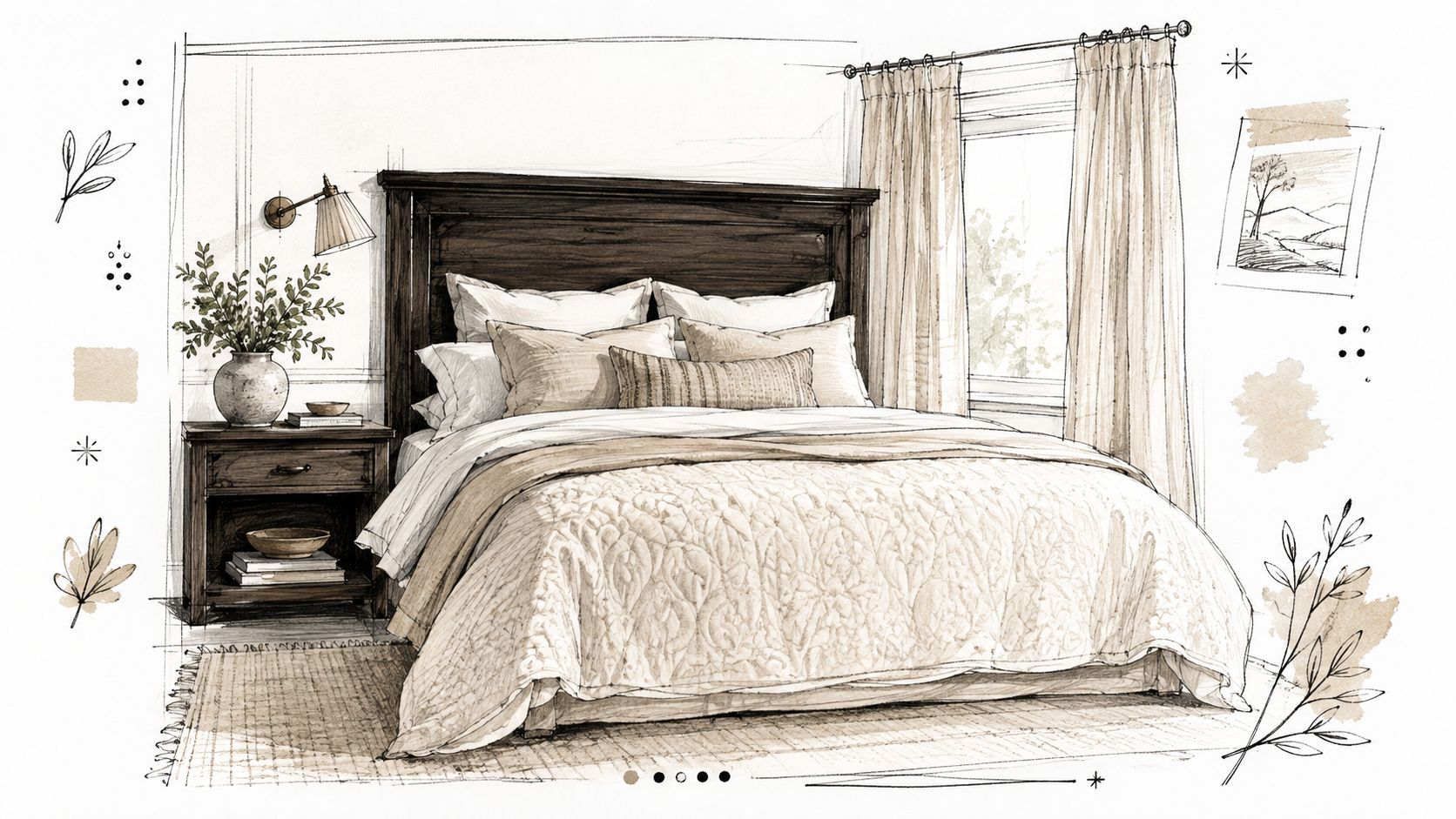
A dark wood headboard can anchor a bedroom beautifully, but it needs light, texture, and breathing room around it. Pair deep walnut, mahogany, or ebony-stained wood with warm white, oatmeal, cream, flax, or natural tan. These shades lift the composition while keeping the bed connected to the room.
Cool gray is harder to control. It can flatten warm walnut and make a charcoal finish look colder. If the walls are already gray, bring warmth through ivory or camel bedding, muted clay accents, and natural wood details. Avoid adding more blue-gray.
Texture prevents visual heaviness
A broad dark panel can look like a black slab when every nearby surface is smooth. Build contrast through tactile materials:
- Bedding: A matelassé coverlet or washed linen duvet adds variation without competing with the wood grain.
- Windows: Linen drapes soften the wall and filter daylight around the bed.
- Flooring: A wool rug gives the room another tactile focal point.
- Accent pieces: Brass, aged bronze, matte black, and woven materials support the finish without forcing a matching furniture set.
Use metal contrast with intention. Brass warms walnut or mahogany. Matte black suits charcoal or ebony-stained wood. Mixing wood tones works when the pieces share an undertone or create a deliberate contrast. Matching nightstands are optional. Related proportions and finishes matter more than a complete set.
Lighting decides whether the finish glows
Warm bedside lamps with 2700K bulbs reveal brown and red undertones and create a softer reflection. 4000K bulbs can make the same headboard appear grayer and harsher, especially beside cool daylight. Linen shades diffuse the light, reducing bright reflections that can distract on satin or gloss finishes.
Small bedrooms need restraint. A tall headboard can draw too much attention upward, so a lower profile usually gives better balance. Carrying the wall color onto the ceiling can reduce a boxed-in feeling. Lighter bedding and a clear nightstand keep the bed from appearing oversized.
Renters should get permission before drilling. A freestanding headboard or removable hook-and-loop-mounted panel reduces deposit risk. Where wall attachment is approved, a French cleat provides a secure mounting method. Check the wall type, fastener strength, and headboard weight before installation.
Current bedroom design direction favors dark woods with airy colors, brass, matte black, textured textiles, and warm lighting (2025 bedroom trend coverage). The advice is practical, not complicated. Give dark wood contrast, tactile variation, and warm illumination, and the finish will anchor the room instead of overwhelming it.
Care, Climate, and Indoor Air Quality
A dark wood headboard beside a sunny window can look polished on delivery day, then reveal dust streaks, water marks, and uneven sheen within weeks. Dark finishes show neglect quickly, especially in side light. The cure is a short, consistent routine matched to the finish.
A simple ownership routine
Dust the headboard with a microfiber or lint-free cloth regularly, including the grain, joints, and carved details. For routine cleaning, use a slightly damp cloth and dry the surface immediately. Follow the maker's finish instructions, and use polish or conditioner only when the finish permits it. This wood furniture care guide offers practical guidance for maintaining finished wood.
Blot spills instead of scrubbing. Water, skin oils, lotion, and cleaning residue can create pale or glossy patches on a dark surface. Avoid ammonia cleaners, abrasive pads, and silicone-heavy polish. They may cloud the coating, leave buildup, or make later refinishing more difficult.
Maintenance habit: Keep a clean microfiber cloth in the bedside drawer. Drying a spill immediately prevents a small mark from becoming a visible finish problem.
Humidity affects solid wood, joints, and veneer. Keep bedroom humidity steady rather than allowing repeated swings from very dry heating to damp conditions. A hygrometer provides useful information in heated rooms, basements, and spaces beside strong HVAC registers. Position the headboard away from radiators and vents, and avoid placing it tight against an exterior wall where temperature and moisture can change quickly.
Indoor air deserves attention
Finish chemistry matters in a bedroom because the room is occupied for long periods. Formaldehyde and other VOC emissions can come from engineered wood, adhesives, stains, and topcoats, not just from the visible species or dark color. Choose solid hardwood or low-emitting construction with a no- or low-VOC finish when household members have respiratory sensitivities or strong odor concerns.
Ask the retailer or maker what finish system was used, whether the piece needs curing, and how to ventilate it after delivery. Air out the room during the initial period, following product-specific instructions instead of assuming every finish clears at the same rate.
Indoor air quality also involves issues unrelated to furniture. Homeowners researching radon levels in Ontario can use that resource to examine a separate household concern.
Inspect mounting bolts, wall hardware, and frame connections periodically. A loosening headboard can mark the wall, strain the bed frame, and create movement noise. Careful cleaning, stable humidity, and an appropriate finish system protect both appearance and lifecycle value.
Shopping Locally and Custom Ordering at Miller Waldrop
A showroom earns its place when finish, scale, and construction matter more than a product photograph. Dark wood shifts under different lighting, and a small online swatch may hide whether the finish reads red, gray, brown, or nearly black.
Miller Waldrop Furniture & Decor gives shoppers a practical setting for comparing bedroom furniture, including wood headboards and bed-and-headboard combinations. Its showrooms may display pieces from Hooker, Riverside, and Lexington, as well as custom-shop options. Compare the headboard with the room's actual palette, then check its scale, mounting method, and finish against the mattress and bed frame.
Bring the room into the decision
A useful consultation starts with evidence from the bedroom:
- Paint information: Bring a paint card or wall photograph to identify warm and cool relationships.
- Bedding samples: Fabric swatches show whether the finish works with linen, velvet, matelassé, or patterned textiles.
- Room measurements: Record wall width, ceiling height, outlet locations, frame dimensions, and mattress height.
- Lighting details: Take photographs in daylight and evening light to reveal how the finish changes throughout the day.
Use those references to narrow the finish instead of accepting a generic dark stain. If the wood tone clashes with the room, fabric or leather alternatives can provide similar visual structure with a different tactile effect. That option suits homeowners who want an anchored bed without repainting or replacing existing case goods.
Custom ordering makes sense when a standard headboard misses the room's proportions. Request finish samples for the home and view them beside the wall, flooring, and bedding. Depending on the maker, lead times may run from 6 to 14 weeks, so settle the delivery schedule before approving the order.
Specify the details that prevent regret
A custom order may allow adjustments to height, width, and mounting hardware for an unusual wall, frame, mattress, or room layout. Put those details in the written order, along with the substrate, finish type, sheen, edge treatment, and delivery access requirements. Ask how the finish system handles the room's humidity and what VOC information is available, especially for a bedroom.
Financing through Synchrony may help qualified shoppers manage the purchase, subject to applicable account terms. A Protection Plan may address finish defects and structural failures according to its written coverage, exclusions, and duration. Read those terms before buying. Protection does not replace inspecting construction, hardware, edges, and the rear of the headboard.
The strongest local-shopping process is straightforward: measure first, bring finish references, inspect the back and edges, confirm mounting hardware, ask about humidity compatibility and VOC information, and document the delivery schedule. A design consultation turns the showroom into a controlled comparison, which a dark finish requires.
Miller Waldrop Furniture & Decor offers bedroom furniture, wood headboards, custom finishes, design guidance, financing options, and delivery support for shoppers in Lubbock, Hobbs, and Ruidoso Downs. Bring room measurements and bedding samples, then visit Miller Waldrop Furniture & Decor to request finish samples, schedule a design consultation, or compare headboard options in a showroom.