

Headboard Styles for Every Bedroom: A Practical Guide

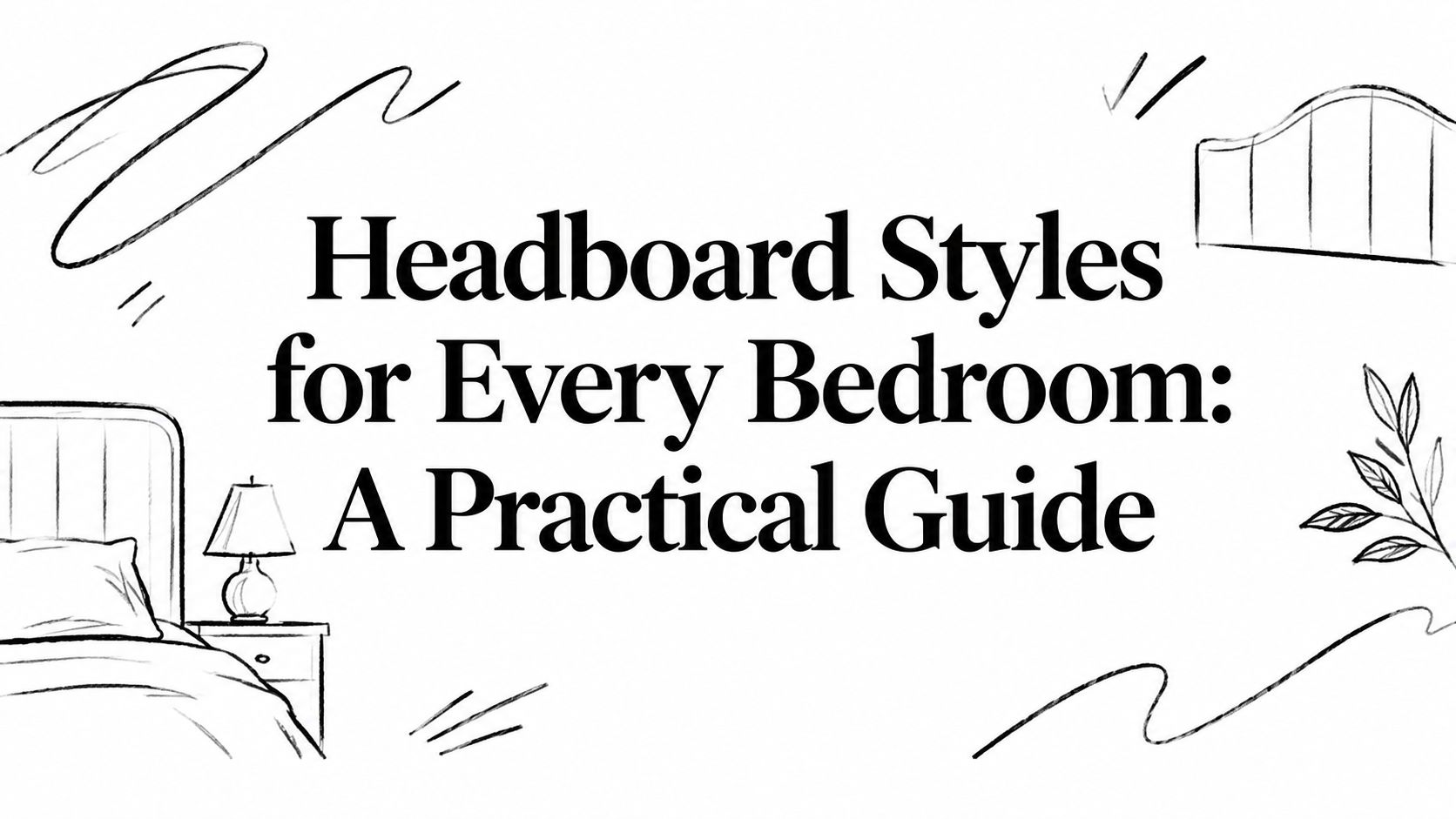
A shopper stands in a showroom, comparing a clean upholstered panel with a tall reclaimed wood statement piece. Both look attractive, but only one will suit the room's ceiling, mattress thickness, nightstands, cleaning routine, and lease terms. That decision matters because the bed usually carries the greatest visual weight in the bedroom.
The right headboard style does more than finish a bed. It controls how the wall reads, affects lighting and rug placement, sets the scale for nightstands, and can make a small room feel orderly or crowded. This guide helps buyers choose with intent, using room proportions, material behavior, mounting requirements, and long-term ownership as the filters.
Why the Headboard You Pick Shapes the Whole Bedroom
A headboard establishes the bed's visual boundary. A slim metal frame leaves more wall visible and keeps the bed visually light. A broad upholstered panel creates a soft backdrop, while a tall wood design turns the bed wall into an architectural feature. Neither choice is automatically right. The room decides.
A headboard that's too tall can make a low ceiling feel compressed. One that's too narrow may look disconnected from the mattress and bedding. A busy carved or patterned silhouette can also compete with artwork, wallpaper, or decorative lighting placed above the bed.
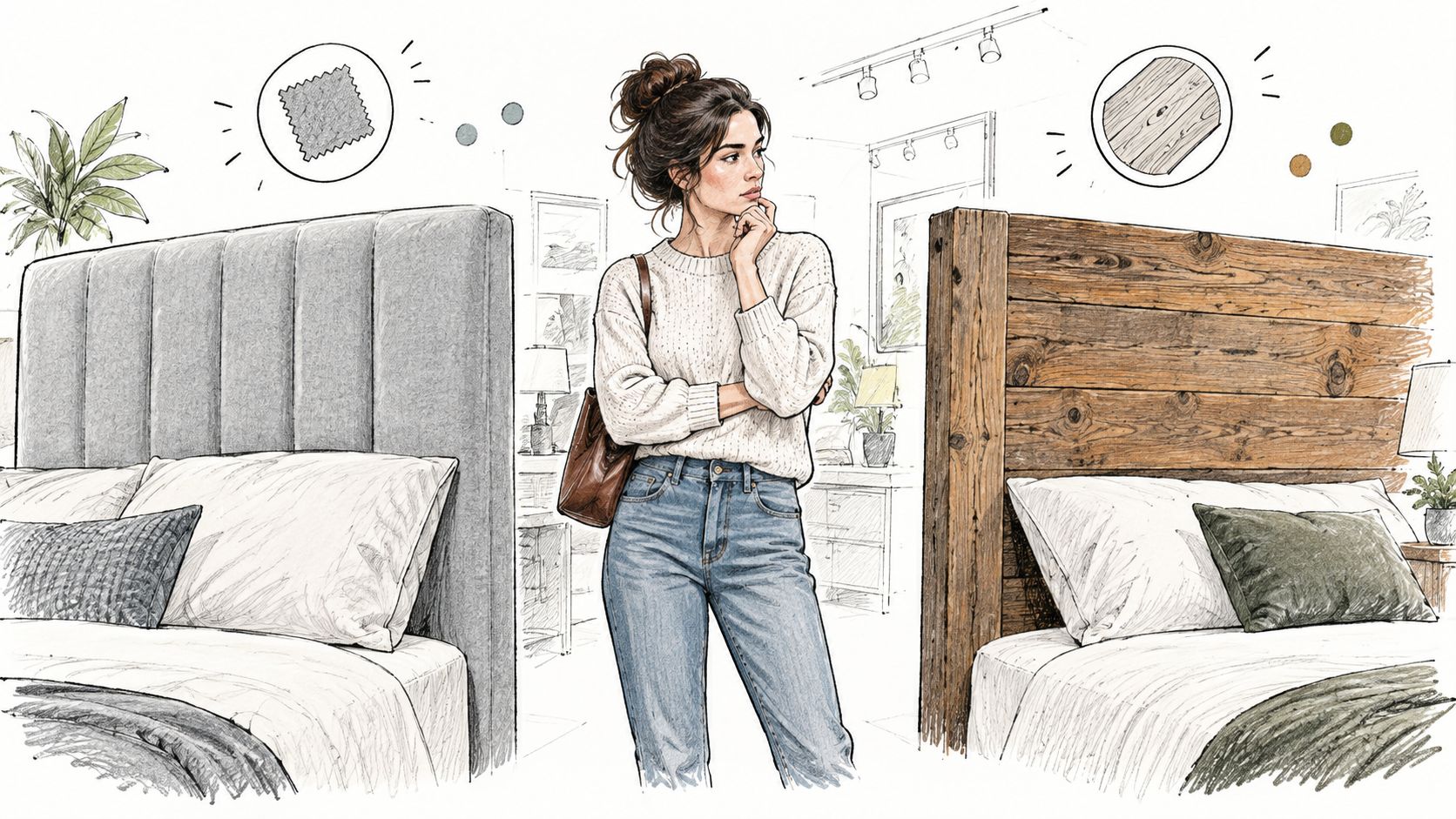
Treat the bed wall as a composition
A successful bedroom has visual relationships rather than isolated purchases. The headboard should speak to the width of the bedding, the height of the mattress, the size of the nightstands, and the position of windows or doors. If a statement headboard reaches wide across the wall, smaller bedside tables may prevent the arrangement from feeling bulky. If the headboard is narrow, substantial nightstands can make the bed look undersized.
Comfort matters, too. Anyone who reads or watches television in bed will notice the difference between a hard board and a properly padded surface. Upholstered headboards use a frame, fill layer, and outer fabric, with comfort shaped by the padding's density and thickness. Technical guidance places polyurethane foam in the 25–45 kg/m³ range, with about 5 cm as a functional minimum and 7–10 cm as a more comfortable range for extended reading. Technical guidance on upholstered headboard construction explains why the internal build matters as much as the fabric.
Practical rule: The headboard should support the way the bedroom is used, not just the way it photographs.
Start with the wall, then choose the style
Before browsing colors, buyers should measure the bed wall and note every competing feature. Windows, outlets, sconces, artwork, radiators, and sloped ceilings can eliminate styles that look perfect in a showroom.
For households exploring floor-level sleeping arrangements or unusual bed placements, the Ocodile headboard guide offers useful context on how a headboard can function within a lower, more flexible setup. The central lesson remains simple: a headboard is part of the room's spatial plan. Choose the material and silhouette only after the wall, mattress, and daily habits are understood.
The Headboard Styles Worth Knowing
The main headboard styles fall into recognizable families. Each has a specific visual language, construction standard, and room where it performs best.
Upholstered panels keep bedrooms quiet and comfortable
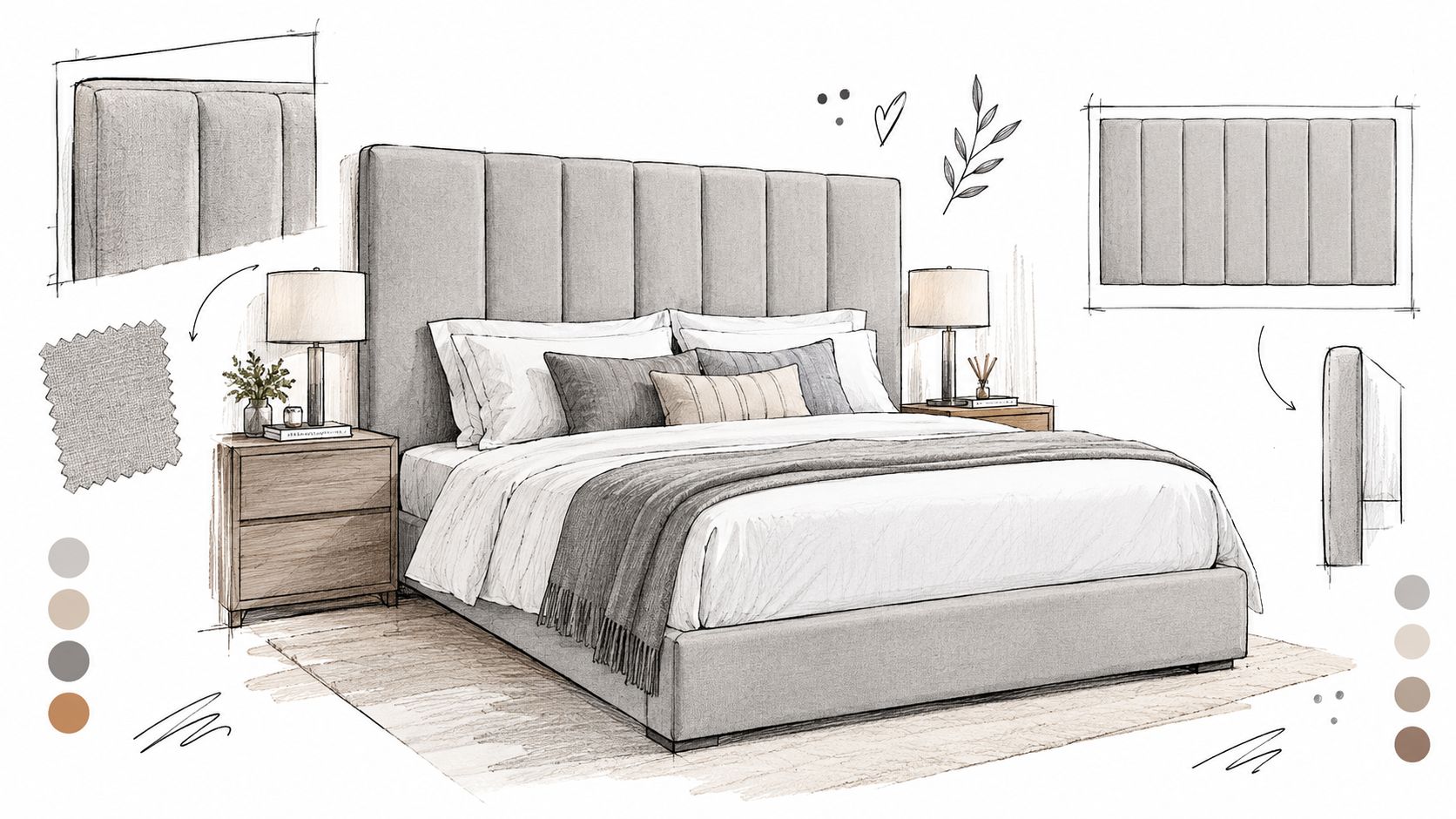
A plain upholstered panel has a clean rectangular silhouette and works especially well in calm, contemporary bedrooms. Choose a firm frame, even seams, secure fabric tension, and padding that doesn't flatten at the edges. Neutral fabric makes the style adaptable, while a stronger color can anchor otherwise simple bedding.
The common mistake is selecting delicate fabric because it looks elegant under showroom lighting. Family bedrooms need upholstery that tolerates regular contact, cleaning, and friction from pillows.
Button tufting suits traditional and hotel-inspired rooms
Button-tufted headboards bring depth, formality, and a refined appearance. Deep, even tufting and consistent button placement indicate better workmanship. This style belongs in rooms with layered bedding, classic case goods, or a deliberate hotel-inspired scheme.
The mistake is combining tufting with too many other ornate features. A detailed headboard already provides pattern and texture. Excessive decorative bedding or elaborate wall art can make the bed wall feel busy.
Wood panels and Shaker designs add structure
Wooden panels suit craftsman, farmhouse, Scandinavian, and transitional interiors. Shaker versions rely on straightforward rails and recessed panels, while slab designs emphasize the grain and overall material. Quality shows through stable joinery, a well-finished surface, and a frame that feels solid rather than hollow.
The mistake is ignoring the wood's visual weight. Dark or heavily grained boards can dominate a compact room, especially when paired with dark case goods and heavy bedding.
Sleigh beds need breathing room
A sleigh bed curves around the sleeper and creates a substantial, traditional silhouette. Solid wood construction and smooth, symmetrical curves confirm quality. This style works best in a generous bedroom with enough floor area for the headboard and footboard to read as a unified form.
The predictable mistake is putting a heavy sleigh bed into a small room. The curved ends consume visual space even when the measurements technically fit.
Canopy and oversized arches create architecture
Canopy beds and arched headboards draw the eye upward and work best in suites with generous ceiling height. Look for balanced proportions, stable corner joints, and a finish that can support the scale of the frame.
The mistake is choosing a canopy for a room with a low ceiling because the style feels dramatic. The upper structure can overwhelm the room and make the bed feel boxed in.
Metal frames preserve a light footprint
Metal headboards suit industrial, minimalist, vintage-inspired, and compact bedrooms. Welds, stable joints, and a durable finish are the construction cues to inspect. Metal is often the sensible choice when the room needs a bed backdrop without a deep or visually heavy form.
The mistake is assuming every metal frame feels warm. Thin profiles can look cold unless softened with textiles, wood nightstands, or warmer lighting.
Reclaimed wood slabs make a strong statement
Reclaimed wood brings irregular grain, visible character, and a rustic or loft-like identity. Buyers should inspect the stability of joined boards, the smoothness of the surface, and whether fasteners feel secure. Loose joints are especially important to catch before installation.
The mistake is pairing a highly active wood slab with equally strong bedding, artwork, and flooring. Let the headboard be the story, then keep the surrounding pieces controlled.
For buyers comparing a standard decorative headboard with a specialized bed setup, headboard and footboard for home care provides a useful example of how function can shape the design decision. The right style depends on whether the bed primarily needs visual presence, back support, accessibility, or a combination of those needs.
Wood, Upholstered, or Metal – Matching Material to Real Life
Material determines how a headboard feels at bedtime, how it ages, and how much attention it requires. The showroom test should include touch, edge inspection, and a firm check for movement. A beautiful finish can't compensate for a weak frame or unsuitable fabric.
| Material | Feel | Durability | Best For |
|---|---|---|---|
| Wood | Warm, grounded, and supportive | Repairable, though it can show dings and react to humidity changes | Long-term furnishing, traditional rooms, and buyers who value natural character |
| Upholstered | Soft, comfortable, and acoustically gentler | Depends on frame quality, foam, stitching, and fabric performance | Readers, primary bedrooms, families choosing practical performance fabric |
| Metal | Slim, cool, and visually light | Strong when joints and finish are sound | Renters, small rooms, minimalist layouts, and industrial interiors |
Wood is the strongest choice for buyers who want warmth and repairability. A scratch or dent may become part of the character, but humidity swings can affect movement and finish. A dark wood design can also carry significant visual weight, so room scale matters. A dark wood headboard can anchor a larger bedroom, but it should be balanced with lighter bedding or open wall space.
Upholstery is the most comfortable option for sitting up, especially when the padding is substantial and the back angle supports the torso. It can also soften sound around the bed. The trade-off is maintenance. Pet owners and families with young children should choose tightly woven, cleanable fabric rather than delicate textures that trap debris or show marks quickly.
Metal works well for renters and allergy-sensitive households because it has a shallow profile and a surface that can be wiped. It may feel less inviting, transmit movement or squeaks if the frame is poorly assembled, and push the room toward an industrial or modern direction.
Recommendation: Choose wood for warmth and longevity, upholstery for comfort and softness, and metal when footprint, easy wiping, or rental flexibility matters most.
Getting the Sizing Right for Your Mattress and Wall
Sizing errors are more common than style errors. Buyers often select a headboard by appearance, then discover that the mattress sits too high, the nightstands collide with the edges, or the mounting point lands above the available studs.
Match width before height
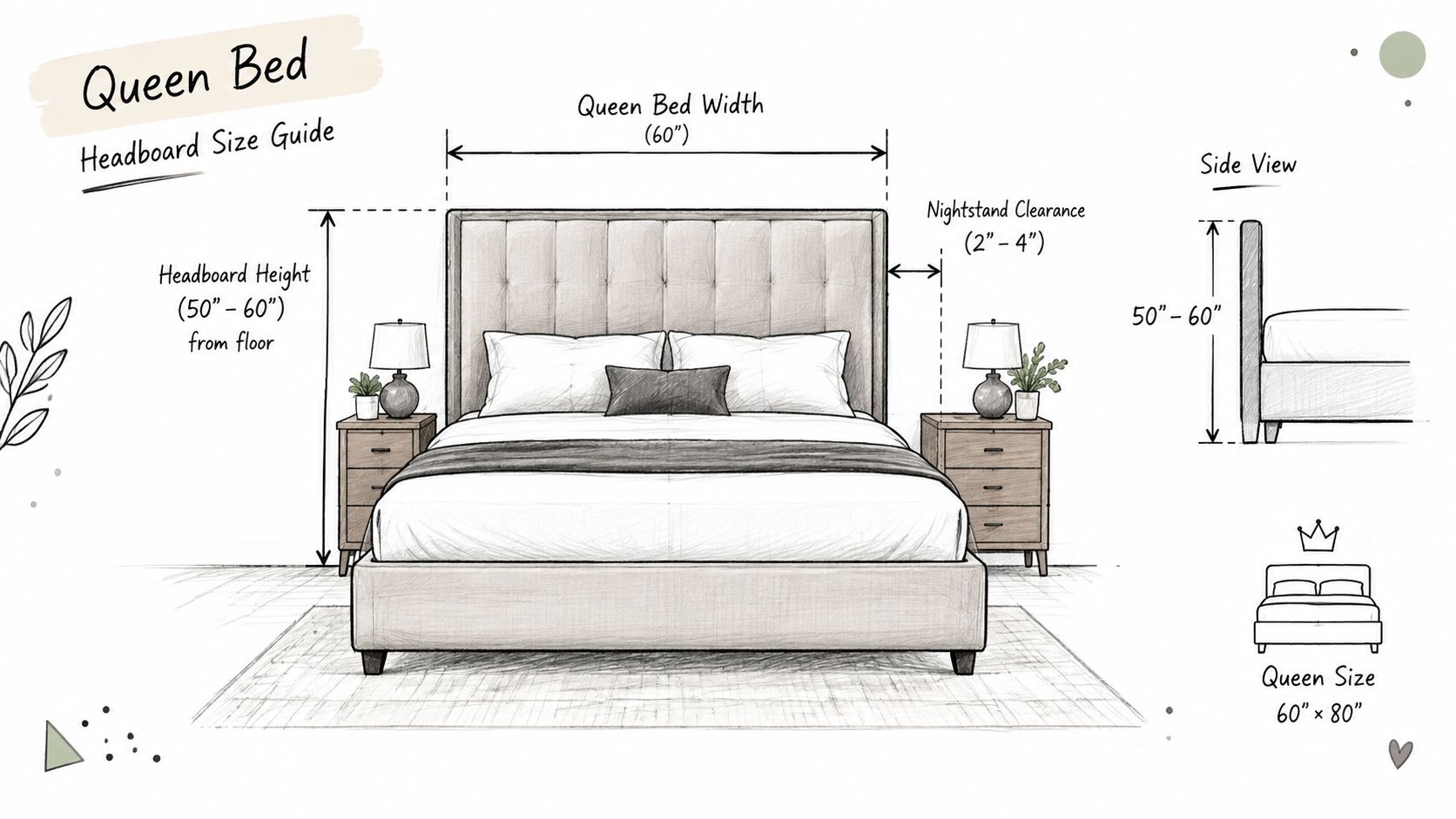
A headboard should extend slightly beyond the mattress or bed frame so the bedding looks intentional rather than squeezed between two vertical edges. A common guide places standard headboards at 0 to 3 inches wider than the bed frame, with a queen headboard around 60–63 inches wide and a king headboard around 76–79 inches wide. Headboard dimension guidance provides those reference ranges.
For a queen or full bed, commonly cited floor-to-top height is 48–54 inches. King and California king headboards are often 50–58 inches tall, while statement designs can reach 60–72 inches. Headboard height guidance shows why bed size alone doesn't determine the right height.
Account for mattress thickness and attachment
A thick mattress, topper, or adjustable base changes the visible relationship between the sleeper and the headboard. Measure from the floor to the top of the mattress, not just the bed frame. Wall-mounted pieces need stronger planning than frame-attached boards. They should be fixed into studs, not drywall alone, with hardware rated for the headboard's weight and dynamic loads. Wall-fixing guidance explains the basic safety principle.
Before ordering, buyers should confirm:
- Width: The headboard suits the mattress and leaves room for bedding.
- Height: The top clears windows, art, outlets, and ceiling details.
- Mounting: The wall has usable studs, or the bed frame supports attachment.
- Clearance: Nightstands, lamps, and curtains won't collide with the headboard.
- Access: The piece can enter through doors, stairs, and tight hallways.
For a detailed installation reference, the guide to attaching a headboard to the wall is useful before committing to a floating or legless design. Renters should generally choose a frame-attached board unless the lease permits secure wall installation.
Oversized Statement Looks Versus Smaller Profiles
Oversized headboards are powerful tools, but they need an empty wall and enough air around them. In practical terms, the oversized category includes a headboard wider than the mattress or taller than 130 cm, along with built-in wall panels, channel-quilted floor-to-ceiling boards, and arched canopy frames.
A large design works when the bed anchors a long, uninterrupted wall or sits beneath a vaulted ceiling. It can unify mismatched walls, conceal visual distractions, and give a primary bedroom the presence of a boutique suite. Wall-to-wall versions should align deliberately with nightstands, windows, and lighting. A random stopping point makes the installation look accidental.
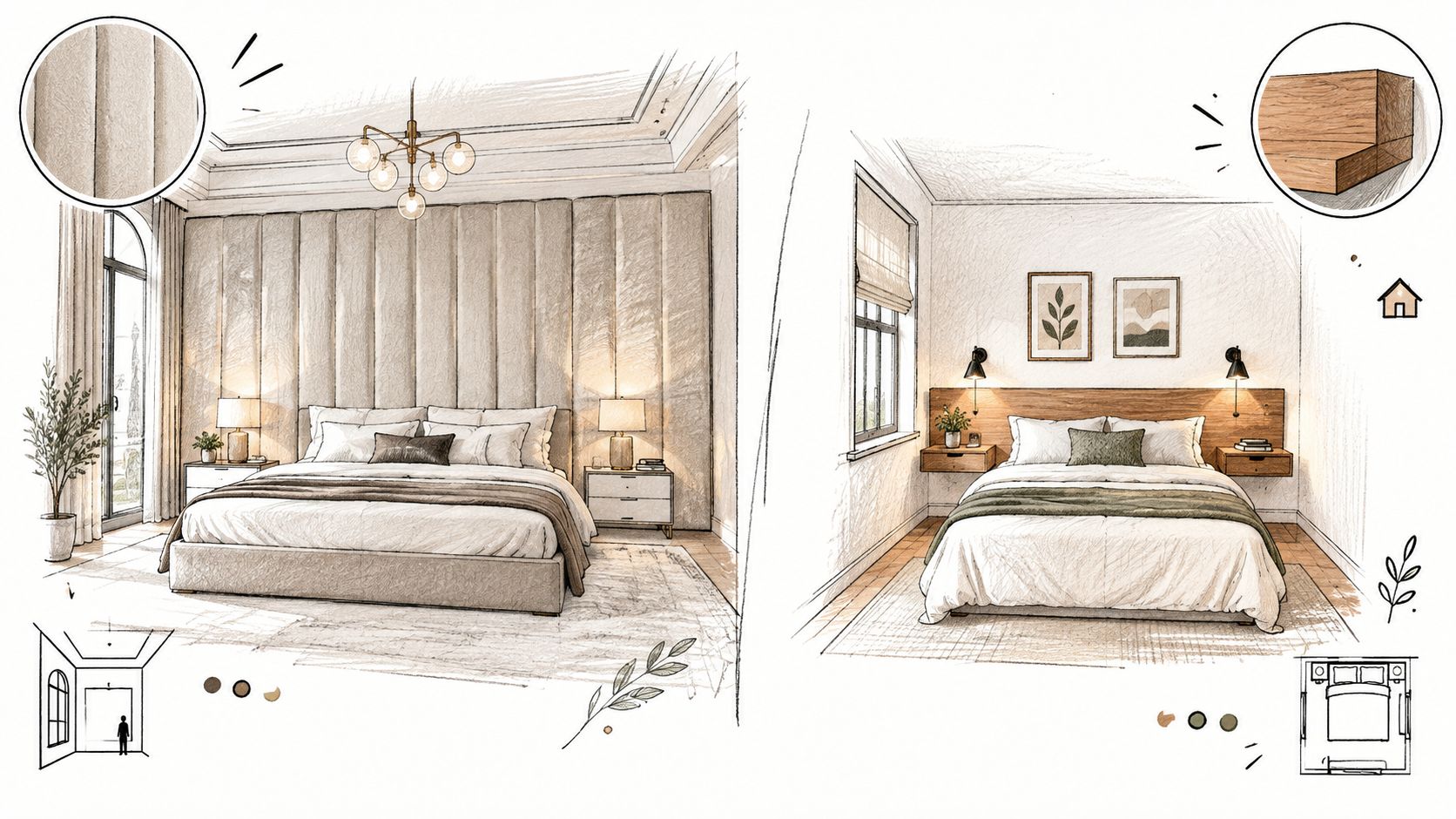
Smaller profiles make more sense in compact bedrooms, apartments, and rooms with standard ceilings. A low wood panel, slim metal frame, or basic upholstered board gives the bed a finished appearance without consuming the wall. These designs also suit renters because many attach directly to the metal bed frame and avoid wall damage.
The trade-off is presence. A compact headboard won't create the same architectural effect, and an undersized version can look lost behind thick bedding. Still, restraint usually beats forcing a dramatic style into a tight room.
Decision rule: Choose oversized when the bed wall is open and the ceiling can carry the height. Choose a smaller profile when the room is tight, the lease is short, or windows and artwork already compete for attention.
Matching Headboard Choices to Different Rooms
The best headboard choice changes with the room's job. A primary bedroom can support more visual weight and a deeper comfort layer. A guest room needs flexibility, while a child's room needs surfaces that tolerate real use.
Primary bedroom
An upholstered panel, tall vertical design, or canopy can anchor a primary suite. Calm neutrals keep layered bedding flexible, while warm wood adds permanence and texture. Buyers should test the back support in person if reading is part of the nightly routine.
Small guest room
A slim wood panel or simple metal frame keeps circulation clear and preserves wall space. A single-row tufted board adds softness without the bulk of deep quilting. Light visual weight is more important than dramatic height in a room that may already contain a dresser, luggage, and a compact nightstand.
Kid's or teen's bedroom
Durability should lead the decision. Rounded edges, wipeable surfaces, and stain-resistant performance fabrics are safer bets than delicate linen or raw wood that quickly reveals marks. A frame-attached design also makes future room changes easier.
Spare room or bedroom workspace
A medium-height upholstered board gives back support for reading or laptop use without turning the wall into the room's only feature. The headboard should work with a desk, foldable seating, or storage rather than blocking access to them.
| Room Type | Recommended Style | Best Material | Suggested Height |
|---|---|---|---|
| Primary bedroom | Tall panel or canopy | Upholstery or warm wood | Tall enough to anchor the bed without crowding the ceiling |
| Small guest room | Low panel or slim frame | Wood or metal | Low to medium |
| Kid's or teen's bedroom | Simple panel with rounded details | Wipeable performance upholstery | Medium |
| Spare room or workspace | Clean upholstered panel | Durable upholstery | Medium |
Miller Waldrop Furniture & Decor can serve as a practical resource for comparing bedroom furniture, mattress height, upholstery, and frame configurations in one shopping process. The useful default is clear: primary bedrooms can carry presence, guest rooms benefit from restraint, and children's rooms need forgiving construction first.
Care, Cleaning, and How Long Each Style Really Lasts
Maintenance starts with the material, not the room's mood. Wood needs dust control and protection from harsh moisture. Upholstery needs regular debris removal before particles settle into the fabric. Metal needs attention to its finish, especially where hands frequently touch the frame.
The figures below are practical ownership estimates for the materials described, not guarantees. Construction quality, installation, moisture, pets, children, and frequency of use can shorten or extend service life.
| Material | Routine Care | Watch For | Avg. Lifespan |
|---|---|---|---|
| Upholstered | Vacuum gently and rotate contact points as practical | Pet claws, wall scuffs, foam compression, stained fabric | Roughly 10–15 years |
| Solid wood | Dust weekly and provide deeper care quarterly | Dings, finish wear, humidity movement | Roughly 15–25 years |
| Wrought iron or durable metal | Dust and use suitable anti-tarnish wipes when needed | Surface corrosion, loose joints, chipped finish | Decades when maintained |
| Reclaimed wood | Dust regularly and check joints and fasteners | Loose boards, splinters, uneven movement | Depends heavily on construction and care |
For upholstered styles, the guide to cleaning upholstery offers a useful starting point for choosing an appropriate cleaning method. Vacuuming should be gentle, and spills should be addressed according to the fabric's care instructions rather than scrubbed aggressively.
Wood benefits from dry dusting and controlled cleaning. Reclaimed wood deserves extra attention at joints, where movement can loosen connections or create rough edges. Metal needs a finish check after moving the bed, since dragging can damage contact points.
Trend versus staying power
Bouclé, sculptural curves, fluting, and oversized panels can make a bedroom feel current, but trend-led pieces deserve a durability test. A buyer should ask whether the silhouette still works with different bedding, wall colors, and nightstands. A simple wood panel or restrained upholstered shape usually offers more flexibility than an elaborate novelty form.
The strongest long-term purchase combines a durable frame, replaceable or cleanable surface, comfortable support, and proportions that suit the room. Visual restraint isn't boring. It gives the rest of the bedroom room to evolve.
Bringing It All Together With Hands-On Design Help
A showroom visit should function as a working design session, not a quick sales stop. Buyers should bring the mattress dimensions, bed-frame measurements, wall width, ceiling height, and photographs showing windows, outlets, flooring, and existing nightstands. Those details allow a designer to reject unsuitable options before the buyer falls in love with the wrong scale.
The physical test matters. Fabric texture can feel different from its screen image, and a headboard that looks comfortable may provide little support once a person sits against it. Sitting upright, checking the top edge against the wall, comparing finishes beside flooring samples, and viewing the piece with actual bedding reveal details that online browsing can't confirm.
A useful appointment should answer four questions:
- Does the headboard fit the wall?
- Does the material suit the household?
- Does the construction support daily use?
- Can the buyer live with the style after the trend moves on?
That process turns a broad search for headboard styles into one confident decision. The right headboard won't merely decorate the bed. It will make the room easier to use, better proportioned, and more comfortable every night.
Miller Waldrop Furniture & Decor offers bedroom furniture, mattresses, adjustable bases, upholstery choices, and personalized design guidance for shoppers in Lubbock, Hobbs, and Ruidoso Downs. Visit Miller Waldrop Furniture & Decor with room measurements and mattress details to compare headboard options in person and choose a setup that fits the space and daily routine.