

Understanding Twin Mattress Cost for Smart Savings

When you start shopping for a new twin mattress, you'll see prices ranging from around $150 for a very basic model all the way up to $1,300 or more for a high-end option. But don't let that huge range intimidate you.
Most people find a fantastic, long-lasting twin mattress somewhere in the $400 to $800 sweet spot. This mid-range is where you typically get the best bang for your buck, balancing great comfort, solid support, and durability that will last for years.
How Much Should a Twin Mattress Really Cost?
Trying to pick out a twin mattress can feel like a guessing game. Is a cheap one good enough? Is an expensive one worth it? Let's break down the factors so you can choose the perfect mattress for your family's needs.
Think of this as your personal guide. We'll demystify the price tags and help you pinpoint what truly matters for your specific situation, whether you're buying for a child, a student, or a guest room. It’s not about finding the absolute cheapest option; it’s about empowering you to find the right one.
Why the Right Mattress Is a Smart Investment
Whether you’re setting up your child’s first "big kid" bed, outfitting a dorm room, or creating a comfortable guest space, the mattress you choose makes all the difference. A good one provides the support needed for restorative sleep, which is essential for health and well-being.
This isn't just a local trend; it's a global one. The mattress industry is valued at over $41 billion worldwide, a clear sign that people everywhere are recognizing just how critical quality sleep is.
A great mattress is more than just a piece of furniture—it's an investment in better days, restful nights, and the well-being of your family. It's the foundation for energy, focus, and happiness.
Here are the tools you need to shop with clarity. We'll break down exactly what drives the twin mattress cost—from the materials inside to the brand name on the label. Once you understand these factors, you can confidently pick a mattress that fits your needs without breaking the bank.
And to make sure you feel great about your purchase, we back it up with our Low Price Promise. With the right information, you can find the perfect sleep solution for your family.
What Really Drives the Cost of a Twin Mattress
Ever stood in a mattress showroom, looked at two twin mattresses that seem almost identical, and wondered why one costs twice as much as the other? It’s a common experience. The real story of a mattress's price isn't on the surface; it's hidden in the materials, the way it's put together, and even the brand's reputation.
Getting to the bottom of what you're paying for is the best way to feel confident about your purchase for years to come. Think of it less like buying an appliance and more like choosing the right tool for a job. A simple innerspring mattress might be the perfect, affordable tool for a guest room that's used a few times a year. But for a growing child or a daybed that doubles as a sofa, a more advanced hybrid model is a much better long-term investment.
The Building Blocks: Materials Matter Most
By far, the biggest influence on what you'll pay for a mattress is what’s inside it. The three main types of mattresses each offer a different feel and come with a different price tag, directly affecting both your sleep and your budget.
- Innerspring Mattresses: This is the classic design we all grew up with, built around a sturdy core of steel coils. They're typically the most affordable option out there, making them a fantastic choice when the budget is tight.
- Memory Foam Mattresses: Famous for that signature "hugging" feel and incredible pressure relief, memory foam mattresses usually land in the mid-range. A heads-up: higher-density foams will cost more, but they also signal a more durable, longer-lasting bed.
- Hybrid Mattresses: Exactly what they sound like! Hybrids combine the "best of both worlds," pairing the supportive bounce of an innerspring coil system with plush comfort layers of memory foam or latex. Because they're more complex to build, they come with a higher price tag, but the blend of support and comfort is hard to beat.
Still weighing the pros and cons of these popular types? Our guide on innerspring vs. memory foam mattresses can help you pinpoint the perfect fit for your needs.
Construction Quality and Craftsmanship
Beyond the raw materials, the how is just as important as the what. Two mattresses can both use memory foam, but the one with thicker, higher-density foam and a more sophisticated, layered design will cost more. Why? Because it’s simply built to last longer and provide better, more consistent support night after night.
A well-constructed mattress is an investment in longevity. Features like reinforced edge support, higher coil counts, and durable stitching may add to the initial cost but prevent premature sagging and extend the life of your mattress significantly.
Here are a few of those under-the-hood details to pay attention to:
- Foam Density: For any foam mattress, a higher density (measured in pounds per cubic foot) equals better durability. A mattress with 3.0 lb density foam will almost always outlast one made with cheaper 1.8 lb density foam.
- Coil Gauge and Count: In innerspring and hybrid beds, a lower coil gauge number means a thicker, stronger wire. At the same time, a higher number of coils can offer more precise, targeted support.
- Stitching and Cover Quality: Don't forget the outside! The fabric used for the cover—whether it's a simple polyester or a high-tech cooling fabric—and the quality of the stitching play a big role in the final cost and overall feel.
These are the little things that separate a mattress that feels great for a year from one that gives you a decade of restful sleep. Once you know what to look for, you can see past the price tag and find the true value in your investment.
Comparing Budget, Mid-Range, and Premium Mattresses
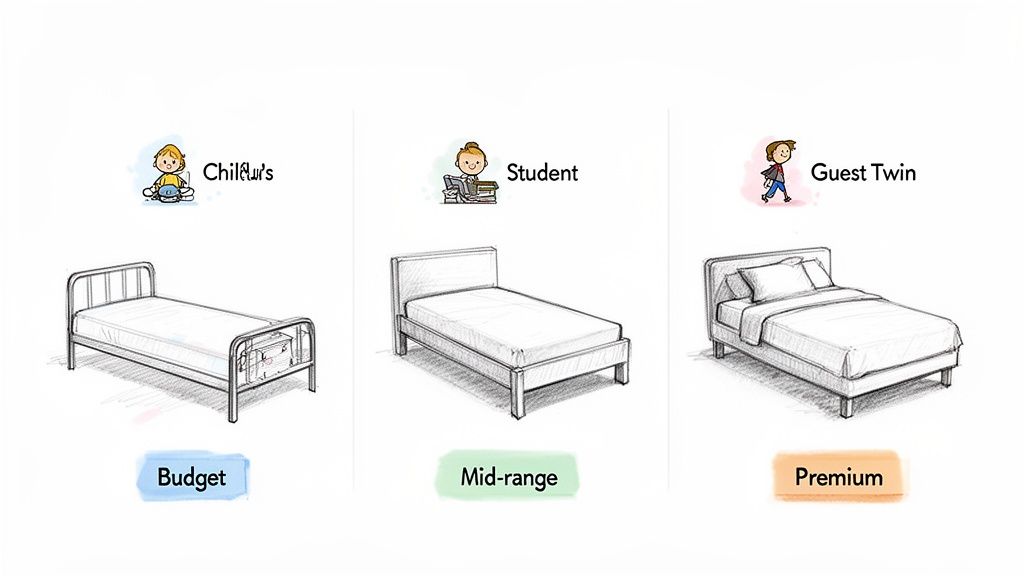
Trying to figure out the different tiers of twin mattresses can feel a bit overwhelming, but it gets a lot simpler when you think of it as choosing the right tool for the job. Whether you need something affordable for a toddler, a durable bed for a teenager, or a truly comfortable mattress for your guest room, there’s an option out there. The trick is just knowing which category fits your specific needs.
The good news? The twin is an incredibly popular size. In fact, twin-sized mattresses make up about 31% of the U.S. mattress market share, making them the most common size sold. This high demand means you'll find a massive variety of options at every single price point, which puts you in a great position to find the perfect fit.
This diagram helps visualize how the key factors—materials, construction, and brand reputation—all come together to influence the final cost of a twin mattress.
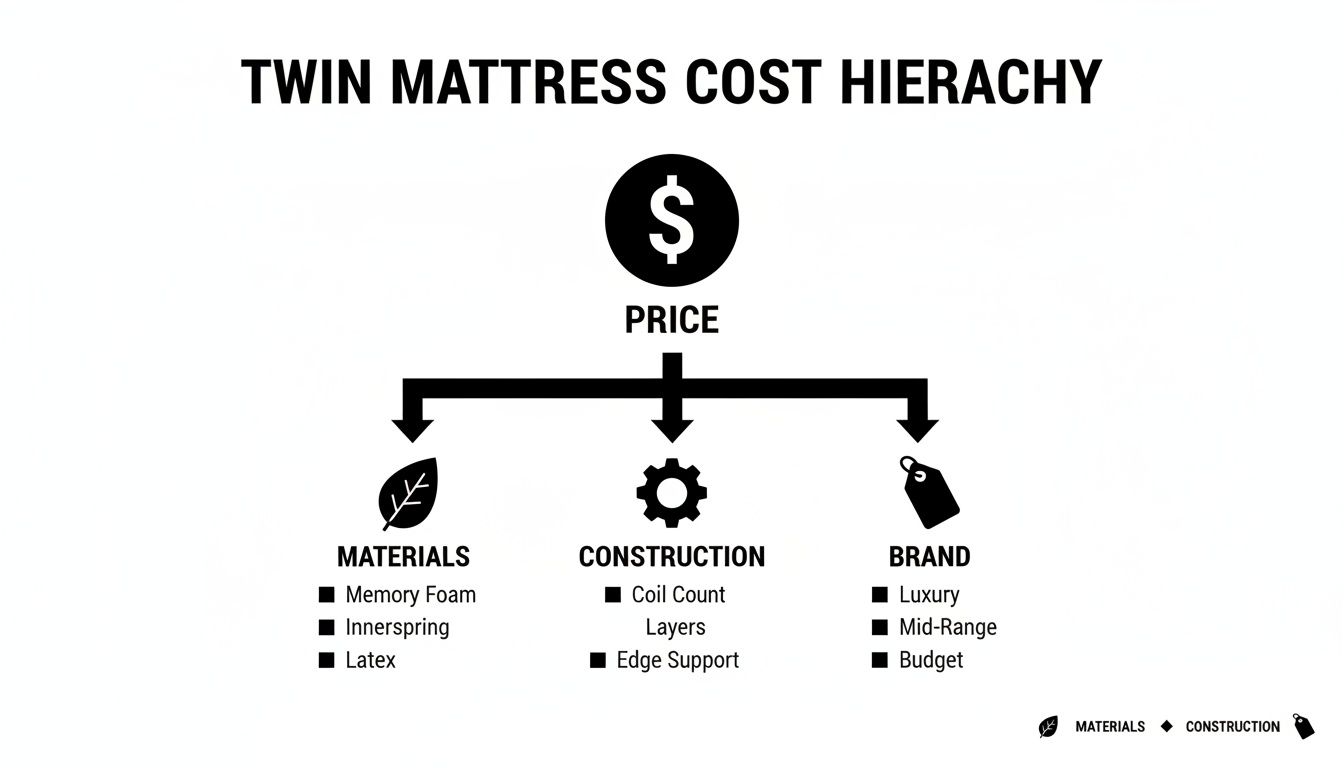
As you can see, it's the combination of these elements that places a mattress in the budget, mid-range, or premium camp. Let's break down what that means for you.
Budget Mattresses: The Essentials for Solid Sleep
A budget-friendly twin mattress, which usually runs from $150 to $400, is the perfect solution when practicality is the top priority. These are typically straightforward innerspring or basic all-foam models built to provide fundamental support without any extra bells and whistles.
They make a fantastic choice for a young child's first "big kid" bed or for a trundle bed that only gets used from time to time. While they won't last as long as their more expensive counterparts, a good budget mattress delivers reliable comfort exactly where you need it.
Mid-Range Mattresses: The Sweet Spot of Value
The mid-range category, from about $400 to $800, is where most people find the ideal balance of better features, solid construction, and a reasonable price tag. Here, you’ll start seeing quality memory foam, responsive latex, and even innovative hybrid mattresses. These models usually come with stronger edge support and more durable materials, making them great for teenagers, college students, or a guest room that sees regular visitors.
For many families, the mid-range mattress is the ultimate problem-solver. It offers a significant upgrade in comfort and durability from budget models without requiring the investment of a premium mattress, making it a smart, long-lasting choice.
A great example of a high-value, mid-range option is a model like the Serta Perfect Sleeper. It gives you trusted technology and supportive comfort that holds up over time, so you can provide great sleep without breaking the bank.
Premium Mattresses: The Ultimate in Comfort
Once you go past the $800 mark, you’re stepping into the premium tier. These mattresses are all about superior materials and sophisticated design. This is where you find things like advanced cooling technologies, natural latex layers, and high-density memory foams that are engineered for maximum pressure relief.
Features designed to create the best pressure relief mattress, for instance, play a big role in both the price and the incredible feel. These luxury options are crafted for exceptional comfort and long-term durability, making them a worthwhile investment for a primary bed or for a guest room you want to feel like a five-star hotel. They are truly built to last and provide restorative sleep night after night.
To help you see the differences side-by-side, this table breaks down what you can generally expect from each tier.
Comparing Twin Mattress Tiers Feature by Feature
This table breaks down the features, materials, and ideal use-cases for budget, mid-range, and premium twin mattresses, helping you make a direct comparison.
| Feature | Budget Tier ($150 – $400) | Mid-Range Tier ($400 – $800) | Premium Tier ($800+) |
|---|---|---|---|
| Common Materials | Basic innerspring coils, low-density polyfoam | Memory foam, gel-infused foam, pocketed coils, basic hybrids | High-density memory foam, natural latex, advanced hybrids, specialty coils |
| Typical Lifespan | 3-5 years | 6-8 years | 8-10+ years |
| Key Features | Basic support, minimal layers | Enhanced pressure relief, cooling features, better edge support | Advanced cooling tech, zoned support systems, premium materials, motion isolation |
| Best For | Toddlers, trundle beds, very occasional guest use | Teenagers, college dorms, regularly used guest rooms | Adults, primary bedrooms, those seeking luxury comfort and support |
As the table shows, the right choice really depends on how the mattress will be used, who will be sleeping on it, and how long you expect it to last. Each tier serves a purpose, so you can confidently pick the one that aligns with your goals and budget.
Choosing Between a Twin and Twin XL Mattress
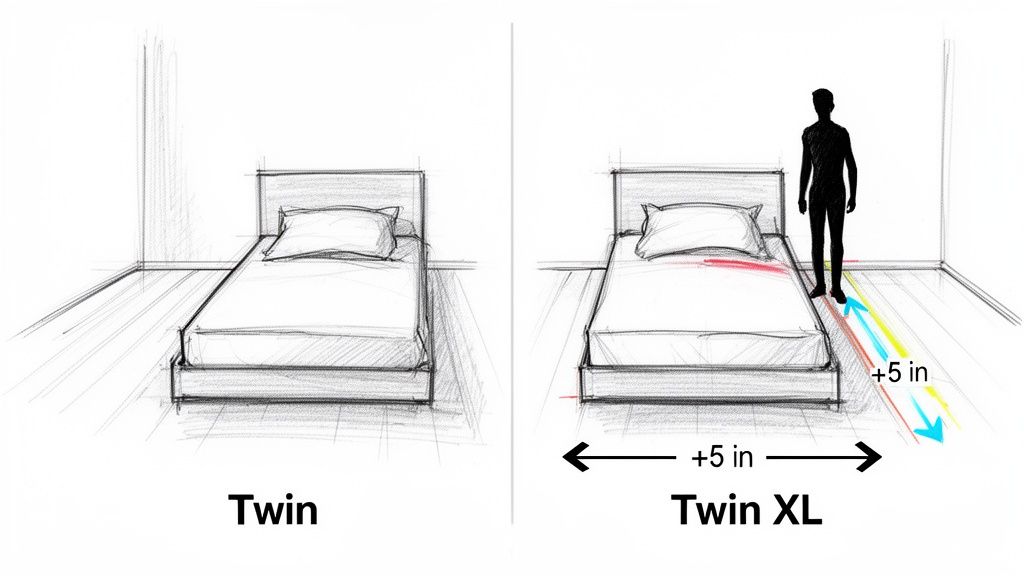
When you start looking at the cost of a twin mattress, one of the first forks in the road you'll encounter is the choice between a standard twin and a twin XL. They sound almost the same, but that little "XL" makes a big difference, and understanding it is key to making a smart buy.
The main distinction is all about length. A twin XL is five inches longer than a standard twin. While both are 38 inches wide, a regular twin measures 75 inches long, and the twin XL stretches out to a full 80 inches. Those five inches are more significant than you might think.
Making the Right Choice for Your Space
So, how do you decide which one is right for you?
A standard twin is the undisputed champ of space-saving. It's the go-to for a young child's room, a cozy guest space, or a daybed where you need to make every single inch count. Its compact size leaves more floor space open for playing, working, or just moving around.
The twin XL, however, is all about providing comfort for taller sleepers. There's a reason it's the standard in almost every college dorm room—it prevents anyone over six feet tall from having their feet dangle off the end of the bed. If you're buying for a lanky teenager or a guest room that needs to accommodate taller friends and family, the twin XL is definitely the way to go.
Choosing the right length from the start prevents the classic mistake of buying a bed someone will outgrow in a year or two. Those five extra inches in a twin XL can mean the difference between lasting comfort and needing to buy a new mattress much sooner than you planned.
Yes, the twin XL mattress might cost a little more because it uses more material, but it's a small price to pay for years of comfortable sleep. Just remember that you'll also need to get twin XL-specific sheets and bedding to match.
Ultimately, it comes down to who will be sleeping on the bed and the room it's going into. If you're still not sure, that's what our sleep experts are here for. They can help you think through the options and find the perfect fit for your home.
How to Find the Best Value for Your New Mattress
Finding a great deal on a twin mattress isn't about snagging the cheapest one you can find. It's about knowing what to look for so you can make a smart investment in your sleep. A fantastic mattress is a tool for better health, and with the right approach, you can find one that delivers incredible comfort and durability without breaking the bank. It all starts with looking past the marketing hype and focusing on the real signs of quality.
Think of it like buying a car. You wouldn't just look at the shiny paint job; you'd pop the hood and check the engine. For a mattress, this means checking for things like strong, even stitching, a sturdy edge that doesn’t sag when you sit on it, and understanding the density of the foams inside. A high-quality mattress simply feels more substantial and well-made, a clear signal that it's built to last.
Look Beyond the Price Tag
One of the best clues to a mattress's quality is its warranty. A 10-year, non-prorated warranty is the gold standard in the industry. It’s a direct reflection of the manufacturer's confidence in their product and your assurance that the twin mattress cost is an investment in a full decade of great sleep.
Timing your purchase can also make a huge difference. You'll often find the best prices of the year during big holiday weekends like Memorial Day, Labor Day, and Black Friday. Keep an eye out for those sales events.
The real secret to finding value is understanding that a mattress is a health and wellness tool. The right one supports your body, improves your mood, and energizes your days. Investing a little more for a quality build often saves you money and discomfort in the long run.
To really dig into what makes a mattress a good value, it helps to explore different types and uses. For instance, understanding what goes into a great twin floor mattress can teach you a lot about materials and design. A resource like this guide to the perfect twin floor mattress can open your eyes to what truly defines quality.
The Power of a Showroom Visit
Online research is a fantastic starting point, but nothing beats trying out a mattress in person. When you visit a showroom, you get to feel the real difference between memory foam, innerspring, and hybrid models. This is your chance to lie down, see how the mattress conforms to your body, and get your questions answered.
Our sleep experts are here to be your guides, not just salespeople. They can help you make sense of the technical jargon and match your personal sleep style to the right mattress technology. You can learn more about how to make the most of your visit in our guide on how to shop for a mattress.
Finally, don't let a tight budget stop you from getting the mattress you need. We believe everyone deserves a great night's sleep, which is why we offer flexible financing options and a low price promise. These tools are here to help put the perfect mattress within your reach, so you never have to compromise on the quality rest your family deserves.
Ready to Find the Perfect Twin Mattress?
You've done the research. You know what goes into the price of a twin mattress—from the materials inside to the brand on the label. Now you can look past the price tag and see the real value, making a choice that will pay off in restful nights for years to come.
But reading about comfort is one thing; feeling it is another. The next step is to put that knowledge to the test.
An Invitation to Our Showroom
We’d love for you to stop by one of our showrooms in Lubbock, Hobbs, or Ruidoso Downs. Think of it as the final, most important step in your research. This is where you can truly connect what you’ve learned with how a mattress actually feels. You’re not just shopping—you’re finding the right foundation for better days and more energized mornings.
While you're here, you can experience our bedMATCH® system. It’s a pretty neat tool that uses scientific measurements—not guesswork—to map your pressure points. In just a few minutes, it recommends the ideal support for your body and sleeping habits, making the whole process simpler and more precise.
Our goal isn't just to sell you a mattress. We're here to offer a relaxed, helpful experience so you can find the comfort your family deserves. Our family is committed to helping yours win the day, and it all starts with a great night's sleep.
Ready to make a decision you can feel good about? Visit a Miller Waldrop showroom today. Let our sleep experts help you find exactly what you’re looking for. Your journey to better sleep is just a visit away.
Got Questions About Twin Mattress Costs? We’ve Got Answers.
As you get closer to making a decision, a few final questions always seem to pop up. It's completely normal. To help you feel confident in your choice, we’ve put together answers to the most common questions we hear from shoppers just like you.
How Much Should I Actually Expect to Pay for a Good Twin Mattress?
Honestly, the sweet spot for a twin mattress that's both comfortable and built to last is in that mid-range tier, usually somewhere between $400 and $800.
In this price range, you move beyond the basics and start getting into high-quality materials and smart designs, like supportive hybrids or genuinely good memory foam. You’re paying for a mattress that won’t start sagging in a year or two. While you can definitely find options under $400, stepping into that mid-range is where you’ll find the best long-term value and a more restorative night’s sleep.
Is It Worth Shelling Out More for a Big-Name Brand?
More often than not, yes. Think of it this way: established brands have poured millions into research and development, figuring out what actually helps people sleep better. You're not just paying for a name; you're paying for proven sleep technology.
A trusted brand also brings peace of mind. You're getting a solid warranty and customer service you can count on if something goes wrong. So while the initial twin mattress cost might be a bit higher, the consistent quality and reliability make it a smart investment for many people.
How Often Do I Need to Replace a Twin Mattress?
A good rule of thumb is every 7 to 10 years. But let's be realistic—how the mattress is used makes a huge difference. A child's mattress that doubles as a trampoline might not make it that long. On the flip side, a mattress in a guest room that’s used a few weeks a year could easily last well beyond a decade.
The best way to know? Listen to your body and look at the mattress. If you see sagging, feel lumps, or just aren't waking up feeling rested, it's time for a change. Your back will thank you.
Finding the right mattress doesn't have to be a guessing game. Here at Miller Waldrop, we’re committed to giving you the knowledge and guidance to choose with confidence.
Take a look at our collection of high-quality mattresses, including the very popular Serta Perfect Sleeper, and let's find the perfect fit for your family's sleep needs today.