

How to Sleep Cooler at Night: Your Guide to Beating the Heat

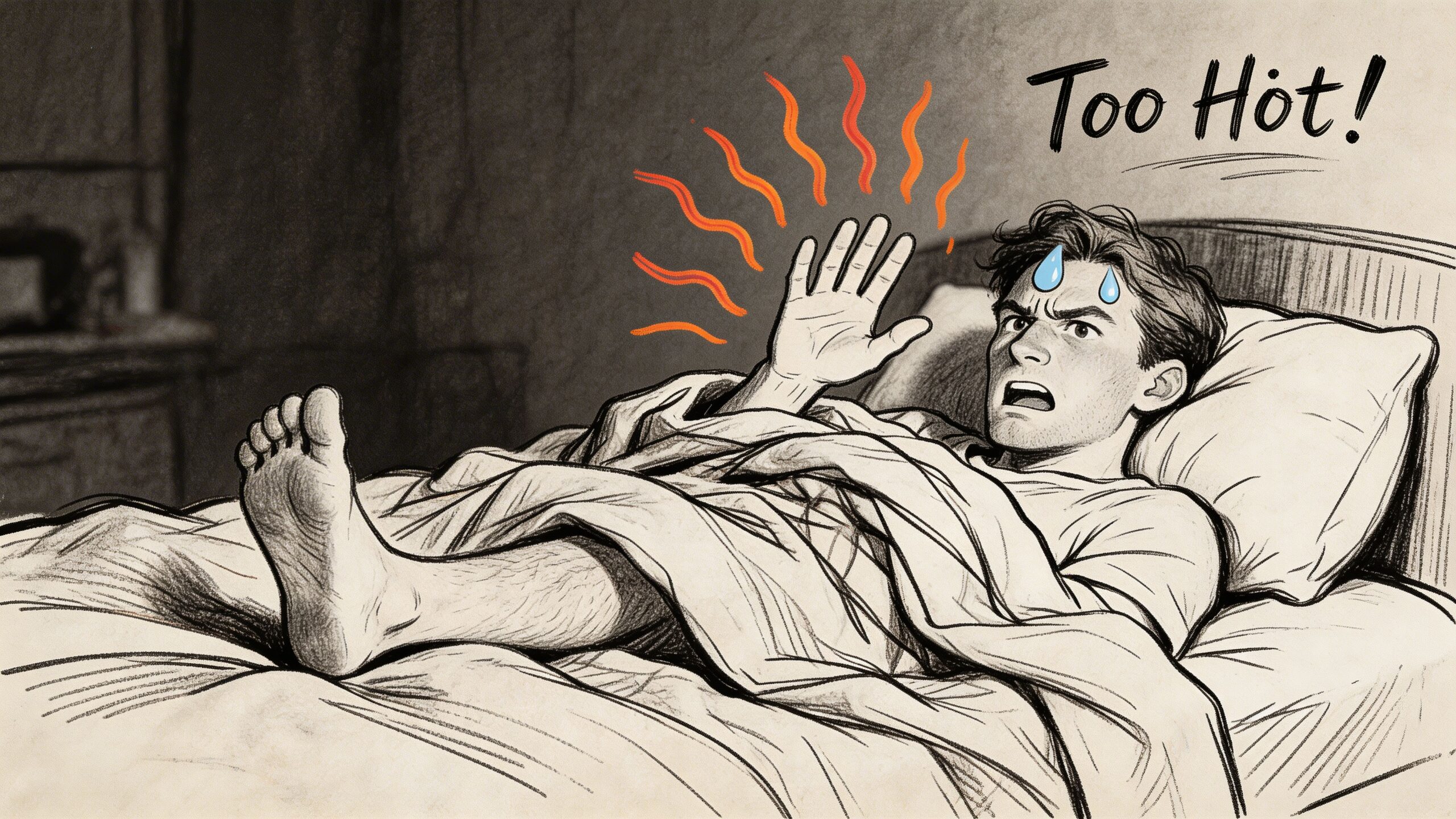
You know the feeling. You fall asleep tired, then wake up irritated, damp, and halfway out of the covers. You flip the pillow. You stick a leg out. You crank the thermostat lower. Still, your bed feels like it’s holding heat instead of helping you rest.
In West Texas and Southeastern New Mexico, that problem gets old fast. Dry heat lingers in the room, warm nights don’t give your house much time to cool down, and the wrong mattress can turn bedtime into a wrestling match with your own body temperature. If you want to know how to sleep cooler at night, stop treating it like a mystery. Cool sleep comes from building the right setup, layer by layer.
Why You're Waking Up Hot and What You Can Do About It
If you sleep hot, you are not the odd one out. A 2023 Gallup survey found that 57% of U.S. adults report being too hot while sleeping at least occasionally, and 14% say they feel too hot always or most of the time. That is a lot of people losing rest for the same reason.
Your body wants to cool down before sleep
Sleep works better when your body temperature drops naturally. If your room is warm, your bedding traps heat, or your mattress holds onto body warmth, that cooling process gets interrupted. You feel it as tossing, kicking off blankets, and waking up more than you should.
That matters even more if hormones are part of the picture. Women are more likely to report sleeping too hot, and if night sweats are part of menopause, practical sleep changes help, but symptom-specific guidance helps too. This guide to natural remedies for menopause night sweats is a useful companion if your overheating comes with hot flashes.
Stop blaming yourself and start fixing the setup
Hot sleep is not usually about “sleeping wrong.” It is usually about a bad sleep environment, heat-trapping materials, or a mattress that works against you.
Here is the mindset shift I want you to make:
- Your room controls the baseline. If the air is warm and still, everything feels hotter.
- Your sheets and sleepwear control skin comfort. The wrong fabrics hold heat and moisture.
- Your mattress controls the deep heat. If the bed stores warmth under your body, the rest of your efforts will only go so far.
If you wake up hot night after night, do not start with gadgets. Start with the foundation. Room, fabrics, mattress, then routines.
Master Your Sleep Environment for Immediate Relief
The fastest wins usually come from your bedroom itself. If the room is fighting your body, your bed never has a fair shot.
Set the room colder than feels “cozy”
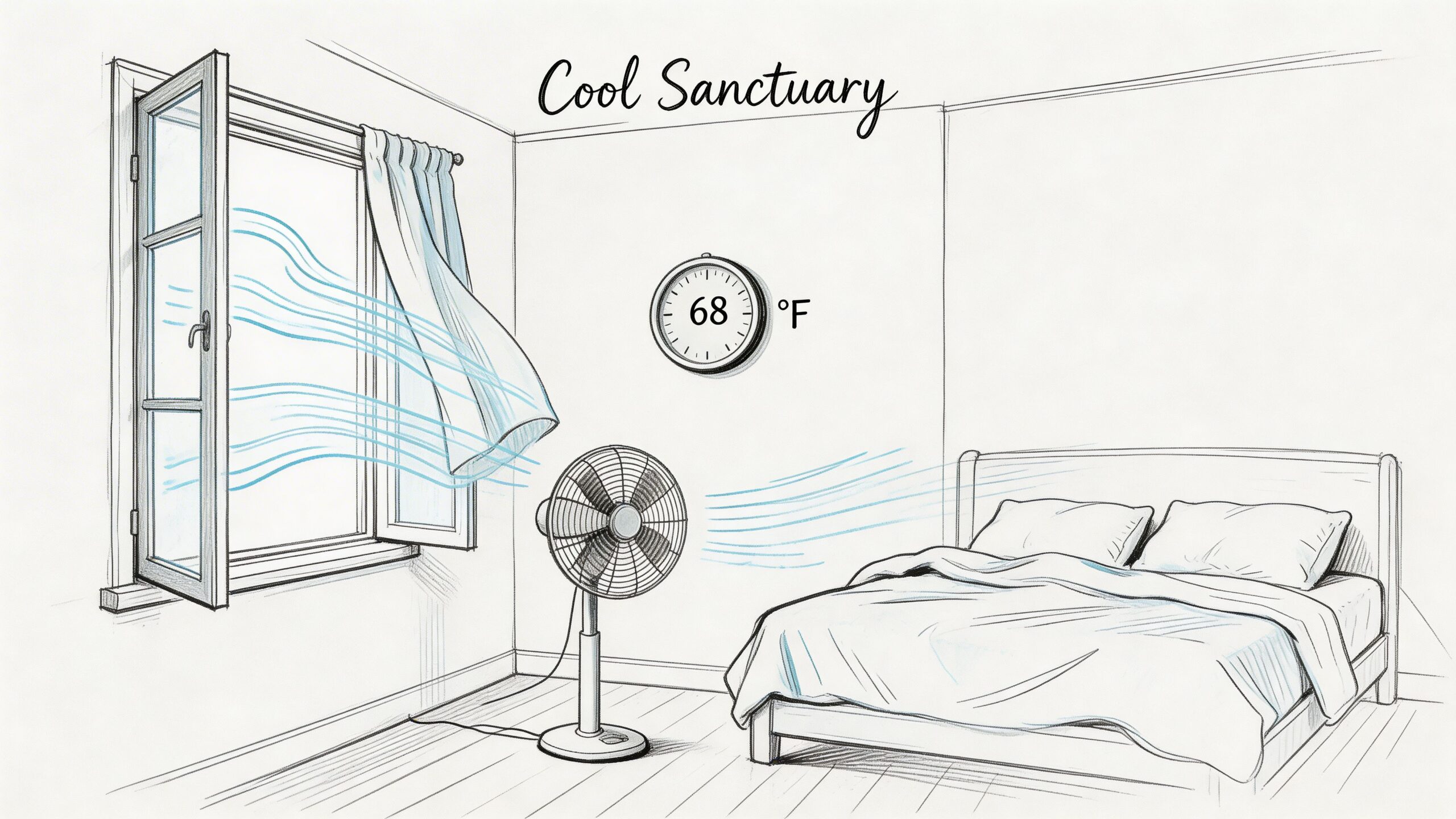
The National Sleep Foundation recommends a bedroom temperature between 60-67°F (15-19°C) to support the drop in core body temperature that helps you fall asleep and stay asleep. If your bedroom sits above that, bring it down.
A lot of folks keep the room at a temperature that feels comfortable while standing up and folding laundry. That is not the same as a temperature that supports sleep under sheets and blankets.
Use airflow on purpose
A fan helps most when it is moving air across the sleeping surface, not just making noise in the corner.
Try this tonight:
- Set the ceiling fan correctly. In summer, run it counterclockwise so it pushes cool air down.
- Aim airflow at the bed. If you use a floor or box fan, position it so air reaches your torso and legs.
- Block daytime heat early. Shut blackout curtains or shades before the room heats up in the afternoon.
- Keep the bed off heat traps. If possible, avoid direct sunlight on the mattress and headboard during the hottest part of the day.
Treat your bedroom like a heat-management zone
People understand this with cars faster than they do with bedrooms. Sun exposure, trapped heat, poor airflow, and hot surfaces all build on each other. The same logic behind how to keep your car cool in summer applies at home too. Stop heat before it builds, then move air where it matters.
If you want a broader room-by-room approach, this guide on creating a sleep sanctuary covers how lighting, temperature, mattress, and bedding work together.
Quick changes that work tonight
| Move | Why it helps |
|---|---|
| Lower the thermostat before bed | Gives your body the cooler air it needs to settle down |
| Close curtains before sunset heat lingers | Reduces radiant heat in the room |
| Run a fan toward the bed | Improves evaporation and skin cooling |
| Reduce extra layers on the bed | Cuts trapped heat around your body |
Do not wait until bedtime to cool the room. Start before the bedroom stores the day’s heat.
Choose Fabrics That Breathe and Wick Away Heat
Once the room is under control, look at what touches your skin. Often, hot sleepers get fooled by soft-looking bedding that sleeps warm.
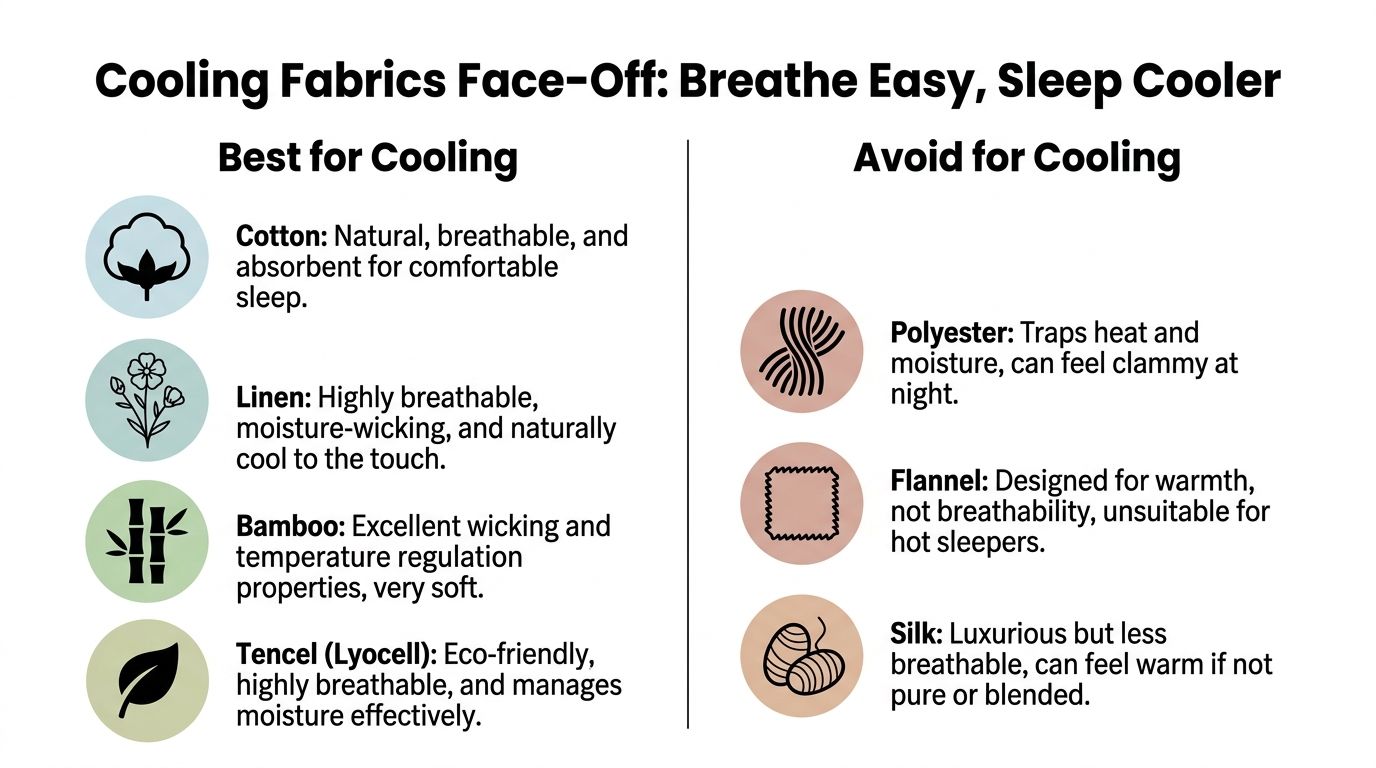
The fabrics I would choose first
Natural and moisture-managing materials usually do a better job of feeling dry and breathable through the night.
Cotton is the dependable choice. It breathes well, feels familiar, and provides comfort for many year-round.
Linen is excellent for hot sleepers who do not mind a slightly more textured feel. It lets heat escape fast and feels cooler against the skin.
Bamboo can feel softer and slicker. Many people like it because it handles moisture well and feels less stuffy than heavier fabrics.
Tencel is another strong option when you want a smoother feel with good airflow and moisture control.
The ones I tell hot sleepers to stop buying
Some fabrics sound cozy in the store and feel miserable at 2 a.m.
- Polyester: Often traps heat and moisture. You may wake up feeling clammy instead of cool.
- Flannel: Great when you want warmth. Wrong choice if you already sleep hot.
- Silk blends: Can feel smooth, but they are not always the coolest option, especially if they are blended with less breathable fibers.
Don’t just change sheets. Change the full contact layer
Look at the whole stack, not one item.
- Sheets: Start here first because they touch the most skin.
- Pillowcases: Your head and neck hold heat. A breathable pillowcase can make a noticeable difference.
- Mattress protector: This gets overlooked all the time. A thick, less breathable protector can cancel out the benefits of cooling sheets.
- Sleepwear: Loose, lightweight fabrics beat heavy or clingy pajamas every time.
If your sheets breathe but your mattress protector does not, you have still built a heat trap.
My practical rule
If the fabric feels dense, fuzzy, slick in a plasticky way, or overly padded, it probably is not helping you sleep cooler at night. Choose materials that let air move and moisture escape. You want your bed to release heat, not store it.
Build Your Sleep Foundation on a Cooling Mattress
Here is the part often overlooked, and it is the part that matters most. If your mattress sleeps hot, everything else becomes damage control.
Your mattress can either vent heat or trap it under you
A mattress is not just support. It is the surface your body presses into for hours. If that surface has poor airflow, heat builds right where you need relief most.
This is why I get blunt about old-school dense foam beds. They can feel good for a few minutes in a showroom. Then you sleep on them through a warm night and realize the bed is storing your body heat.
A National Sleep Foundation study found that 68% of hot sleepers reported better temperature regulation with breathable hybrid or innerspring mattresses compared to dense memory foam, which can increase the bed’s microclimate by 2-3°F. That lines up with what people tell us every day in the store.
What to look for in a cooler mattress
Not every “cooling” label means much. Look for construction that supports airflow.
Hybrid builds
A hybrid mattress combines foam comfort layers with a coil support core. That coil system matters because it leaves more room for air movement than a dense all-foam slab.
For hot sleepers, hybrids often strike the best balance between pressure relief and breathability.
Innerspring support
Traditional innerspring designs can still be a smart choice if airflow is your top priority. More open space inside the bed usually means less trapped heat.
That can be especially helpful for people who run hot and do not want the hug of dense foam.
Cooling materials that help
Look for features such as:
- Gel-infused foams
- Breathable cover fabrics
- Ventilated comfort layers
- Coil systems that promote air circulation
These are not magic. They do a better job of moving heat away from your body than closed, heat-holding materials.
Support and temperature should be matched together
Shoppers often get stuck here. They focus only on firmness or only on cooling. You need both.
A mattress that feels cool but lets your shoulders and hips sink the wrong way can still wreck your sleep. A mattress that supports you well but sleeps hot is not a real solution either.
Your body type, sleeping position, and pressure points affect how much of your body stays pressed into the bed. More contact can mean more retained heat. That is why a personalized fit matters.
One practical place to start is this guide to finding a cooling mattress for hot sleepers.
My advice if you sleep hot in this region
In West Texas and Southeastern New Mexico, I lean people toward breathable hybrids from Serta and Beautyrest far more often than dense foam options when overheating is the complaint. The reason is simple. Airflow wins.
I also put a lot of value on pressure mapping and bed matching because a mattress should fit your frame, not just your budget or what your cousin bought. Miller Waldrop Furniture & Decor uses a high-tech bed-matching process that helps identify pressure points and narrow down mattresses that support the body without creating unnecessary heat buildup.
A simple comparison
| Mattress type | Cooling outlook | Who it often fits |
|---|---|---|
| Dense memory foam | Warmest feel for many hot sleepers | People who prioritize deep contouring over airflow |
| Innerspring | Strong airflow | Back and combo sleepers who want a more lifted feel |
| Hybrid | Balanced cooling and pressure relief | Many hot sleepers, side sleepers, and couples |
If your mattress traps heat, do not expect sheets and fans to solve the whole problem. They help. The mattress still sets the baseline under your body.
Elevate Your Comfort with an Adjustable Base
An adjustable base is not just for reading in bed or easing into a sitting position. It can also help you sleep cooler because it changes how your body meets the mattress.
Position creates airflow
When you raise your head slightly or elevate your legs a bit, you reduce that flat, pinned-down feeling that can make heat feel trapped under your back and torso. Even a small change in angle can improve comfort.
That matters because cooling is not only about temperature. It is also about air circulation around your body and reducing that heavy, stuck-to-the-bed sensation.
Couples need a better answer than “sleep farther apart”
If you share a bed, heat transfer is real. For couples, proximity in bed can increase skin temperature by 15-25%, and a split adjustable base allows independent positioning to reduce that heat transfer. That is one of the smartest reasons to consider a split setup.
One partner can stay flatter. The other can elevate slightly. You both get a position that feels better without turning bedtime into a negotiation.
How I would use one for cooler sleep
Slight head elevation
A mild lift can help some sleepers feel less smothered by the bed surface and bedding. It also pairs well with snoring or congestion concerns.
Split positioning for couples
If one of you runs hotter, separate control helps. You do not need different bedrooms. You need better customization.
Better bedding drape
Changing the angle of the bed can also change how blankets and sheets sit on the body. Sometimes that alone makes the bed feel less stifling.
If you want to see how these bases work in real life, this overview explains what an adjustable base bed is.
Who should seriously consider one
- Couples with different sleep temperatures
- Hot sleepers who feel heat trapped under the torso
- People who want more control without changing the whole room
- Anyone upgrading to a new mattress and wanting the full system to work together
I do not think every sleeper needs an adjustable base. I do think a lot more hot sleepers would benefit from one than they realize.
Adopt Cooling Routines Before You Go to Bed
Your setup matters most, but habits still count. The hour before bed can either help your body cool down or keep it revved up.
Use routines that lower friction, not just temperature
A lukewarm shower before bed helps many people feel less sticky and more settled. Heavy meals, intense late workouts, and too much alcohol tend to do the opposite. If you are serious about how to sleep cooler at night, stop doing things that make your body work harder right before you want it to power down.
A few simple habits help:
- Shower smart: Go lukewarm, not icy. You want to feel refreshed without shocking your system.
- Hydrate earlier: Drink enough through the evening, but do not wait until lights-out to catch up.
- Eat lighter at night: Heavy, rich meals can leave you feeling warmer and more uncomfortable.
- Keep pre-bed activity calm: Stretching and easy winding down beat anything intense.
Your sleeping position can help
This is one of those practical tips people ignore because it sounds too simple. It works because body exposure matters.
Starfish position
You are on your back with arms and legs spread more openly. It takes up space, but it exposes more of the body to cooler air.
Log position
You are on your side with a straighter posture. For side sleepers, this can feel more realistic and still allows better airflow than curling up tightly.
If you sleep hot, curling into a tight ball under heavy covers is usually the wrong move.
A short pre-bed reset
My favorite version is simple:
- Cool the room before bedtime.
- Take a lukewarm shower.
- Put on lightweight sleepwear.
- Keep bedding minimal at first.
- Settle into a more open sleep position.
You do not need a complicated nighttime ritual. You need one that stops adding heat.
Your Blueprint for a Restful, Cool Night
You know the feeling. The house is quiet, the lights are off, and an hour later you are kicking off covers, flipping the pillow, and wondering why sleep still feels like a fight.
Cool sleep comes from a setup that works together. Keep the room from holding heat. Wear and sleep on fabrics that breathe. Use bedtime habits that stop you from overheating before your head hits the pillow. Then fix the part that carries the most weight every single night: the mattress.
That last piece matters most in West Texas and Southeastern New Mexico. Our heat is stubborn, our air is dry, and a mattress that traps warmth will keep working against you long after the thermostat says the room is cool. A mattress that allows airflow and fits your body correctly gives every other cooling step a fair chance to work.
Start there if you are serious about sleeping cooler.
If you are tired of trial and error, visit one of our Miller Waldrop Furniture & Decor showrooms in Lubbock, Hobbs, or Ruidoso Downs and try options in person. We use a high-tech fitting process to match your body, sleep position, and comfort needs to the right bed. That takes the guesswork out of the decision and helps you build a cooler sleep setup that lasts.
If you are ready to build a cooler sleep setup from the ground up, explore Miller Waldrop Furniture & Decor and start with a mattress designed for airflow, support, and real nightly comfort.