


Adjustable Bed Zero Gravity: Health Benefits & Setup


Some mornings start with a long stretch, a stiff lower back, and the feeling that sleep somehow didn't do its job. Other people wake up with heavy legs, a dry throat from snoring, or that familiar burn of nighttime reflux. The mattress may not be the only issue. Sometimes the body needs a different position.
That's where adjustable bed zero gravity becomes useful. It isn't just a fancy remote feature. It's a practical way to change how the body is supported through the night, so pressure isn't dumped into the same sore spots hour after hour. For many sleepers, that changes everything from comfort to breathing to morning mobility.
Sleep also connects to other parts of health in ways people often overlook. For readers who want a broader view, these insights for Wesley Chapel residents on sleep from Seven Oaks Dentistry and Sleep Medicine offer helpful context on sleep quality habits beyond the bed itself.
A good adjustable base isn't just about movement. It's about finding a position that fits the body's real needs. Some people need less pressure on the lower back. Some need a little lift under the knees. Others need head elevation to settle reflux or open the airway. This guide gives a simple way to understand zero gravity, test it properly, and fine-tune it so it works for the person using it.
Table of Contents
- Your Journey to a More Restful Night
- What Is the Zero Gravity Position
- Health and Comfort Benefits of Zero Gravity Sleep
- Is the Zero Gravity Position Right for You
- How to Find Your Perfect Zero Gravity Setting
- Begin Your Journey to Better Sleep at Miller Waldrop
Your Journey to a More Restful Night
A flat bed works well for some people. For others, it creates the same problem night after night. The shoulders bear too much weight. The low back tightens. The knees lock flat. The chest and throat settle in ways that can make breathing feel less open.
Zero gravity changes that by changing support.
Instead of asking the body to rest in one straight line, an adjustable base raises the upper body and legs into a more neutral shape. That shift can feel small at first. By morning, it may feel like the difference between waking up guarded and waking up loose.
Sleep comfort is more personal than most people think
Two people can lie on the same bed and have completely different experiences. One person might love a preset right away. Another might need a little more knee lift or a little less head elevation. That's normal.
A useful way to think about zero gravity is as a starting framework, not a rigid rule. The position gives the body a better support pattern, then the sleeper fine-tunes it based on where tension shows up.
Practical rule: The right zero gravity setting should feel supportive, not forced. If the neck strains, the hips feel jammed, or the feet feel oddly lifted, the position needs adjustment.
Some shoppers focus only on the mattress feel and forget the role of posture. Yet posture can be the missing piece. A sleeper with back discomfort may need pressure moved away from the lumbar area. A person with nighttime reflux may need the upper body positioned higher. A snorer may notice that even a modest lift changes how open the airway feels.
That's why adjustable bed zero gravity works best when it's treated as a sleep solution, not just a bed feature. Once the body is placed better, the mattress can do its job better too.
What Is the Zero Gravity Position
The term sounds futuristic, but the idea is straightforward. The zero-gravity sleep position used by adjustable beds traces its origin to NASA, which developed body positions to reduce pressure on astronauts during launch. In sleep systems, the goal is to mimic a neutral posture with a torso-and-leg angle of about 120°, achieved in some systems by setting the backboard around 35° and the legboard around 25°, as described in this NASA-linked posture research on adjustable-bed geometry.
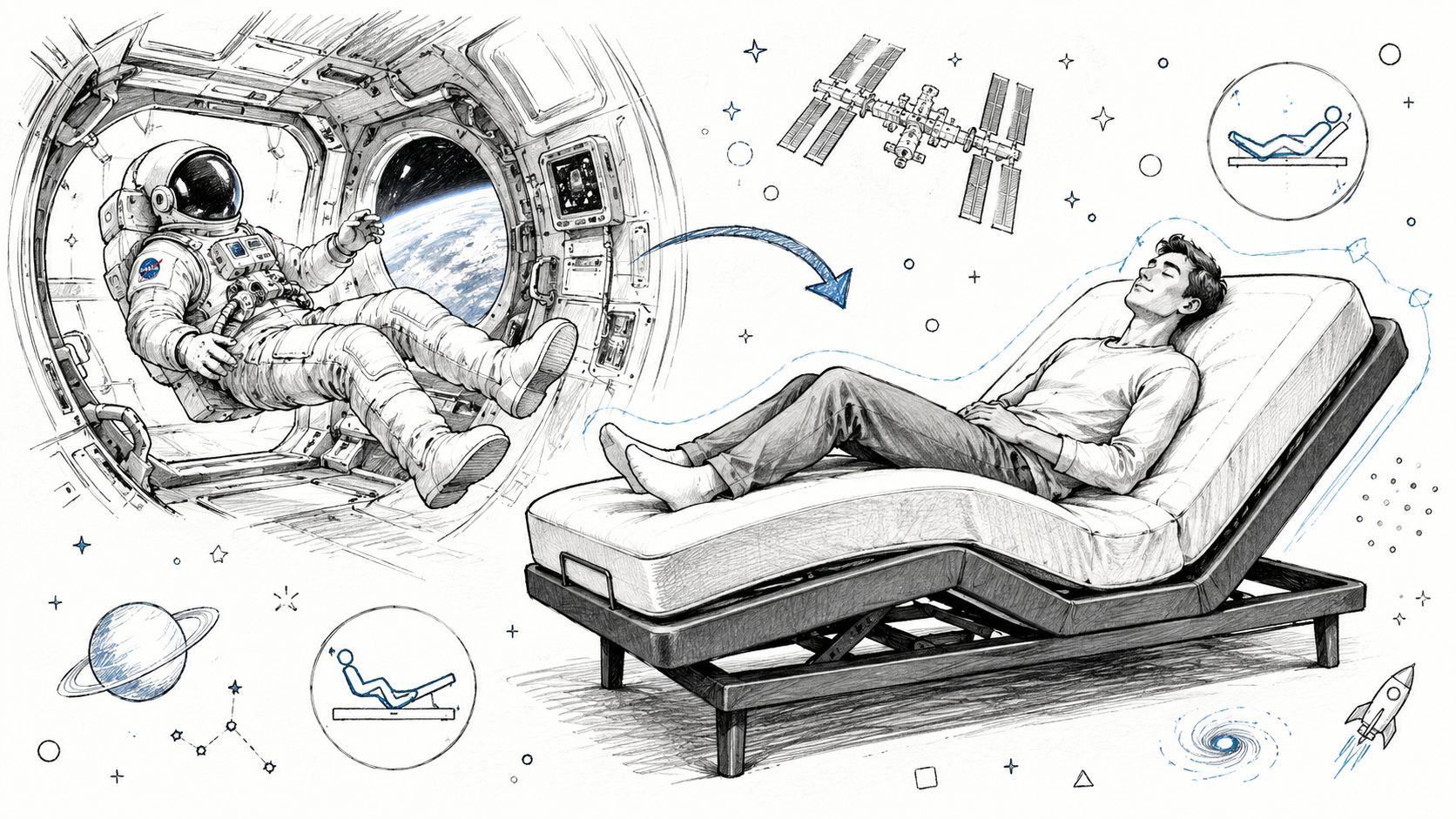
That mechanical definition matters. It means zero gravity isn't just a vague comfort label. It's a repeatable body position designed to spread force more evenly across the body instead of concentrating it in a few high-pressure zones.
Readers who want another plain-language overview can also look at this guide on exploring weightless sleep solutions, which helps illustrate why the position feels different from a basic recline.
Why the body responds so well to it
When a bed lies flat, the body's heavier areas tend to press downward in predictable places. The pelvis sinks. The lumbar area may flatten awkwardly or hover without enough support. The shoulders can take more load than they should.
An adjustable base changes those pressure patterns by lifting both ends of the body. The result is often a gentle cradle shape rather than a straight line.
For shoppers who are still learning the basics of adjustable bases, this explanation of how an adjustable base bed works helps connect the motion of the base to the comfort it creates.
What zero gravity feels like in real life
Many sleepers describe the sensation as being more “floated” than “propped up.” That distinction is important. A stack of pillows can lift the head, but pillows usually don't create the same balanced support under the knees and lower body. They compress, shift, and lose shape overnight.
Consumer guidance commonly places the head at about 20 to 30° and the knees at about 25 to 35°, creating a gentle V-shape intended to redistribute body weight, as explained in this angle-focused setup guide for zero gravity. That's why the preset tends to feel more consistent than trying to build the position with pillows alone.
A true zero gravity position should feel like the bed is meeting the body in the right places, not pushing the body into a pose.
Once that clicks, the feature starts to make sense. The sleeper isn't trying to sit up in bed. The sleeper is trying to reduce pressure, improve alignment, and create a position the body can relax into for hours.
Health and Comfort Benefits of Zero Gravity Sleep
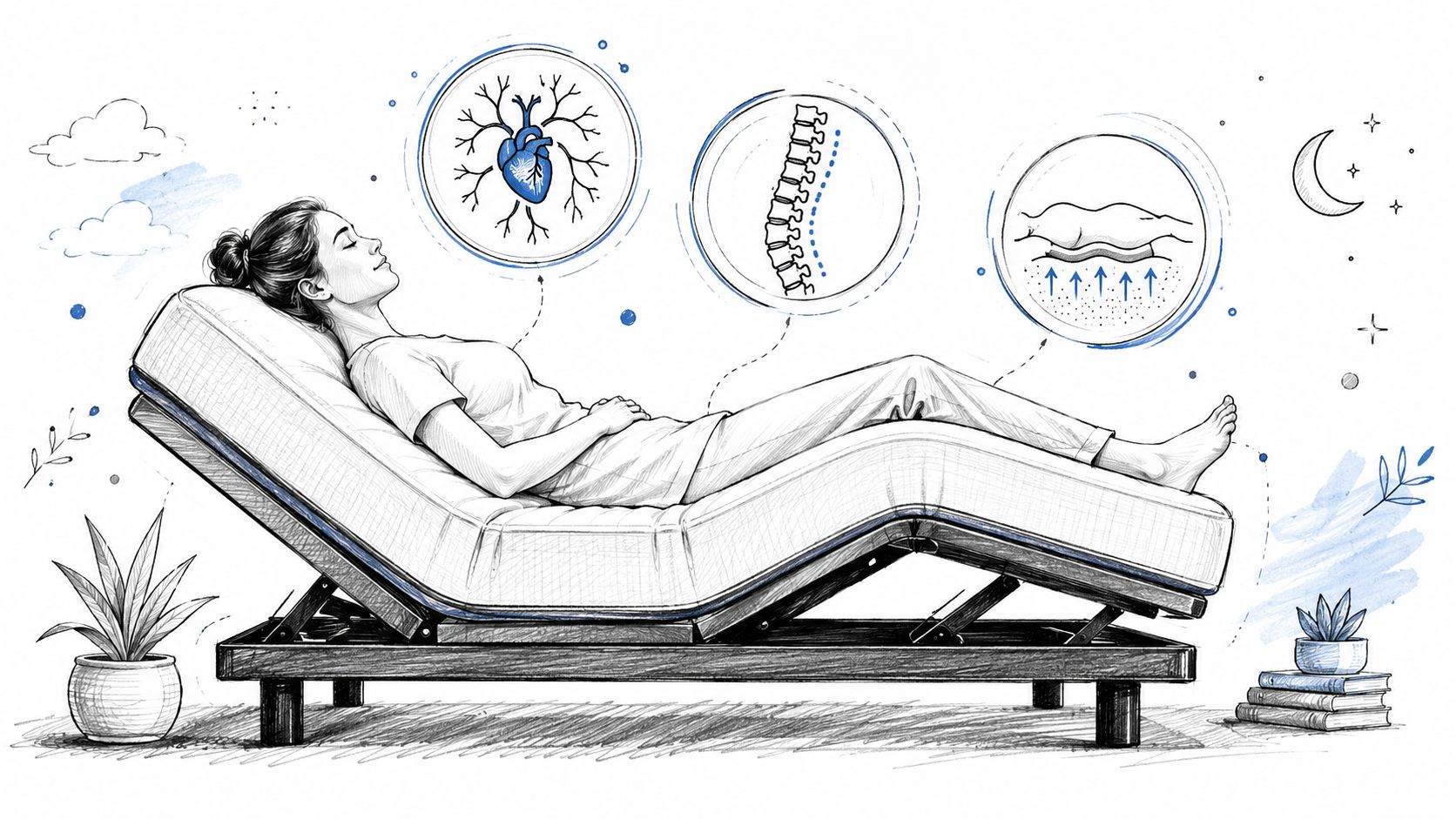
The biggest reason people care about zero gravity isn't the engineering story. It's what they feel after a few nights of using it well. The position can address several common sleep complaints by changing pressure, posture, and elevation in one move.
Common problems this position may help address
The first benefit many sleepers notice is less pressure through the lower back and hips. By elevating the legs and upper body, the base supports a more neutral spinal curve and reduces concentrated pressure across the pelvis, shoulders, and lumbar region, as explained in this biomechanical overview of zero gravity positioning. For someone who wakes up sore rather than injured, that change in load can be meaningful.
Another common win is easier leg comfort. People who deal with heavy, tired, or slightly swollen legs often prefer having the lower body raised instead of lying completely flat. The body doesn't have to fight the same downward pull for hours.
Head elevation also matters. Some sleepers use zero gravity because they or their partners notice snoring or less comfortable breathing when lying flat. Others want support for nighttime reflux or heartburn, where a raised upper body may feel more comfortable than sleeping level.
For readers focused specifically on posture and lower-back support, this resource on how to relieve back pain through sleeping positions offers helpful context on why alignment matters so much at night.
Sleep expert note: The benefit usually comes from the combination of head and leg elevation, not from lifting only one end of the bed.
People who are considering an adjustable base because of comfort or wellness concerns can also review this overview of health concerns adjustable bases may help address.
Why this feature has become mainstream
Zero gravity used to sound specialized. Today it's part of mainstream adjustable-base shopping. Major brands commonly include a dedicated preset, and one industry source says the adjustable bed market was valued at USD 4.38 billion and is projected to nearly double by 2033, according to this adjustable-bed market and zero-gravity overview.
That doesn't prove the position is perfect for everyone. It does show that buyers increasingly see adjustability as useful, not niche. People aren't only shopping for a mattress surface anymore. They're shopping for a sleep setup that can respond to the body they have.
Is the Zero Gravity Position Right for You
Zero gravity helps many sleepers, but it shouldn't be treated like a universal prescription. One person's ideal posture can feel awkward to someone else. The preset is a strong starting point, not a verdict.
Who often responds well
This position tends to make sense for sleepers who deal with morning stiffness, pressure through the lower back, heavy legs, nighttime reflux, or snoring that worsens when flat. It can also appeal to people who can't get comfortable lying fully horizontal for long stretches.
There's a practical reason for that. Zero gravity changes several things at once. It raises the upper body, bends the knees slightly, and redistributes weight. For a person whose discomfort comes from being too flat and too compressed, that combination may feel much better than adding another pillow or changing mattress firmness alone.
A quick self-check can help:
- Back discomfort on waking: If the lower back feels tight first thing in the morning, a more neutral supported position may help.
- Pressure at the hips or shoulders: If side or back sleeping creates hot spots, reducing concentrated load may matter as much as mattress feel.
- Reflux or snoring when flat: If symptoms feel worse lying level, upper-body elevation may be worth testing.
- Leg fatigue overnight: If the lower body feels restless or heavy, some leg elevation may feel more natural.
Who may need to customize the preset
Confusion often arises among shoppers. They assume zero gravity is a precise, one-size-fits-all angle that either works or doesn't. In reality, source guidance varies. Some describe a neutral posture around 120 degrees, while others cite more specific joint geometries. That variation highlights why the setting often needs to be personalized based on body type, mattress thickness, pillow height, and health goals, as discussed in this guide to individualized zero-gravity positioning.
A thicker mattress may change how far the body settles into the curve. A taller pillow may over-lift the head once the bed is already raised. A sleeper with hip sensitivity may want more bend at the knees, while another may want less.
The right question isn't “Is the preset correct?” The better question is “Does this setting keep the body relaxed, aligned, and comfortable through the night?”
The best candidates for zero gravity are often the people willing to test, notice, and adjust. The feature is most useful when the sleeper treats comfort as personal data instead of chasing a single “correct” angle.
How to Find Your Perfect Zero Gravity Setting
A zero gravity button is helpful, but the button itself isn't the final answer. The goal is to identify the setting where the body settles, the pressure eases, and sleep becomes less interrupted.
Start with the preset, then adjust with purpose
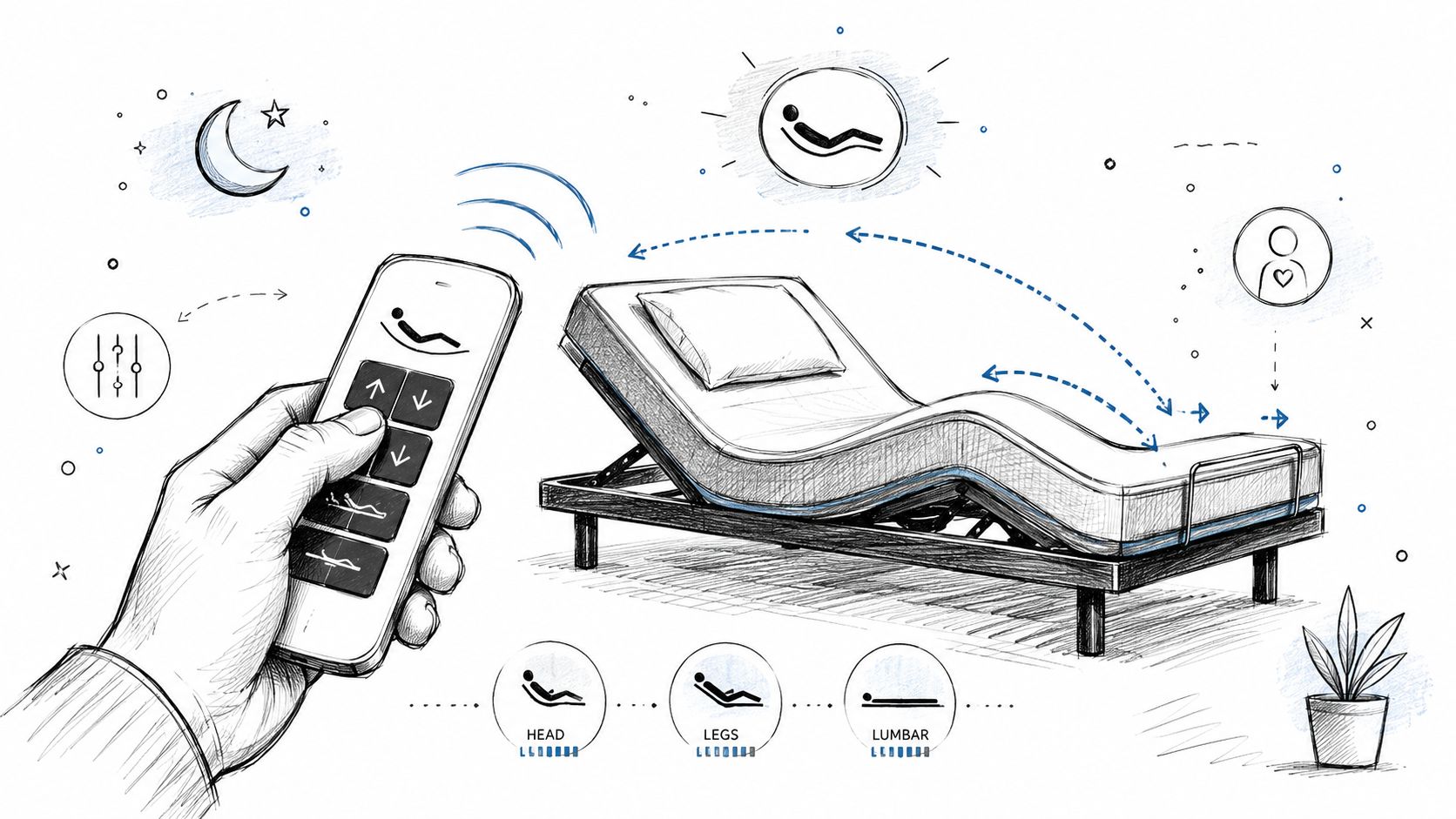
Most modern adjustable bases include a programmed zero gravity mode. That's useful because it creates a repeatable posture rather than a random recline. From there, the sleeper can fine-tune head or leg elevation in small increments.
A simple in-store test often works better than guessing at home with no reference point. When a shopper lies on an adjustable base and pays attention to the neck, lower back, knees, and heels, patterns show up quickly. Does the chin tilt too far down? Do the knees feel comfortably supported? Does the lower back soften or stay tense?
A practical product starting point is a mattress designed to flex cleanly with the base. This collection of mattresses for adjustable beds shows the type of sleep surface that pairs well with adjustable positioning.
Useful signs during testing include:
- The shoulders relax. If they stay braced, the upper-body angle may need adjustment.
- The lower back feels supported, not flattened. The body shouldn't feel forced into the mattress.
- The knees feel gently carried. Too little lift can leave the legs feeling long and tense.
- The neck stays neutral. If the pillow suddenly feels too tall, the problem may be the pillow, not the base.
A simple at-home testing method
The most reliable method is to test one variable at a time over several nights. Start with the preset. Leave it there for a night or two unless something feels clearly wrong right away.
Then adjust slowly.
- If the lower back still feels tight, add a little more leg elevation.
- If the neck feels crowded, reduce the head angle slightly or try a lower pillow.
- If reflux or snoring is the main issue, a bit more upper-body lift may be worth trying.
- If the knees feel too bent, back off the leg section a little.
Keep notes in plain language. “Less shoulder pressure.” “Feet felt too high.” “Woke up with no hip ache.” Those observations are more useful than trying to chase an exact formula.
Small adjustments usually work better than dramatic ones. The body tends to respond best when the position changes just enough to remove strain.
In-store testing can also speed up that process because sleepers can compare several feels in one visit. A trained sleep specialist can watch posture, ask where pressure builds, and help the shopper separate mattress issues from position issues. That saves time and reduces the chance of blaming the wrong part of the sleep setup.
One practical option is testing adjustable-base combinations at Miller Waldrop Furniture & Decor, where shoppers can work with Sleep Experts and use bed-matching technology to identify pressure areas before choosing a mattress and base combination.
The most important mindset is simple. The preset is the launch point. The sleeper's body gives the final answer.
Begin Your Journey to Better Sleep at Miller Waldrop
A lot of people start this search thinking they need a softer mattress or a firmer one. Sometimes they do. But sometimes the bigger breakthrough comes from changing position, not just surface feel. Adjustable bed zero gravity gives sleepers a way to reduce pressure, support alignment, and create a more comfortable posture that fits their actual needs.
That matters because discomfort isn't one-size-fits-all. One person needs relief through the lumbar area. Another needs easier breathing. Another just wants to stop waking up feeling folded, stiff, or sore. A personalized zero gravity setup gives those sleepers a tool they can use.
The advantage of shopping in person is that the body gets a vote before the purchase. A shopper can lie down, try the preset, make small adjustments, and notice where support improves. That's especially helpful when mattress thickness, pillow height, and body shape all affect how zero gravity feels in real use.
Miller Waldrop has served West Texas and Southeastern New Mexico for over 70 years and offers a practical environment for this kind of testing. Shoppers in Lubbock, Hobbs, and Ruidoso Downs can work with non-commissioned Sleep Experts, explore curated mattress and adjustable-base options, and use advanced bed-matching technology to better understand pressure points and comfort needs.
Better sleep often starts when the sleeper stops guessing and starts testing the right setup.
The goal isn't to chase a trend. The goal is to find a position that helps the body rest more easily tonight, and wake up feeling better tomorrow.
Ready to test whether zero gravity is the missing piece in a better night's sleep? Visit Miller Waldrop Furniture & Decor to explore adjustable bases, compare mattress options, and get a personalized sleep consultation in Lubbock, Hobbs, or Ruidoso Downs.