

Your Guide to Finding the Perfect 30 Pair Shoe Rack


The shoe pile usually starts with good intentions. Work boots land by the door after a long day, sneakers get kicked off in a hurry, kids' shoes drift into the hallway, and before long the entryway feels smaller, dustier, and harder to manage than it should. In West Texas and Southeastern New Mexico, that mess gets even more stubborn because everyday life includes grit, changing weather, and footwear that isn't all the same size or shape.
A well-chosen 30 pair shoe rack can change that fast. It doesn't just hold shoes. It creates a landing zone, protects walkways, and helps a busy home feel settled the minute someone walks in. The right one can also handle the realities that national advice often skips over, like taller boots, dusty air, garage overflow, and the need to keep daily pairs easy to reach without turning the whole room into visible clutter.
Table of Contents
- Conquer the Shoe Pile An Introduction to Order
- Measure Twice Buy Once Planning Your Space
- Decoding Durability Materials and Must-Have Features
- Open Shelving vs Closed Cabinets A Regional Perspective
- Smart Placement and Organization for Your Home
- Find Your Perfect Storage Solution at Miller Waldrop
Conquer the Shoe Pile An Introduction to Order
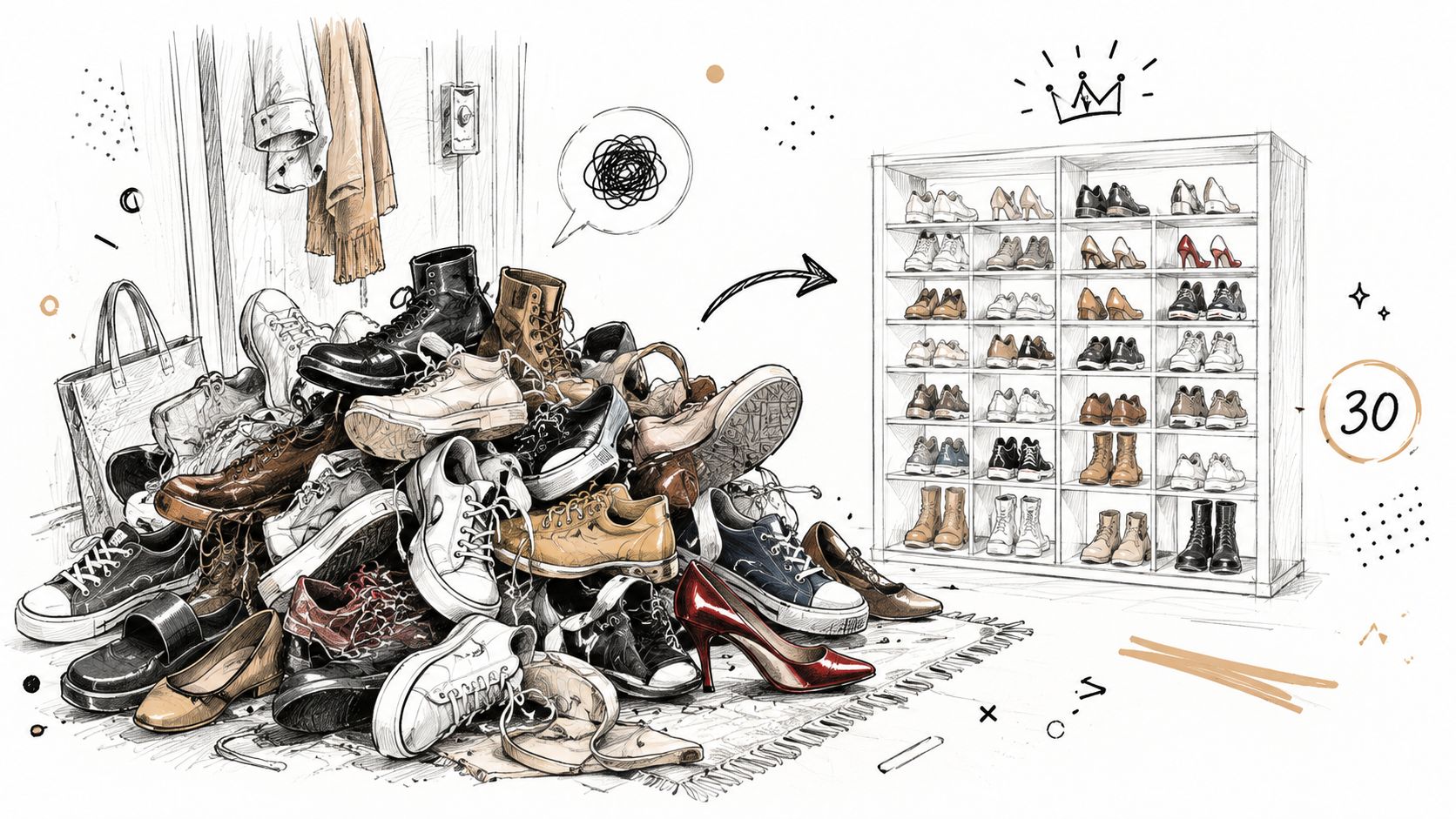
Most families don't have a shoe problem. They have a system problem. Shoes collect wherever people stop moving, which is why the front door, mudroom, and hallway become catch-all zones so quickly.
A 30 pair shoe rack works because it gives every pair a home before clutter spreads. That's especially useful for households that juggle school shoes, work shoes, church shoes, athletic shoes, and boots through the same doorway. Once shoes have a dedicated place, the room starts working better. People can find what they need, floors stay clearer, and sweeping up West Texas dust gets easier.
That demand for order isn't small. The global shoe storage market was valued at $12.8 billion in 2025 and is projected to reach $18.9 billion by 2033, according to shoe storage market data from Dataintelo. That growth points to a simple reality. Homeowners want storage that solves real daily friction.
Why a 30 pair size makes sense
A smaller rack often fills up too fast in a family home. An oversized system can swallow the room and still fail if the shelves don't fit the shoes people wear.
A 30 pair range often hits the practical middle. It's large enough for daily rotation, shared household use, and a few seasonal pairs, but still compact enough to fit an entryway, closet wall, or mudroom corner without taking over.
Practical rule: Choose storage for the shoes that need to live near the door, not for every shoe in the house.
That one decision keeps the main living area usable. Special occasion heels, out-of-season pairs, and backup work boots can live elsewhere. The entry should support the week, not the whole year.
What a good shoe rack should do
The best shoe storage earns its footprint. It should:
- Clear the floor: Fewer shoes loose on the ground means safer walking paths.
- Match household habits: Kids need low access. Adults need quick grab-and-go shelves.
- Handle local conditions: Dust protection, boot storage, and easy cleaning matter in this region.
- Look intentional: Shoe storage should feel like part of the home, not an afterthought.
A 30 pair shoe rack isn't magic. But when the size, layout, and placement fit the household, it can do what clutter rarely allows. It can make the first and last few minutes of the day feel calmer.
Measure Twice Buy Once Planning Your Space
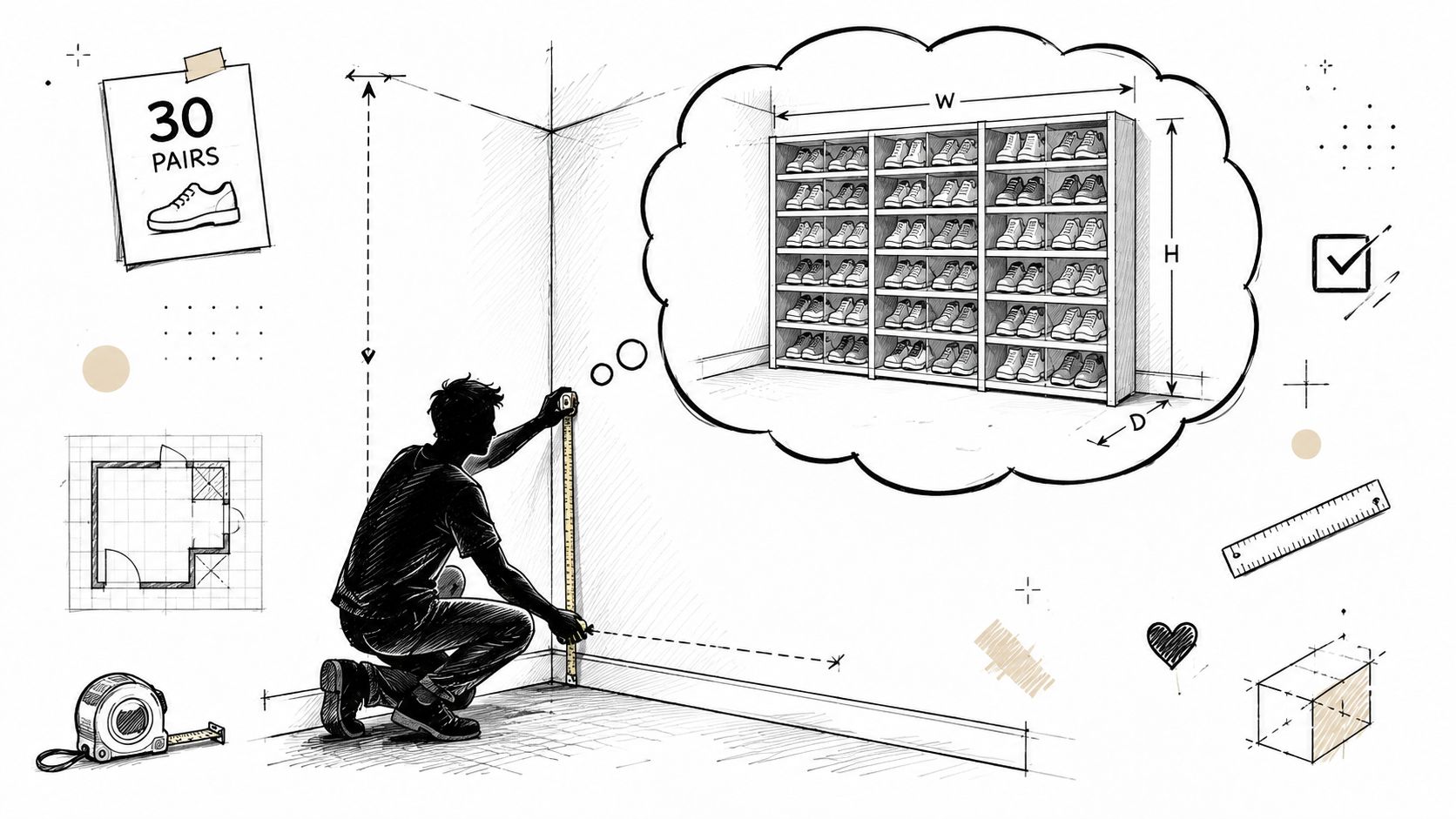
Buying shoe storage before measuring is one of the fastest ways to waste money. A rack can be attractive, well built, and completely wrong for the spot where it needs to live. That's why planning starts with the room, not the product.
Start with the traffic path
Measure the width of the wall, then measure what still has to happen around that piece. Doors need to swing. People need to pass through without turning sideways. Entry benches, rugs, and nearby furniture all affect whether a shoe rack feels tidy or crowded.
For homeowners who need a little help mapping the room, this guide on figuring out square footage is useful for getting a clearer sense of what the area can realistically hold. It also helps to compare those dimensions with a local room-planning tool for calculating square feet in a room before choosing entryway storage.
A tall cabinet can work beautifully in a narrow footprint. A 10-tier shoe rack offers a footprint of 12.2"D x 25.6"W and reaches 70.86"H while holding up to 30 pairs, as shown in this Home Depot product listing for a tall 10-tier shoe cabinet. That kind of shape makes sense in compact entryways because it builds upward instead of blocking the walkway.
Choose height or width on purpose
Some homes need a tall, shallow unit. Others need a lower, wider piece that sits under artwork or beside a door without crowding the line of sight. The right answer depends on how the room functions.
Use this quick filter:
- Choose tall and narrow if the hallway is tight, the wall is short, or floor space is limited.
- Choose low and wide if the piece may double as a landing spot for bags, keys, or decor.
- Choose enclosed storage if dust control matters more than instant visibility.
- Choose open shelving if quick access is the top priority and the shoes look orderly when visible.
Leave enough breathing room around the piece so the storage solves congestion instead of creating it.
Three measurements that matter most
A tape measure can save a lot of frustration. Focus on these:
- Usable width: Measure the actual wall space, not the wall on paper. Trim, outlets, and door casings count.
- Depth allowance: In a hallway or entry, shallow usually works better. The piece shouldn't force people into an awkward path.
- Vertical clearance: Tall storage is helpful, but only if it doesn't interfere with switches, art, or visual balance.
Many families in this region do best with a split setup. A compact unit near the entry holds everyday pairs, while closet or garage storage handles overflow. That keeps the front of the home from doing too much heavy lifting.
Decoding Durability Materials and Must-Have Features
Price gets attention first, but construction decides whether a shoe rack still works after daily use, dust, and constant loading. In busy homes, weak materials show themselves quickly. Shelves bow. Fabric stretches. Lightweight frames start wobbling every time someone grabs a pair from the top row.
Why material matters in real homes
Metal racks usually make sense for utility spaces, garages, and mudrooms. They're straightforward, often easier to wipe down, and they don't mind a more hardworking environment. If the goal is pure function, metal is hard to dismiss.
Wood and engineered wood cabinets bring a different strength. They look more finished in an entryway and do a better job of blending with the rest of the home. In a visible space, that furniture-like presence matters. It keeps storage from looking temporary.
Fabric and lightweight plastic units can help in short-term situations, but they rarely feel grounded in a long-term family setup. They're best used when budget or flexibility matters more than polish and longevity.
A durable rack also depends on details people miss at first glance:
- Shelf attachment: Fixed shelves often feel sturdier, but they can limit flexibility.
- Back support: A solid back panel or cross-support helps prevent racking and wobble.
- Surface finish: Dust shows quickly on some finishes. Mid-tone and textured surfaces tend to be easier to live with.
- Weight tolerance: A rack loaded with family footwear has to handle repeated daily stress, not just look good in a listing photo.
For anyone comparing materials beyond furniture, this breakdown of how to choose durable labels is a useful reminder that longevity comes down to repeated wear, cleaning, friction, and environment. The same thinking applies to home storage. A piece has to perform under real conditions, not just on day one. That's also why it helps to think about how long furniture should last before choosing a bargain piece that may need replacing too soon.
The 30-pair promise versus actual fit
Many buyers get frustrated. A unit can be marketed as a 30 pair shoe rack and still fail in everyday use because not all shoes are shaped the same way.
According to user experiences discussed in this decluttering thread, standard racks marketed for 30 pairs often only fit 25 pairs of mixed-height shoes. That gap is common when a household owns boots, wedges, larger men's shoes, or bulkier athletic styles.
A 30-pair label often means ideal conditions. Real capacity depends on the shoes, not the headline.
That's why fixed narrow tiers can disappoint. They may fit flats and low sneakers neatly, but they waste vertical room above low-profile shoes and don't leave enough height where taller footwear needs it.
Features worth paying for
A strong layout solves more than a strong frame. The most useful features tend to be practical, not flashy.
- Adjustable shelves: These make room for boots, high tops, or taller heels without sacrificing the whole unit.
- Closed doors: Helpful in dusty climates and in rooms where visual calm matters.
- Open bottom clearance: Useful for grab-and-go pairs that shouldn't require opening doors every time.
- Stable proportions: A tall rack needs the right footprint so it doesn't feel top-heavy.
If boots are part of the weekly routine, adjustable storage isn't a bonus. It's the difference between a rack that works and one that creates a second pile next to itself.
Open Shelving vs Closed Cabinets A Regional Perspective
In West Texas and Southeastern New Mexico, this decision affects more than style. It affects maintenance. Dust finds open surfaces quickly, and entryways already work hard enough without asking them to display every pair of shoes in the house.
What works best in dusty country
Open shelving has a place. It gives fast visibility, better airflow, and easy access for families who are constantly coming and going. In a mudroom or garage transition area, that convenience can be worth a lot.
Closed cabinets solve a different problem. They hide visual clutter and shield shoes from the fine layer of dust that settles in this region, especially near active entries and exterior doors. They also help a home feel calmer because the eye reads furniture, not footwear.
The right choice depends on personality as much as floor plan. Some households stay organized with open shelves because everyone puts shoes back neatly. Others need doors because even orderly families don't want to look at a wall of sneakers, sandals, and boots every day.
In a dusty climate, hidden storage often feels cleaner even before the mop comes out.
Open vs. Closed Shoe Storage Comparison
| Feature | Open-Shelf Racks | Closed Shoe Cabinets |
|---|---|---|
| Visibility | Easy to see every pair at a glance | Shoes stay out of sight |
| Dust protection | Shoes stay exposed to everyday dust | Better protection from dust and debris |
| Ventilation | Strong airflow for recently worn shoes | Less airflow, though still workable with routine rotation |
| Visual appearance | Can look casual or cluttered fast | Creates a cleaner, more furniture-like look |
| Ease of access | Quick grab-and-go use | Slightly slower because doors must be opened |
| Best location | Mudrooms, garages, utility zones | Entryways, hallways, living-adjacent spaces |
| Best for boots and mixed styles | Works well if shelves are flexible and open | Works well if interior shelves can be adjusted |
A practical compromise works well in many homes. Use an open rack in the mudroom or garage for dirty work shoes and daily boots, then use a closed cabinet in the main entry for the cleaner, everyday pairs people want close by.
That approach respects both how people live and how regional dust behaves. It also keeps the front of the house from carrying the full burden of the household's footwear.
Smart Placement and Organization for Your Home
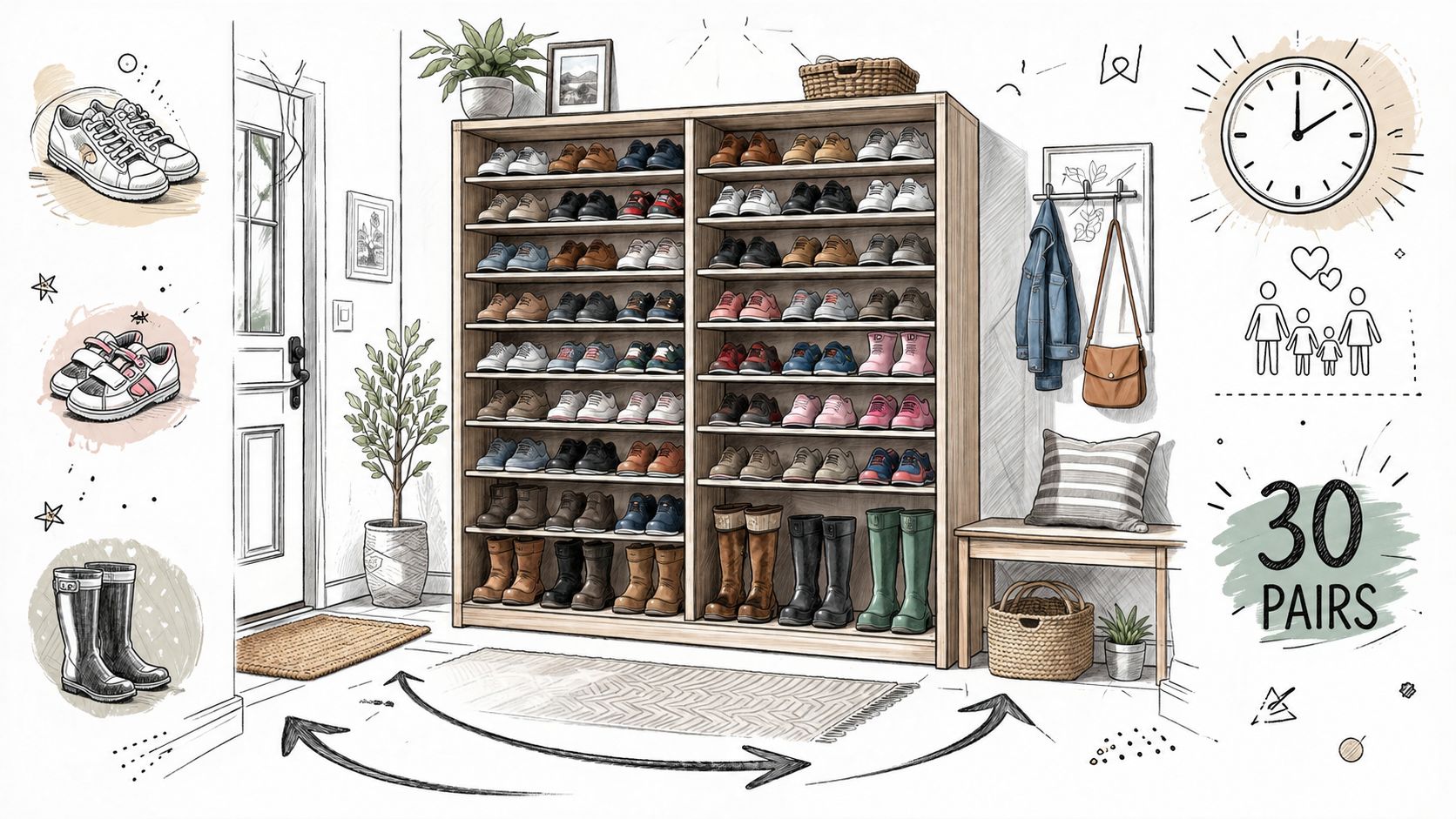
The best shoe rack can still fail if it lands in the wrong spot. Placement has to match the way the household moves. Shoes should stop where people naturally take them off, not where a storage piece happens to fit.
Build a drop zone that matches daily life
In a family home, the entryway usually handles the first wave. That's where school shoes, everyday sneakers, and quick errand pairs need to live. If the front door opens straight into the living space, a closed cabinet often keeps things looking more settled.
Mudrooms are ideal for the messier category. Work boots, ranch boots, cleats, and shoes that carry in dust belong in the part of the home designed to absorb wear. If a mudroom isn't available, a garage-adjacent zone can serve the same purpose.
Closets can take the overflow. That's often where less-used shoes, occasion footwear, and off-season pairs should go. Homeowners who want inspiration for more custom storage layouts may enjoy seeing how designers think about custom closets for South Jersey homes. The location is different, but the organizing principle is useful anywhere. Daily-use items stay accessible, while less-used categories move deeper into the home.
Organize by who uses what
A 30 pair shoe rack works best when it reflects the people using it. Generic shelf assignments don't last long. Clear zones do.
Consider a setup like this:
- Lowest shelves: Kids' shoes, because they need easy reach and they change pairs often.
- Middle shelves: Daily adult shoes, which should be visible and quick to grab.
- Upper shelves: Occasion pairs or items used less often.
- Separate zone for boots: Taller footwear needs breathing room and shouldn't be jammed sideways if the rack isn't built for it.
This also helps with cleaning. When each section belongs to a person or a category, shoes are easier to put back and easier to sort when the collection starts growing past the rack.
Keep the most-used pairs in the easiest reach zone. Storage should support the morning rush, not slow it down.
A simple maintenance rhythm keeps the system from slipping:
- Rotate seasonally: Move sandals, heavy boots, or holiday footwear out when they're not in use.
- Edit regularly: If a pair hasn't been worn in a long time, it may not deserve prime entryway space.
- Protect the floor: A mat or washable runner near the rack helps catch dust and grit before it spreads.
- Use the one-in one-out habit: New shoes come in, older ones get reconsidered.
A tidy entry doesn't require perfection. It requires a setup that respects daily habits and makes the right choice the easy choice.
Find Your Perfect Storage Solution at Miller Waldrop

A shoe rack should solve a clutter problem without creating a style problem. That's where many homeowners get stuck. Utility pieces can hold shoes, but they don't always belong in the spaces where family and guests enter the home every day.
What to look for before bringing one home
A smart choice starts with the checklist that matters most in this region:
- Dust control: Closed or partially closed storage usually works better in visible areas.
- Boot flexibility: If the household wears western boots, work boots, or taller fashion boots, shelf adjustability matters.
- Stable construction: A family-sized rack needs to stay solid under daily use.
- Furniture presence: In a front entry, the piece should contribute to the room instead of reading like garage storage.
Adjustability is one of the strongest features to prioritize. According to this product reference for an adjustable shoe storage cabinet, adjustable shelves can increase storage efficiency by up to 20% compared with fixed-height racks by reducing wasted space and fitting everything from flats to boots. That's a practical gain, not a decorative one.
For shoppers exploring more built-in-looking entry solutions, entryway lockers with doors are also worth considering. They solve the same underlying problem with a more furniture-forward approach, especially in homes that need shoes, bags, and outerwear to work together.
When furniture should solve more than one problem
The strongest storage pieces do more than hold shoes. They support the rhythm of the home.
A closed cabinet can anchor an entry wall. A console-style piece can hide footwear while giving space for a lamp, tray, or seasonal decor. A taller storage unit can turn an underused wall into something functional without eating up valuable square footage.
That's the kind of trade-off that matters. A bargain rack may solve capacity for the moment, but a thoughtfully chosen storage piece can improve the whole room. It reduces visible clutter, cuts cleaning frustration, and gives the home a stronger sense of order.
For homeowners in Lubbock, Hobbs, Ruidoso Downs, and surrounding communities, local guidance matters because local conditions matter. Dust, boots, mixed-use entries, and hardworking family spaces all change what counts as the right solution. The right storage isn't the one with the biggest label. It's the one that fits the room, the footwear, and the way the household lives.
If shoe clutter is taking over the entry, mudroom, or hallway, Miller Waldrop Furniture & Decor can help turn that problem into a polished, workable solution. From furniture-quality entry storage to hardworking pieces that suit real family life in West Texas and Southeastern New Mexico, the team offers the tools homeowners need to create cleaner drop zones, better flow, and a more welcoming home. Browse the selection, explore practical storage options, and visit a showroom to find a piece that fits the space, the style, and the way the household lives every day.