


Extra Large Bedspreads: A Buyer’s Guide to a Perfect Fit


You bought a beautiful new mattress. It's thicker than your last one, maybe you added a topper, and now the bedspread that used to work suddenly looks skimpy. The sides barely cover the mattress, the corners ride up, and the whole bed feels unfinished no matter how carefully you make it.
That frustration is common in West Texas and Southeastern New Mexico homes, especially when bedrooms mix modern mattresses with older bed frames, taller box springs, or adjustable bases. The good news is that the fix usually isn't complicated. You don't need more pillows or a fussy bed skirt. You need the right bedspread size, the right fabric, and a clear way to measure.
Beyond the Standard Size What Are Extra Large Bedspreads
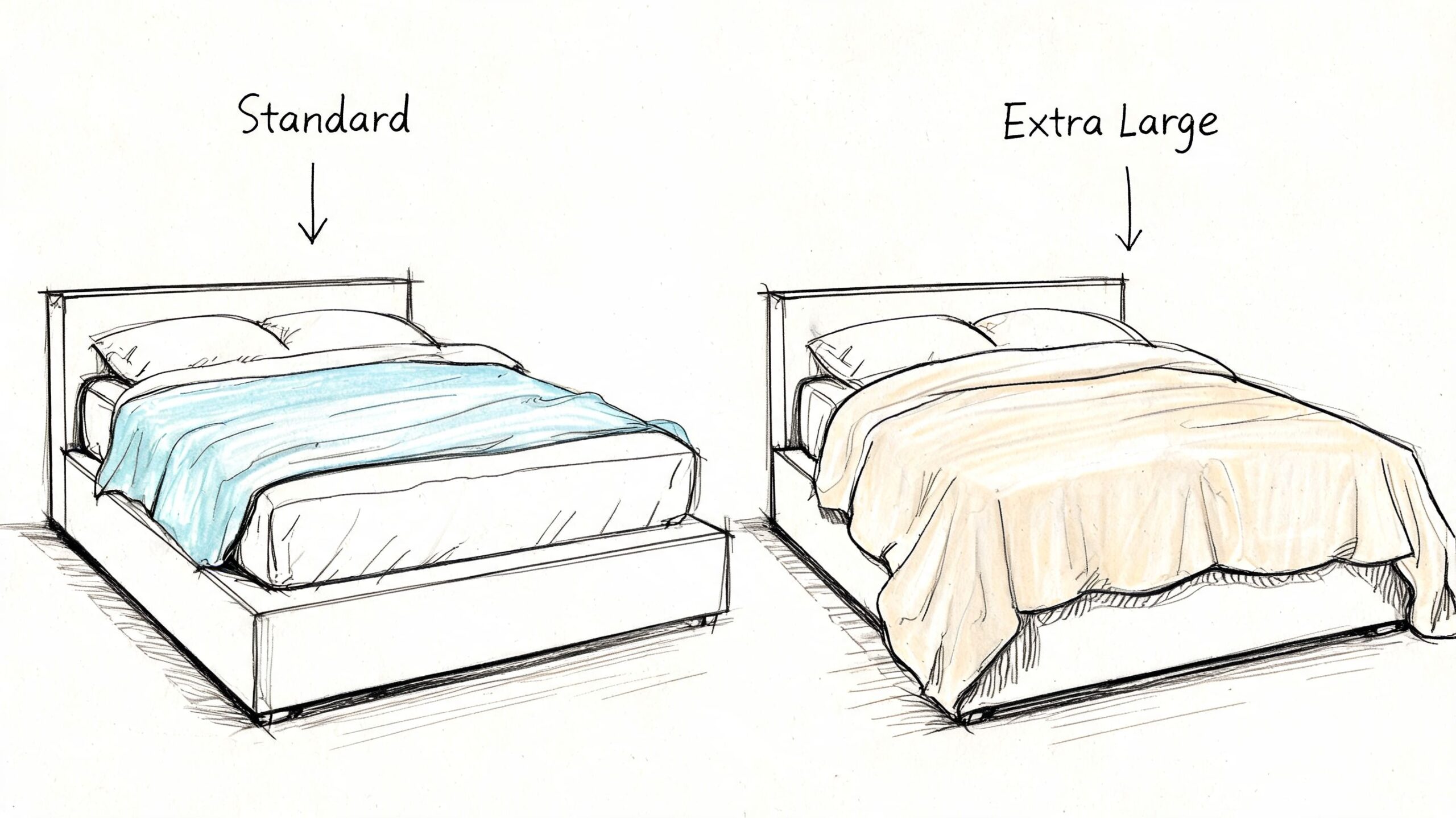
This problem occurs frequently with modern beds. The mattress is taller, the corners are thicker, and an adjustable base changes how the bedding falls. A standard bedspread may fit the mattress label, yet still look undersized once it is on the bed.
An extra large bedspread is made for that real-world difference. It gives you more width and length so the fabric can fall over deep mattress sides and still look balanced at the foot of the bed. In design terms, proportion matters as much as color. A bed that is properly covered looks settled, finished, and easier on the eye.
Why standard bedding often falls short
Size names can be misleading. "Queen" and "king" describe the mattress, but they do not tell you how much drop you will get once the spread comes over the sides. That is why two king beds can need very different bedspread sizes.
As noted in the Sleep Foundation's comforter size guidance, oversized bedding is intended to provide more coverage beyond the mattress edges than standard options. That extra fabric is what creates the fuller drape many homeowners want, especially on thicker mattresses.
A simple way to picture it is to compare curtains. Panels that barely reach the window frame look skimpy, while panels with enough width and length make the whole wall feel complete. Bedspreads work the same way. The right amount of overhang changes the room.
What extra large bedspreads solve
In homes across West Texas and Southeastern New Mexico, I often see the same three fit problems. Deep mattresses expose the sidewall. Adjustable bases make shorter spreads creep upward when the head of the bed is raised. Taller bed setups can leave the foot looking abruptly cut off.
An extra large bedspread helps solve those issues by giving you:
- Better coverage on deep or pillow-top mattresses
- A cleaner, more custom-looking drape
- Less daily tugging to straighten the sides
- Enough fabric to work with adjustable bases more gracefully
- A simpler look that may reduce the need for a separate bed skirt
That last point matters more than many shoppers expect. If you want a bedroom to feel calm instead of crowded, one well-fitted spread often does more than layers of extra bedding.
The difference in a real bedroom
This is especially true with modern sleep setups. Adjustable bases, cooling toppers, and deep-profile mattresses have changed what "fits" means. Bedding that looked fine on a lower mattress ten years ago may come up short on a bed you buy today.
That is why we encourage clients to look beyond the package label and check actual dimensions first. Our bed sheet measurements guide is a helpful starting point, and this partner guide to finding your perfect fit can also help you compare how different bedding categories are sized.
At Miller Waldrop, in-person design help makes a real difference. We can look at your mattress height, bed frame, and adjustable base together, then help you choose a spread that fits the way your bed is built. If stock sizes still leave you short, custom ordering gives you the best path to a polished result with a fit you can feel confident about.
Extra large bedspreads are not just larger versions of standard bedding. They are proportioned for the beds people are using now.
How to Measure for the Perfect Drape
The most common mistake isn't picking the wrong color or fabric. It's skipping the measuring step and guessing based on mattress name alone.
If your bed has a thick profile or sits on an adjustable base, guessing usually leads to a bedspread that's too short on the sides or awkward at the foot. A few minutes with a tape measure will save you from that problem.
Start with three measurements
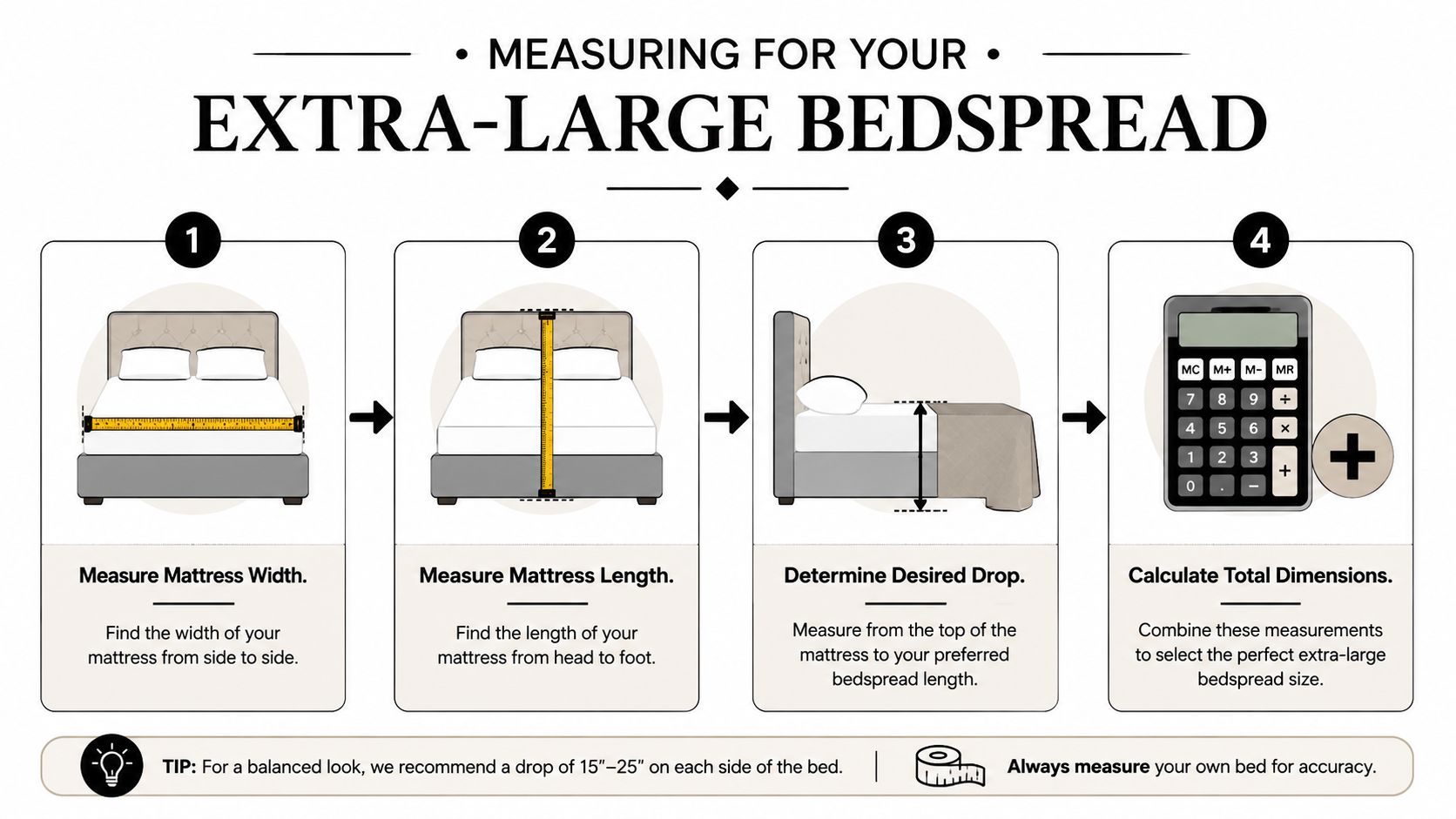
Use a soft tape measure and write down these numbers:
Mattress width
Measure from side to side across the top.Mattress length
Measure from head to foot across the top.Desired drop
Measure from the top edge of the mattress down toward the floor. This tells you how much drape you want on each side.
If you have a topper, include it. If your bed sits on a box spring, pay attention to whether you want the bedspread to cover that too.
Use a simple formula
A reliable starting point is:
- Bedspread width = mattress width + (drop x 2)
- Bedspread length = mattress length + desired end drop
For taller bed setups, broader rules are helpful too. For a standard king mattress measuring 76" x 80", an extra large bedspread typically measures at least 120" x 122", and one sizing recommendation is to measure your full stack height and add 40 to 50 inches to the bed's width and length, especially for adjustable bases, according to this oversized bedspread measuring reference.
Practical rule: Measure the bed you actually have, not the mattress size printed on the receipt.
Standard versus extra large dimensions
Here's a quick way to think about the difference.
| Mattress Size | Standard Bedspread (Approx.) | Extra Large Bedspread (Approx.) |
|---|---|---|
| Twin | Standard options are typically closer to basic mattress coverage | 80" x 110" |
| King | Standard options often leave less side drop on deep mattresses | 120" x 122" or larger |
If you'd like a second reference point while you compare bedding dimensions, this guide to finding your perfect fit is a useful companion resource.
Where shoppers get tripped up
The biggest confusion is the word “king.” One king bedspread can be generous, while another can be barely adequate for a deeper mattress. That's why measurement matters more than the size label.
Another issue is forgetting the total bed height. In homes around Lubbock, Hobbs, and Ruidoso Downs, it's common to see thicker mattresses paired with substantial frames or adjustable foundations. If that sounds familiar, use your actual bed dimensions and compare them with a dedicated bed sheet measurements guide so your layers work together.
A final note on drape. Decide whether you want the bedspread to skim the rails, cover the box spring, or fall close to the floor. None of those choices is wrong. But each one requires a different number.
Finding Your Ideal Fabric and Style
A bedspread can fit beautifully on paper and still disappoint you every night. In Midland or Roswell, that usually shows up in one of two ways. The fabric feels too warm by bedtime, or it looks stiff and awkward once it has to bend with a deep mattress or an adjustable base.
That is why I tell clients to choose fabric and style the way they choose flooring or upholstery. You are not only picking a color or a pattern. You are choosing how the room feels, how the bedspread hangs, and how much fuss it will require in real life.
Start with climate and bed function
West Texas and Southeastern New Mexico bedrooms often need bedding that can handle warm nights, dusty conditions, and strong temperature swings between seasons. For that reason, breathable fabrics such as cotton are often the easiest starting point. Cotton generally feels familiar, washes well, and works for homes that need comfort without a lot of maintenance.
If your bed sits on an adjustable base, fabric behavior matters just as much as appearance. A heavily structured spread may look handsome when the bed is flat but bunch up when the head or foot lifts. Softer woven fabrics and lighter quilted styles usually drape more naturally over moving sections, which helps the bed look neat instead of strained.
How each fabric and finish changes the look
The fastest way to narrow your options is to decide what mood you want the room to have.
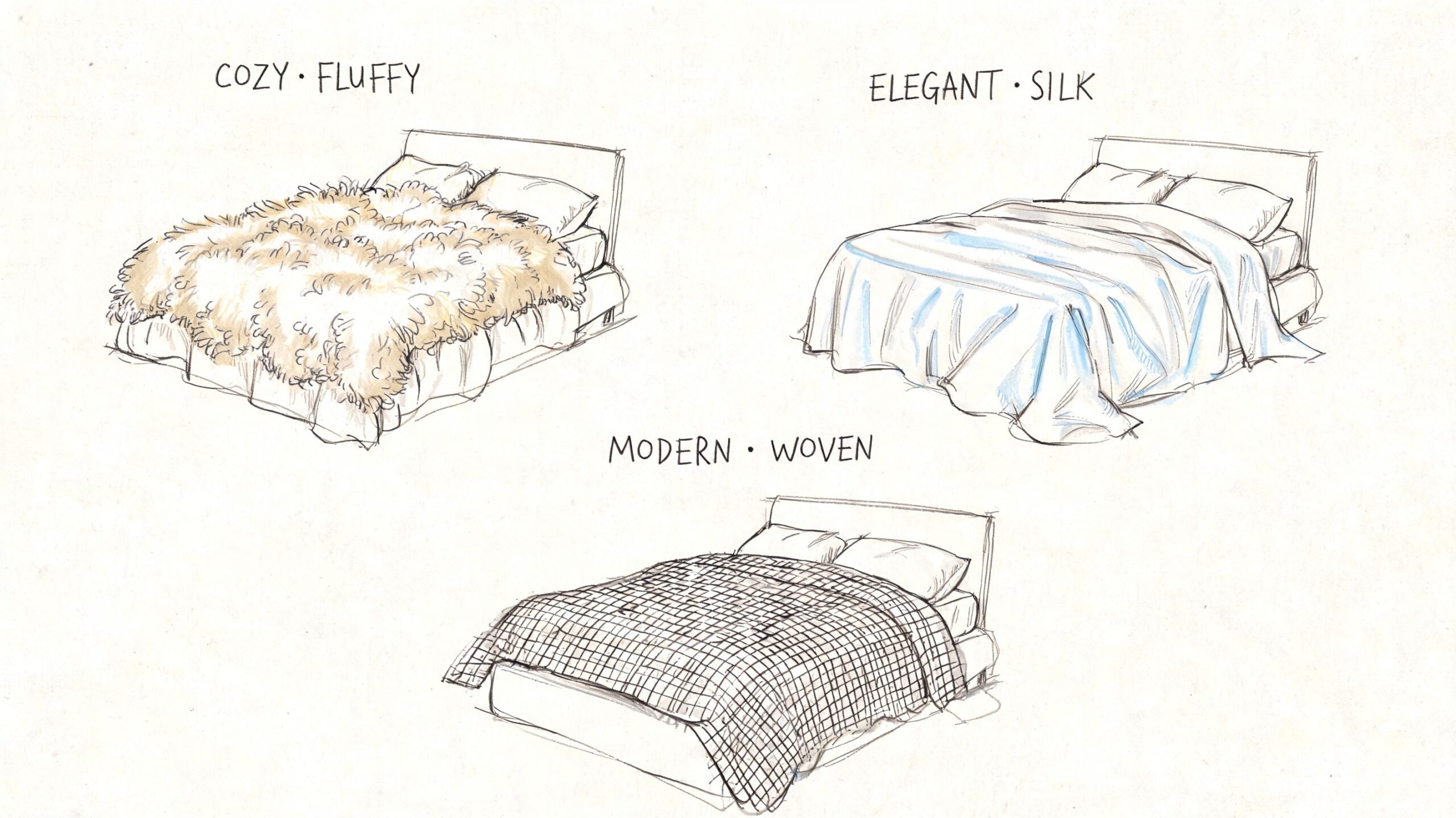
- Quilted bedspreads give the bed more shape and visual order. They suit traditional rooms, family homes, and spaces with substantial wood furniture.
- Matelassé and textured woven styles add depth without relying on bold prints. They are a smart choice if your bedroom already has color in the rug, drapery, or artwork.
- Smooth cotton or cotton-blend weaves look cleaner and quieter. They fit well in more current bedrooms and are often easier to pair with adjustable beds because they fold and move more willingly.
- Dressier woven patterns, including jacquard-style looks, bring formality. These work best when you want the bed to feel finished and a little more refined.
A simple rule helps here. The more going on elsewhere in the room, the calmer the bedspread should be.
Match the bedspread to the way you live
A guest room and an everyday primary bedroom do not need the same fabric. If you have pets that jump up, children who sit on the bed, or a habit of folding the spread back each morning, easy-care materials usually make better sense than delicate decorative ones.
Comfort matters, too. If sleep temperature is part of the problem, our team often suggests starting with breathable layers and then reviewing the rest of the bed as a system. Miller Waldrop shares more ideas in this guide on how to improve sleep quality.
Where in-person help makes the difference
This is often the point where online shopping gets frustrating. Two bedspreads can both be labeled cotton, oversized, and king, yet one will skim a modern deep mattress beautifully while the other will pull short at the corners or fight the motion of an adjustable base.
In our showroom, we help clients compare weight, texture, drape, and finish in person, then custom order the size that works for their bed and foundation. That matters if you want a guaranteed fit rather than a close-enough guess. The right bedspread should feel good at night, look right in daylight, and fit your bed the way it was meant to be there.
Styling Your Bed with an Oversized Spread
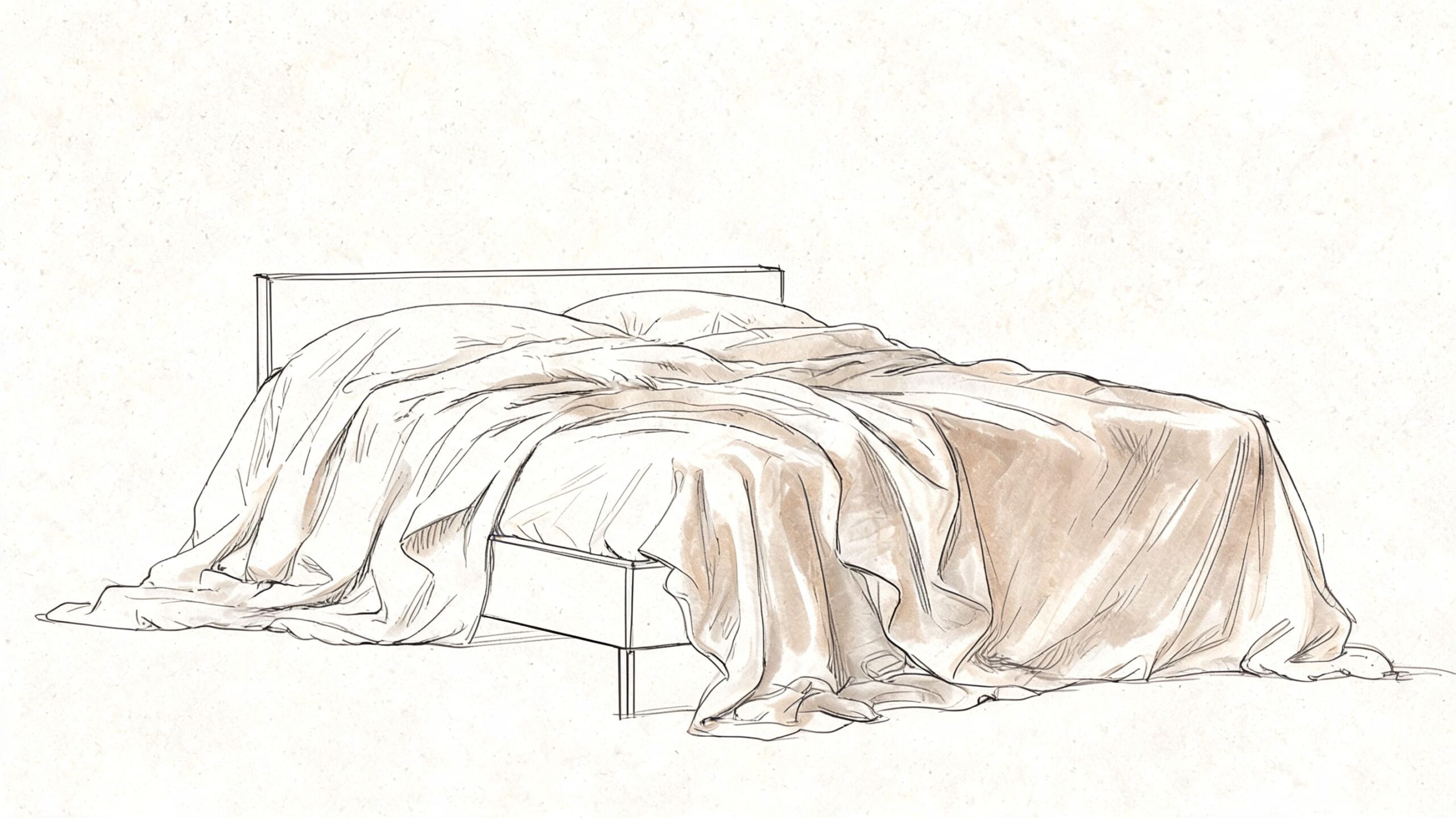
An oversized spread changes more than fit. It changes how you style the entire bed because you have enough fabric to shape the look on purpose.
I've seen the same bedroom feel polished, relaxed, or dramatic just by changing how the spread falls and what sits on top of it. The bed doesn't need dozens of accessories. It needs a clear point of view.
For a neat and tailored bed
If you like order and symmetry, pull the bedspread smooth across the mattress and let the sides hang evenly. Fold the top edge back just enough to reveal your sheets or a blanket underneath. Add matching shams and a pair of euro pillows.
This works especially well in traditional bedrooms, guest rooms, or spaces with substantial wood furniture. The larger spread gives you clean lines instead of the skimpy look that happens when standard bedding has to stretch.
For a relaxed layered look
A looser arrangement feels inviting and easy. Let the spread drape naturally, then place a folded quilt or throw across the lower third of the bed. Use pillows in mixed textures rather than a perfectly matched set.
That approach works beautifully in homes where the bedroom needs to feel calm rather than formal. If sleep comfort is part of your design plan, these small styling decisions pair well with broader habits that support rest, like those shared in this article on ways to improve sleep quality.
Three easy styling formulas
Minimalist room
One oversized spread, two sleeping pillows, two euro shams. Keep the palette close in tone.Family-friendly room
Oversized spread, washable accent layer at the foot, fewer decorative pillows so the bed is simple to remake.Plush primary bedroom
Oversized spread, coverlet or quilt folded at the bottom, euros at the back, standard shams in front, one lumbar pillow to finish.
Let the drape do some of the decorating. When the proportions are right, you don't need to over-style the bed.
The best part of extra large bedspreads is that they make styling easier. You're working with enough fabric to create shape, softness, and presence without fighting the bed.
Keeping Your Bedspread Looking New
A bedspread that fits beautifully can lose its shape fast if it is cleaned the wrong way. I see this often with newer sleep setups in West Texas and Southeastern New Mexico, especially on tall mattresses and adjustable bases. The spread looks perfect in the room, then a too-small washer, too much heat, or rough handling leaves it twisted, puckered, or shorter than it started.
The care label is your starting point. Good Housekeeping advises checking both the fabric instructions and your washer capacity before cleaning bulky bedding at home, because items need room to move through water and rinse properly. That matters with oversized pieces, since size alone can make a washable bedspread hard to wash well.
A simple rule helps here. If the bedspread fills the drum so tightly that you have to press it in, the washer is probably too small for an effective wash. GE Appliances makes a similar point in its washer capacity guidance. Bulky bedding needs enough space to circulate, or soap and moisture can stay trapped in the fabric.
When home washing makes sense
Home care usually works well when the spread is lighter weight, the stitching is not heavily padded, and your machine has enough room for the fabric to move freely.
Pause before washing at home if you notice any of these signs:
- The bedspread is hard to turn or reposition in the drum
- Wet fabric will likely be too heavy to lift safely
- Quilted sections or decorative stitching look vulnerable to pulling
- The care label calls for a large-capacity machine or professional cleaning
Drying matters just as much as washing. High heat can tighten fibers, dull texture, and change the way the corners fall over a deep mattress. For adjustable beds, even a small change in drape can become obvious once the base starts moving.
That is why I tell clients to treat a bedspread a little like custom clothing. Clean it gently, give it enough space, and avoid shortcuts that reshape it.
Habits that preserve the look
A few steady habits will keep the fabric looking fresh longer:
- Blot spills early so oils and residue do not settle in
- Rotate the spread if one side gets stronger afternoon sun
- Wash on the gentlest cycle the label allows
- Store it only when fully clean and dry to prevent musty odor or discoloration
If you are building a bedroom around a taller mattress, such as one featured in our guide to the best king size mattress for the money, protecting the bedspread's original dimensions becomes even more important. A little shrinkage on a standard bed may go unnoticed. On a deep mattress, it can ruin the drop you carefully chose.
For oversized bedding that is technically washable but awkward to manage, professional laundering can be the safer choice. If convenience matters, services that offer pickup and delivery show the kind of help worth looking for in your own area.
Good care keeps the fabric looking crisp, the color clearer, and the fit closer to what you saw the day it first went on the bed.
Your Guide to Buying the Right Bedspread
You get the new bed made, step back, and something still looks off. The mattress is taller than your old one, the adjustable base shows at the corners, and the bedspread that looked generous online suddenly feels skimpy in real life. I see this often in homes across West Texas and Southeastern New Mexico, especially when clients upgrade to deeper mattresses but keep shopping by standard bedding labels.
Buying the right bedspread starts with one simple idea. Product names are not measurements. "Oversized" can mean one thing from one brand and something completely different from another. For modern beds with pillow tops, mattress toppers, or adjustable bases, that difference shows up fast.
What to check before you buy
Before you focus on color or pattern, answer these five questions:
What is the full height of your bed? Measure the mattress, topper, and any padding that adds bulk. The bedspread has to cover the bed you own, not the mattress size listed on the tag.
How much drape do you want?
Some clients want the fabric to clear the mattress and box spring. Others want it to fall close to the floor for a fuller, quieter look.Will the bed sit on an adjustable base?
A flat bed and a moving bed do not behave the same way. Once the head or foot lifts, fabric can pull tighter at the corners or climb shorter than expected.What does your room need in this climate?
In our dry, warmer region, breathable fabrics usually feel better and sit more naturally than heavy, heat-trapping options.Are the care instructions realistic for your routine?
A large bedspread may look beautiful in the package, but if it is difficult to clean or store, it often becomes frustrating to live with.
Why in-person guidance makes a difference
The biggest buying mistake is trusting the size name instead of the finished dimensions. A king bedspread may still be too small for a deep king mattress. Add an adjustable base, and the fit gets even trickier.
Industry retailers and bedding specialists often note that oversized bedding categories are not standardized across brands, which is why exact width, length, and recommended drop matter more than the label alone. In other words, buying a bedspread works a lot like buying window panels. "Extra long" only helps if you know the actual inches.
That is where our in-store design help at Miller Waldrop saves clients time and costly returns. We can look at your mattress height, bed style, and the way you want the spread to fall, then guide you toward options that fit the room and the bed together. If a standard size still will not give you the coverage you want, our custom-order capabilities give you a practical path to a better fit instead of asking you to settle.
A smart way to narrow the choices
Start with the problem you need the bedspread to solve.
Maybe your mattress is tall enough that standard sizes leave too much frame showing. Maybe your adjustable base keeps changing the way the corners hang. Maybe you want the bed to look polished without adding a bed skirt. Once you define the job, the right dimensions and fabric become much easier to choose.
If you are still comparing mattress profiles, our guide to the best king size mattress for the money can help you see how mattress height affects the bedding that will fit well.
A good bedspread should not need constant tugging, smoothing, or second-guessing. It should fit the way a well-proportioned rug fits a room. Calm, intentional, and right for the space. That is the standard we help clients reach, especially when deep mattresses and adjustable bases make off-the-shelf sizing harder to trust.
Frequently Asked Questions About Bedspreads
What's the difference between a bedspread, a coverlet, and a quilt
A bedspread is usually the largest of the three and is meant to cover most or all of the bed with visible drape. A coverlet is generally smaller and lighter, often used as a layering piece. A quilt usually has stitched construction and a bit more body, so it can add both texture and warmth.
The names can overlap in retail listings, which is why measurements matter more than the label.
Can I use an extra large bedspread on a smaller bed
Yes, if you want a dramatic look. That can work well in guest rooms or rooms with a more romantic style. The main thing to watch is proportion. If the spread puddles too much on the floor, it can look heavy instead of elegant.
Are extra large bedspreads too hot for summer
Not automatically. Warmth depends more on the fabric and construction than on the width and length alone. A breathable cotton spread can feel comfortable in a warm climate, while a denser synthetic version may feel stuffier.
Do I still need a bed skirt
Often, no. One of the practical advantages of extra large bedspreads is that they can cover more of the bed frame area on their own. If you like a cleaner look, that's a big benefit.
What's the best option for adjustable beds
Choose generous dimensions and pay close attention to how the fabric falls at the corners and foot. Beds that move need enough fabric to keep from pulling tight or exposing the mattress when the base shifts.
Is oversized bedding only for large primary bedrooms
Not at all. It works in smaller rooms too, especially when you want the bed to look softer and more finished. The key is choosing drape that complements the room rather than overwhelming it.
If you'd like help choosing bedding that fits your mattress, frame, and style, visit Miller Waldrop Furniture & Decor. Their team can help you compare bedroom pieces in person, explore quality options, and make confident choices for homes in Lubbock, Hobbs, and Ruidoso Downs. If you're furnishing a full bedroom or updating your sleep setup, their curated selection and design guidance give you practical tools to create a bed that looks right and feels right every day.