

A Guide to Weather Resistant Fabric for Outdoor Furniture

A patio can look finished one spring and tired by late summer. Cushions lose color, seams hold dust, a surprise rain leaves damp spots, and a fabric that looked sturdy in the showroom starts feeling brittle under hard sun. That cycle frustrates a lot of homeowners in West Texas and Southeastern New Mexico because the weather asks more from outdoor furniture than a simple “outdoor safe” tag can deliver.
The good news is that weather resistant fabric isn't a mystery once the parts are broken down. The right fabric can handle strong sun, dry heat, windblown grit, and the occasional heavy storm far better than a basic decorative textile. For homeowners comparing patio seating, dining chairs, porch cushions, or custom upholstery, understanding the fabric matters as much as the frame.
Some readers also like to pair fabric choices with protective habits, especially in exposed spaces like balconies and uncovered patios. For broad cover-related ideas, this guide to Aussie sun and rain protection offers useful context on shielding outdoor pieces between uses.
Table of Contents
- Your Guide to Long-Lasting Outdoor Comfort
- What Is Weather Resistant Fabric
- Decoding Fabric Performance Characteristics
- Weather Resistant vs Waterproof Fabric
- How to Choose Fabric for a West Texas Patio
- Care Tips and Custom Fabric Solutions
Your Guide to Long-Lasting Outdoor Comfort
A familiar pattern plays out on patios across the region. A family buys a handsome outdoor set, enjoys it through a few weekends, then notices the first warning signs. The bright color starts looking chalky. The seat cushions stop drying as quickly. Dust works its way into the weave, and a fabric once described as “all-weather” starts showing stress in exactly the places people use most.
That disappointment usually isn't caused by one bad decision. It comes from a mismatch between the fabric and the climate. In Lubbock, Hobbs, Ruidoso Downs, and the surrounding area, outdoor furniture has to stand up to intense UV exposure, dry heat, blowing debris, and sudden moisture. A fabric can resist one of those problems and still fail at another.
Practical rule: A good outdoor fabric choice starts with the harshest condition the furniture will face most often, not the most dramatic condition it faces occasionally.
For many local homes, that harshest condition isn't a thunderstorm. It's day-after-day sun exposure. That's where shoppers often get tripped up. They focus on rain resistance because it feels obvious, but fading, drying out, and fiber breakdown can shorten the life of a cushion long before water gets the last word.
A better approach is to read weather resistant fabric as a performance system. Fiber type, weave, finish, and maintenance all work together. Once a homeowner understands those pieces, shopping gets easier. Marketing language starts making more sense. Product labels become more useful. And outdoor comfort stops feeling like a seasonal gamble.
What Is Weather Resistant Fabric
A homeowner in West Texas can buy a patio set in spring and have it face a full year of punishment in just one season. Strong sun bakes the surface day after day. Dust settles into the weave. Then a hard rain shows up, soaks everything, and disappears. Weather resistant fabric is made for that kind of mixed exposure.
Weather resistant fabric is a category of textiles built to hold up better outdoors than standard indoor upholstery. The fabric itself, the way it is woven, and any surface treatment all affect how well it resists sun, moisture, dirt, and daily wear. For homes around Lubbock, Hobbs, and nearby communities, that matters because fabric often has to handle intense UV and dry heat more often than steady rain.
The three parts that matter
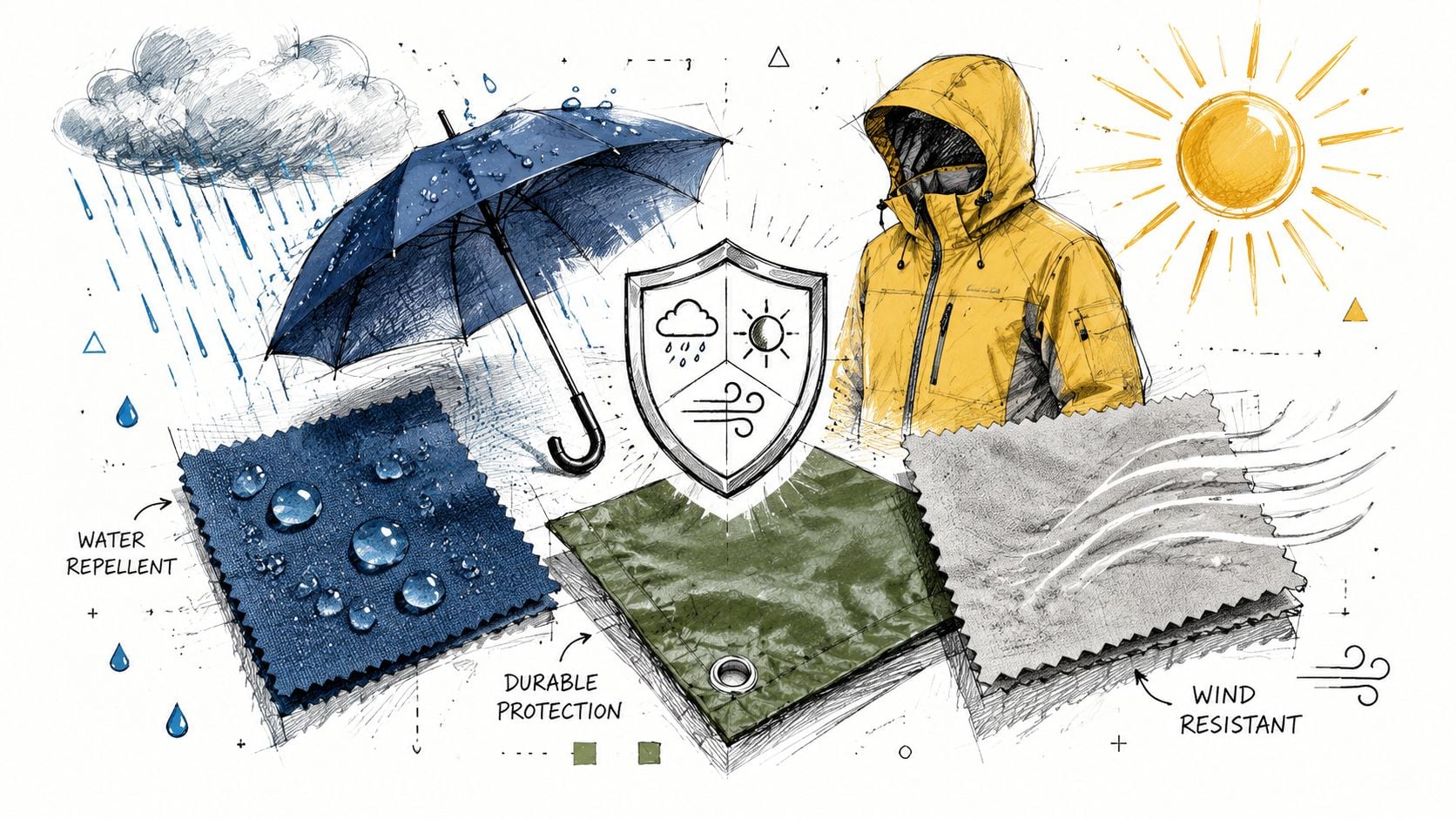
Weather resistance usually comes from three working parts.
- Fiber choice sets the baseline. Some synthetic fibers resist fading, moisture, and mildew far better than decorative indoor fabrics.
- Weave structure changes how exposed the fabric is. A tighter weave can slow water entry and keep dust and grit from working as far into the material.
- Finishes or coatings add surface protection. A durable water-repellent finish, often called DWR, helps water bead up and roll off. Other treatments can improve stain resistance or reduce how quickly the fabric absorbs moisture.
A good way to read this is to picture a house roof. The shingles matter, the underlayment matters, and the way the roof is assembled matters. Outdoor fabric works the same way. No single feature carries the whole load.
That is one reason two cushions can look similar in a showroom and perform very differently on a patio. At Miller Waldrop, that difference comes up often with shoppers who want a soft hand feel but also need fabric that can tolerate local sun, airborne dust, and quick weather swings. If you want a better feel for how construction affects long-term wear indoors and out, this guide to choosing upholstery fabric for durability and use helps explain what to look for.
Why the category keeps evolving
Fabric makers have spent generations trying to solve the same basic problem. They want material that can shed water and resist wear without turning stiff, hot, or uncomfortable. Outdoor furniture has that same balancing act.
That history helps explain why weather resistant fabric should not be judged by one label alone. A fabric may handle sun well but dry slowly. Another may resist moisture but feel too firm for a lounge cushion. The best choice depends on the conditions it will face most often, especially in this region where relentless sunlight usually does more long-term damage than a passing storm.
Why furniture shoppers get confused
Terms like “outdoor,” “performance,” and “all-weather” often get used loosely. They sound similar, but they do not promise the same level of protection. One fabric may be a smart fit for a covered patio in Midland. The same fabric may wear out faster on an uncovered rooftop in southeastern New Mexico.
The clearer question is simple: what is this fabric built to resist, and for how long?
That question leads to better buying decisions than marketing language alone.
Decoding Fabric Performance Characteristics
A fabric can look durable and still perform poorly outside. What matters is how it handles the stressors that outdoor seating sees every week. For patio furniture, four characteristics deserve the closest attention.
UV Resistance
Sun damage does more than fade color. It can also weaken fibers over time, leaving fabric rougher, drier, and more likely to crack or wear thin. That's why UV resistance is often the first thing a homeowner in this region should evaluate.
Industry guidance for outdoor applications points shoppers toward fiber types like polypropylene, polyolefin, acrylic, and vinyl, noting that polypropylene and polyolefin are fade-, stain-, and moisture-resistant, acrylic offers strong weather resistance with softness and resistance to fading, shrinking, and wrinkling, and vinyl is waterproof with strong resistance to mildew and UV rays. That's especially relevant in West Texas and Southeastern New Mexico, where strong solar exposure often causes more long-term trouble than rainfall, as described in this guidance on outdoor fabrics for high-UV settings.
A simple showroom test helps. If two fabrics feel similar, the one with stronger UV stability is often the better long-term value for an uncovered patio.
Water Resistance
Water resistance doesn't mean water can't touch the fabric. It means the fabric is built to resist penetration long enough to handle normal exposure, light rain, splashes, or damp conditions better than ordinary upholstery.
That resistance can come from a tight weave, a surface treatment, or both. The goal isn't only to keep the top surface drier. It's to buy time. If moisture sits on the surface long enough to bead and run off, the cushion has a better chance of drying before water settles deeper into the system.
Many homeowners benefit from learning more about upholstery choices in general. Miller Waldrop's guide on how to choose upholstery fabric gives a helpful framework for thinking about use, texture, and durability before narrowing down performance features.
Mildew Resistance
Mildew resistance often gets misunderstood in dry climates. Homeowners sometimes assume low humidity means mildew won't matter. But outdoor furniture still deals with morning moisture, shaded corners, spills, storm runoff, and cushions that don't fully dry after cleaning.
Modern performance textiles often manage moisture instead of trying to seal everything off. A good example is Polartec Power Dry, introduced in 1994 with a bi-component knit. Its hydrophilic inner face pulls moisture away, while its hydrophobic outer face spreads it for faster evaporation, showing how engineered fabrics can prioritize moisture management rather than simple waterproofing, as described in this history of outdoor fabric evolution.
That same principle matters for furniture. A fabric that dries efficiently often performs better in real life than one that only sounds more protective on paper.
Cushions don't fail only because they get wet. They fail because they stay wet longer than the fabric system can handle.
Abrasion Resistance
Sun and moisture get most of the attention, but abrasion matters too. Outdoor furniture faces repeated rubbing from clothing seams, pets, shifting seat cushions, and windblown dust. In a region where grit can settle on every exposed surface, abrasion is part of daily wear.
Abrasion resistance doesn't have to mean a rough, stiff surface. A well-chosen outdoor fabric can still feel inviting. The key is matching texture to use. A decorative bench cushion on a covered porch can tolerate a softer hand than a dining chair used daily, and a poolside chaise needs a tougher surface than an accent pillow.
A homeowner who knows these four terms can usually spot the difference between a fabric meant to last outdoors and one that's only borrowing the look.
Weather Resistant vs Waterproof Fabric
A cushion can feel dry right after a storm and still hold moisture where you cannot see it. That is why shoppers often get tripped up by these two terms. Weather resistant and waterproof are related, but they are built for different jobs.
The easiest way to picture it
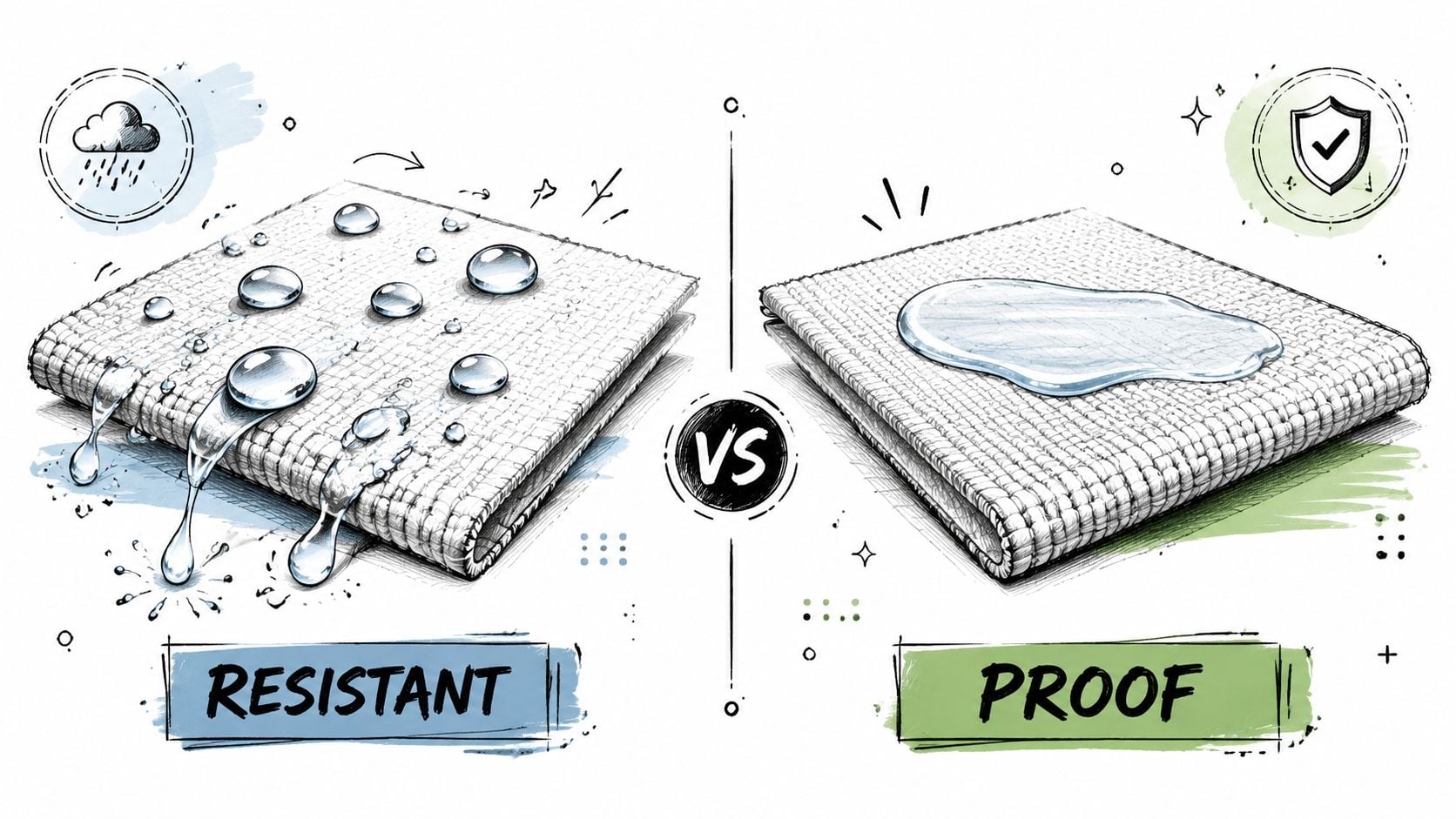
Weather resistant fabric is made to handle sun, light rain, dust, and daily exposure while still staying comfortable to sit on. Waterproof fabric is made to block water more completely. That sounds better at first, but patio seating has another job. It also needs to release heat and moisture so the full cushion system can dry.
For homeowners in West Texas and Southeastern New Mexico, that difference matters more than it does in milder climates. Our patios take long hours of UV, dry heat that can build up inside cushions, blowing dust, and the occasional hard rain. A fabric that sheds water but also dries out well usually serves seating better than one that seals everything in.
The technical side in plain language
The simplest way to separate these terms is by priority. Waterproof fabric puts liquid blocking first. Weather resistant fabric usually balances several needs at once, including water repellency, airflow, comfort, and faster drying in normal outdoor use.
On furniture, that balance often wins. A fully waterproof surface can trap heat, feel stiff, or keep internal moisture from escaping if water gets in through seams, zippers, or the cushion core. Homeowners comparing seat cushions with outdoor wicker furniture built for everyday patio use should pay attention to the whole system, not just the boldest word on the tag.
Which one belongs on patio furniture
For most outdoor seating, weather resistant is the more practical choice. It gives you a better mix of comfort, moisture handling, and everyday usability. Waterproof materials fit better on furniture covers, some storage applications, and surfaces where complete liquid blocking matters more than sitting comfort.
That is also why experienced outdoor furniture providers, including Van Dyke Outdoors patio furniture services, often focus on how materials perform in actual use instead of chasing the most absolute label.
Takeaway: For patio seating, the better fabric is often the one that helps the cushion dry thoroughly after sun, dust, and sudden rain, not the one with the most aggressive water barrier.
“Waterproof” is not automatically the better buy. On many local patios, especially uncovered ones, weather resistant fabric gives the more useful kind of protection.
How to Choose Fabric for a West Texas Patio
A local patio doesn't face the same threats as a shaded porch in a mild climate. Around West Texas and Southeastern New Mexico, a fabric usually spends far more time under harsh sun and dry heat than under steady rainfall. That changes the buying priorities.
What the local climate does to fabric
Strong UV exposure can fade color and weaken fibers. Dry air can leave some materials feeling stiff over time. Dust settles into texture and seams. Then a sudden storm arrives, and the fabric also has to cope with quick moisture and drying cycles. That combination is why shoppers in this region should prioritize UV stability, mildew resistance, and cleanability alongside water repellency.
Independent consumer guidance also points out a common mistake: buyers often treat “outdoor fabric” as a single category when, in actuality, selection depends on exposure, pets, cleaning needs, sun levels, and intended use. That practical gap shows up often with umbrellas, cushions, awnings, and rugs, which may all need different fabric qualities, as discussed in this consumer overview of how outdoor fabric needs vary by use case.
A quick rule helps. For uncovered patios in this region, fading is often the first battle. For shaded but humid corners, mildew becomes more important. For heavily used family seating, cleanability and abrasion move higher on the list.
For homeowners comparing patio seating materials and styles, Miller Waldrop's overview of best outdoor wicker furniture can help connect fabric performance to frame and furniture type.
Common Weather Resistant Fabric Comparison
| Material | UV/Fade Resistance | Water Resistance | Mildew Resistance | Best For |
|---|---|---|---|---|
| Acrylic | Strong for sun-heavy settings | Good for normal outdoor exposure | Good | Uncovered seating, cushions, and spaces where softness matters |
| Polypropylene | Strong | Good | Strong | High-use seating, casual patios, and areas that need fast drying |
| Polyolefin | Strong | Good | Strong | Family patios, dining seating, and general outdoor upholstery |
| Vinyl | Strong | Waterproof surface | Strong | Very wet areas, easy-clean applications, and some specialty seating |
This table isn't a ranking. It's a fit guide. The right answer depends on where the furniture sits and how the household uses it.
A shopper looking at structure as well as fabric may also find value in broader patio material guidance such as Van Dyke Outdoors patio furniture services, especially when comparing how fabric and frame choices work together outdoors.
How use case changes the right choice
A covered porch settee and a poolside chaise shouldn't be evaluated the same way.
- For an uncovered conversation set, UV stability should lead the list. Color retention and fiber integrity matter every day.
- For dining chairs used often, abrasion and easy cleaning become more important because repeated movement wears surfaces faster.
- For cushions near a pool or hot tub, quick drying and mildew resistance deserve extra weight.
- For decorative pillows, feel and appearance can carry more importance, but they still need enough weather resistance to handle the setting.
Some homeowners also need flexibility in style, cushion comfort, and fabric selection. In those cases, Miller Waldrop Furniture & Decor can function as a practical shopping resource because it offers outdoor furniture and access to fabric-focused guidance for matching material performance to local conditions.
The best buying decision usually comes from one honest question: will this piece be lived on, looked at, or left exposed? Once that's answered, the fabric shortlist gets much smaller.
Care Tips and Custom Fabric Solutions
Even a well-chosen weather resistant fabric needs routine care. Outdoor performance doesn't stay at its peak merely because the tag says “outdoor.” Sun, use, cleaning, spills, and airborne dust all affect how the material behaves over time.
Simple habits that protect performance
Industry guidance notes that one of the biggest unanswered consumer questions is how long weather-resistant properties hold up after real-world exposure and cleaning, because many claims describe inherent material properties rather than a quantified lifespan. That's why maintenance plays such a large role in longevity, as explained in this article on outdoor fabric durability over time.
A few habits make a real difference:
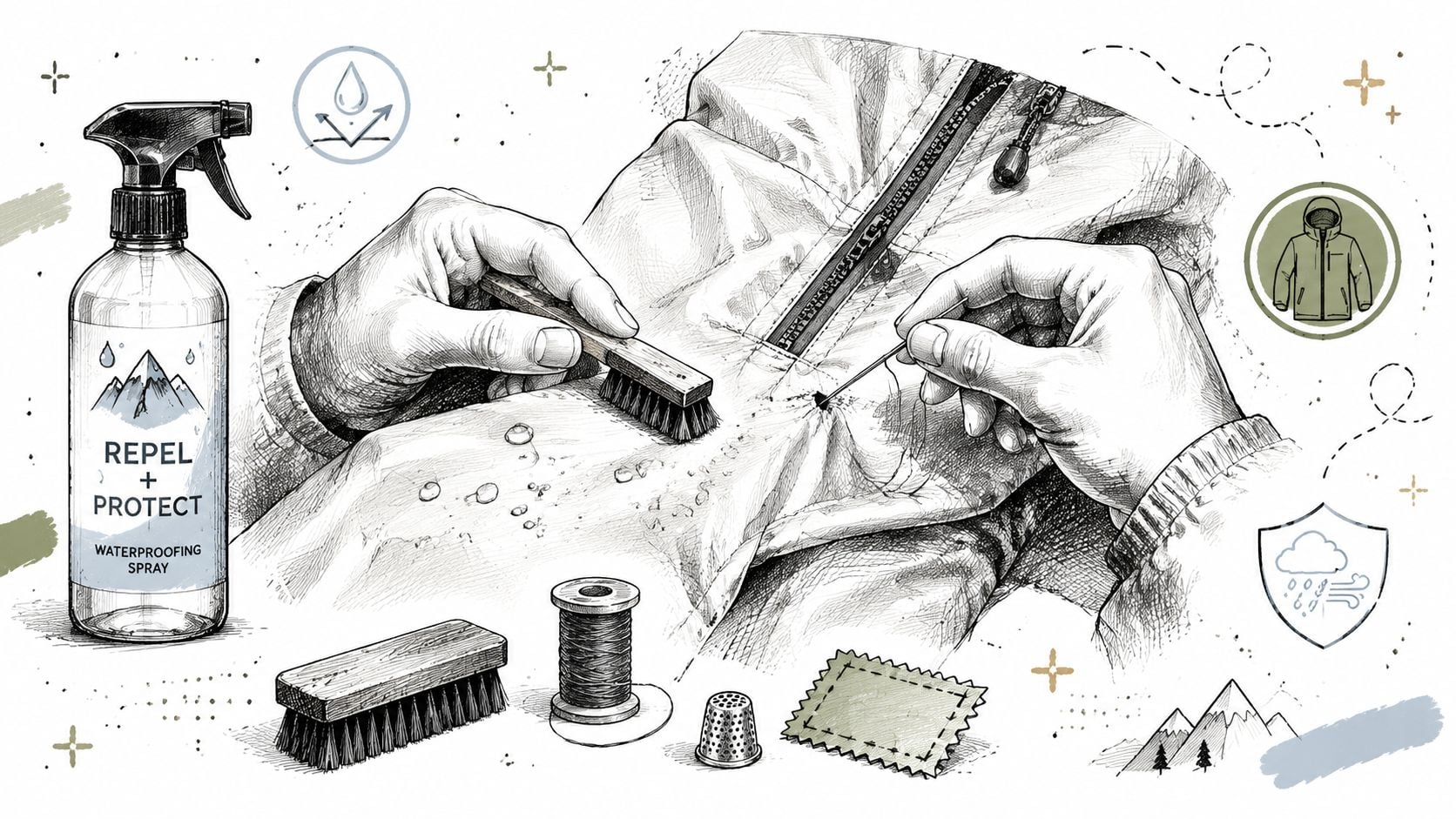
- Brush off dust regularly. In dry, windy climates, grit acts like fine sandpaper. Removing it helps preserve both color and texture.
- Blot spills quickly. The longer a spill sits, the more likely it is to work past the surface treatment.
- Let cushions dry fully. After rain or cleaning, air circulation matters. Don't stack or store damp cushions.
- Clean before storage. Dirt left on fabric during off-season storage can become harder to remove later.
- Use protectants carefully. Homeowners researching post-purchase fabric protection sometimes compare methods used indoors and out. For general context on aftercare products, this piece on how to Scotchgard your couch can help frame the questions to ask before applying any treatment.
A fabric lasts longer when cleaning removes stress from the surface instead of adding more of it.
When custom fabric makes more sense
Sometimes the standard cushion fabric on a showroom piece is close, but not quite right. A homeowner may want a softer hand, a quieter neutral, a stronger mildew focus for a shaded courtyard, or a tougher fabric for a household with pets and frequent entertaining. That's where custom upholstery becomes useful.
Custom work lets a shopper match the furniture to the environment instead of settling for a one-size-fits-all label. Fabric choice, color, texture, and intended use can all be aligned more carefully. For homeowners exploring that route, Miller Waldrop's custom fabric upholstery options provide a starting point for comparing materials by performance as well as appearance.
That kind of decision-making protects more than the purchase. It protects the comfort of the space itself. A patio should feel inviting in real life, not just look good on delivery day.
A homeowner who wants outdoor furniture that suits West Texas or Southeastern New Mexico conditions can get practical help from Miller Waldrop Furniture & Decor. Their team can help compare fabrics, explain tradeoffs between softness and durability, and guide custom selections for patios, porches, and outdoor living spaces so the final choice fits the climate, the home, and the way the space is used.