

Finding the Best Outdoor Wicker Furniture for 2026


A lot of patios in West Texas and Southeastern New Mexico start the same way. A homeowner steps outside, looks at the slab or deck, and sees the potential for morning coffee, late dinners, and a comfortable place to gather when the sun finally drops. Then the furniture search begins, and the options all start sounding alike. Weather-resistant. Outdoor-safe. All-season. Premium wicker.
That's where expensive mistakes happen.
Outdoor wicker can be a smart, long-lasting choice, but only if the material, frame, and cushions are built for intense sun and heat. That matters even more in a region where furniture doesn't just deal with the occasional storm. It sits through dry air, bright afternoons, dust, and long stretches of UV exposure. The broader category is large and growing, too. The U.S. outdoor furniture market was estimated at $9.06 billion in 2020 and projected to reach about $19 billion in 2025, according to Statista's overview of the outdoor furniture market in the United States. Shoppers have more choices than ever, which makes knowing what lasts more important than knowing what looks good online.
Table of Contents
- Creating Your Dream Outdoor Oasis
- The Great Wicker Debate Natural vs All-Weather Resin
- Beyond the Weave What a Quality Frame Looks Like
- Built for the Sun Choosing Wicker for Hot Climates
- Comfort and Style Cushions Layouts and Sizing
- Protecting Your Investment Maintenance and Care
- Your Wicker Furniture Questions Answered
Creating Your Dream Outdoor Oasis
The best outdoor spaces feel like an extension of the home, not an afterthought. A pair of deep chairs under a covered patio can turn a quiet corner into a daily habit. A seating group around a coffee table can make a plain backyard more usable than a formal room indoors.
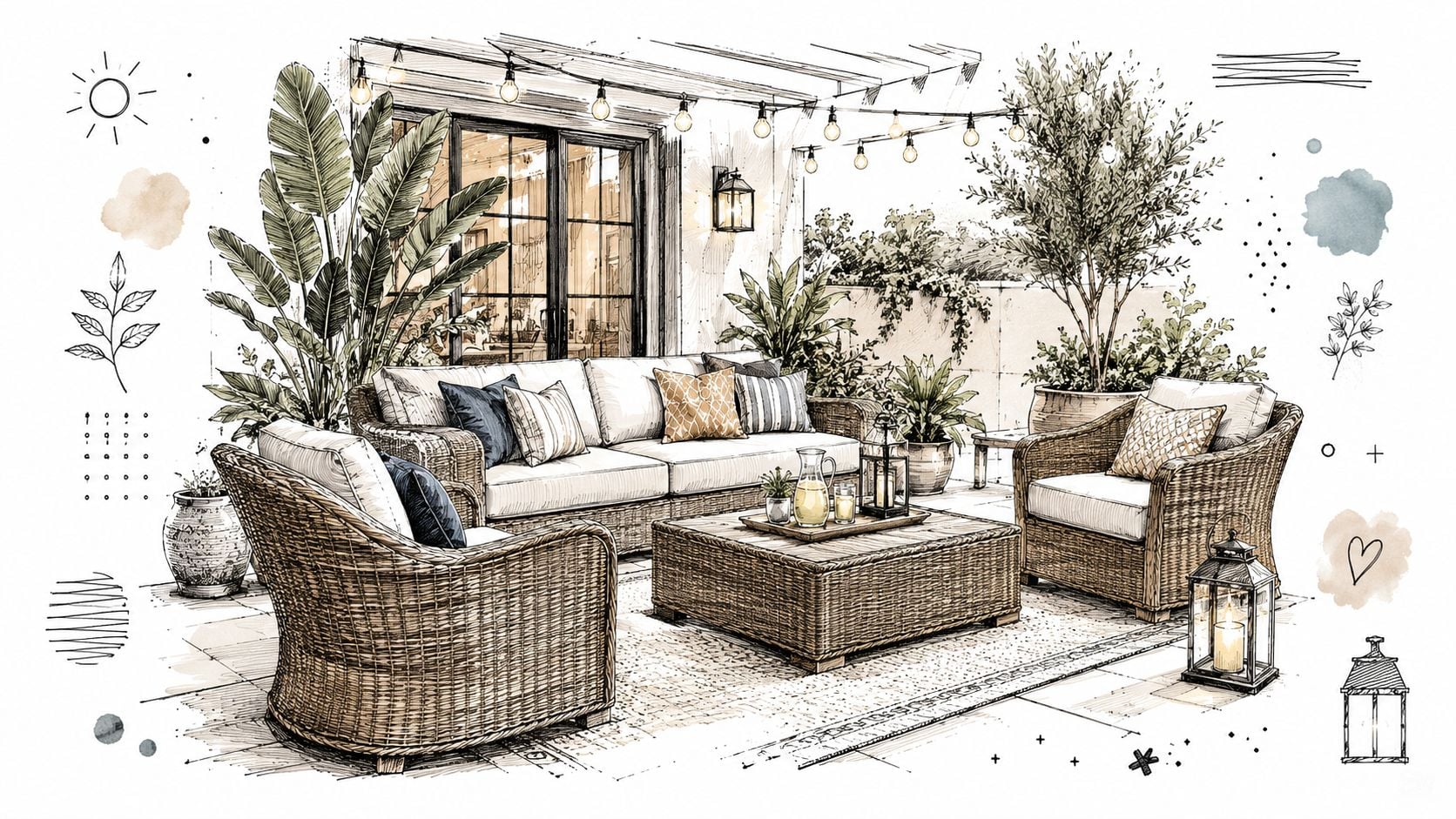
That's why outdoor wicker stays popular. It has the soft, welcoming look people want, but it can also fit a wide range of spaces, from compact patios to larger entertaining areas. Homeowners gathering ideas for shade structures, built-ins, and layout planning often find useful direction in Pergola and deck design inspiration, especially when the seating plan needs to work with the structure around it.
Where good patio plans go wrong
The trouble starts when wicker gets treated like a style choice only. It isn't. Two sets can look nearly identical in a photo and perform very differently after a few seasons outside. One keeps its shape, color, and comfort. The other fades, loosens, or starts feeling weak at the arms and base.
Practical rule: Buy outdoor wicker for the climate it will live in, not for the catalog photo it came from.
In this region, the usual failure points aren't just rain and mildew. Sun exposure, heat buildup, and dry conditions matter just as much. That's why rugs, shade, and furniture need to work together. For anyone building a full patio setup, this guide to outdoor rugs for layered patio design can help tie the seating area together without choosing pieces that fight the climate.
What shoppers should focus on first
The strongest outdoor wicker purchase usually comes down to four decisions:
- Material choice: Natural wicker and outdoor-grade resin wicker are not the same thing.
- Frame construction: The hidden frame often determines whether the set stays sturdy.
- Sun performance: UV resistance matters more here than many buying guides admit.
- Long-term comfort: Cushions, covers, and layout affect how often the space gets used.
A beautiful patio should still look inviting after years outside. The right wicker furniture can do that. The wrong set can make an outdoor project feel tired much too soon.
The Great Wicker Debate Natural vs All-Weather Resin
Many shoppers use the word wicker as if it names a material. It doesn't. Wicker is a weaving technique, not a material, which is one of the most important distinctions to understand before buying. According to this wicker furniture guide, modern high-quality outdoor wicker made with synthetic fibers can have an average lifespan of 10 to 20 years with proper care.
That explains why one wicker chair belongs on a screened porch while another can handle a much more exposed patio.
Natural wicker vs all-weather resin wicker
| Feature | Natural Wicker (e.g., Rattan) | All-Weather Resin Wicker (HDPE) |
|---|---|---|
| What it is | Woven natural plant material | Woven synthetic outdoor-grade material |
| Best location | Covered porch, sunroom, protected space | Patios, decks, poolside seating, exposed outdoor areas |
| Sun tolerance | Limited | Better suited for direct outdoor use |
| Moisture tolerance | Lower | Better suited for changing weather |
| Maintenance needs | More protection and more caution | Easier for everyday outdoor living |
| Long-term use outdoors | Usually not the best fit for exposed conditions | Stronger choice for long-term outdoor use |
Why natural wicker still has a place
Natural wicker has warmth and character that many people love. It can look relaxed, classic, and textured in a way that fits traditional homes beautifully. In protected settings, it can be a very good design choice.
But it's usually the wrong choice for a patio that gets regular sun and weather. Natural fibers don't like prolonged outdoor exposure. They're better treated like indoor furniture that occasionally enjoys fresh air, not furniture meant to stay outside through the seasons.
Why resin wicker wins outdoors
All-weather resin wicker is the recommended category for those seeking the best outdoor wicker furniture. The reason is simple. It's made for exposure, not occasional use. It gives the wicker look people want, but in a form that's engineered for outdoor conditions.
Outdoor wicker should be judged by where it will live. A covered porch and an uncovered patio are two different jobs.
That doesn't mean every resin set is a good one. Cheap outdoor wicker can still fail if the strands are low quality, the weave is inconsistent, or the frame underneath is weak. But if the piece is built well, resin wicker is usually the more practical buy for a home in a hot, dry climate.
A simple way to decide
Choose based on placement, not impulse.
- Pick natural wicker if the furniture will stay in a protected area with minimal exposure.
- Pick all-weather resin wicker if the furniture will live outdoors full time.
- Skip vague labeling if a listing talks mostly about style and barely addresses construction.
- Ask what the woven material is made of before worrying about color or cushion pattern.
A lot of disappointment in patio furniture starts with buying decorative wicker for a hardworking outdoor space.
Beyond the Weave What a Quality Frame Looks Like
The weave gets attention first. The frame is what earns the money back over time.
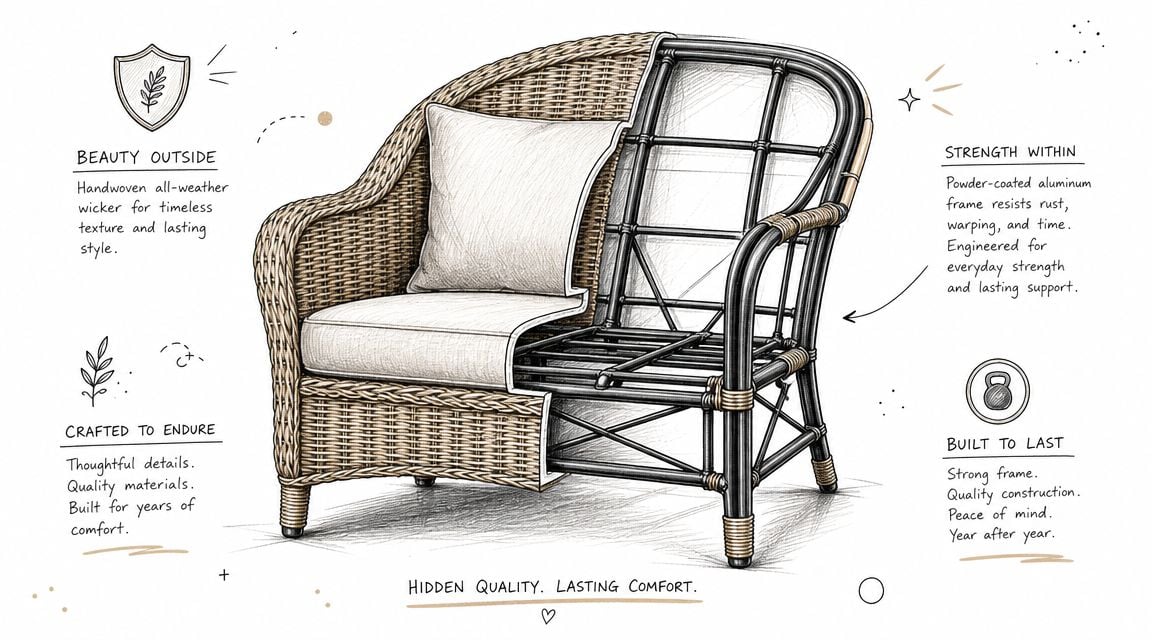
Most outdoor wicker furniture is built around a hidden support structure. If that structure is poor, the set won't stay solid no matter how attractive the exterior looks on day one. For long-term outdoor performance, the strongest frame materials are powder-coated aluminum and stainless steel, because their corrosion resistance helps prevent structural failure from moisture and temperature changes, as noted in this overview of all-weather outdoor wicker furniture.
The frame material hierarchy
Not all metal frames perform the same outdoors. The basic order usually looks like this:
- Powder-coated aluminum
This is often the safest choice for outdoor wicker. It resists rust, stays relatively lightweight, and handles everyday patio use well.
- Stainless steel
Also strong outdoors, though the exact performance depends on the grade and the overall build.
- Lower-cost painted or coated steel
This can work for a while, but once the finish gets compromised, corrosion becomes a bigger concern.
The key point is that outdoor wicker itself is often the wrap. The frame is the skeleton. If the skeleton weakens, the whole piece loses integrity.
What to inspect before buying
Shoppers don't need to see the entire internal structure to judge build quality. A few details reveal a lot.
- Check the weight balance: A chair shouldn't feel flimsy or uneven when it's moved.
- Look at the joints: Tight, clean connections usually signal better construction than visible wobble or distortion.
- Press on the arms and back: Good frames feel steady under pressure.
- Inspect the weave where it meets the base: Sloppy transitions often point to rushed production.
- Ask directly about the subframe: If the seller can't answer clearly, that's useful information.
Small specifications can tell a bigger story
Manufacturers that take construction seriously often publish exact dimensions and structural details. One resin-wicker patio set, for example, lists 4.5-inch-wide arms and a back height of about 38 inches, which shows how better-built products use measurable geometry to signal comfort, support, and production consistency in this product listing.
A clean weave can catch the eye. A strong frame is what keeps the chair usable year after year.
That's also why the best outdoor wicker furniture rarely wins on appearance alone. It wins when the visible finish and the hidden construction are both doing their jobs.
Built for the Sun Choosing Wicker for Hot Climates
A furniture label that says outdoor-safe doesn't answer the question that matters most in this region. How does it handle relentless sun?
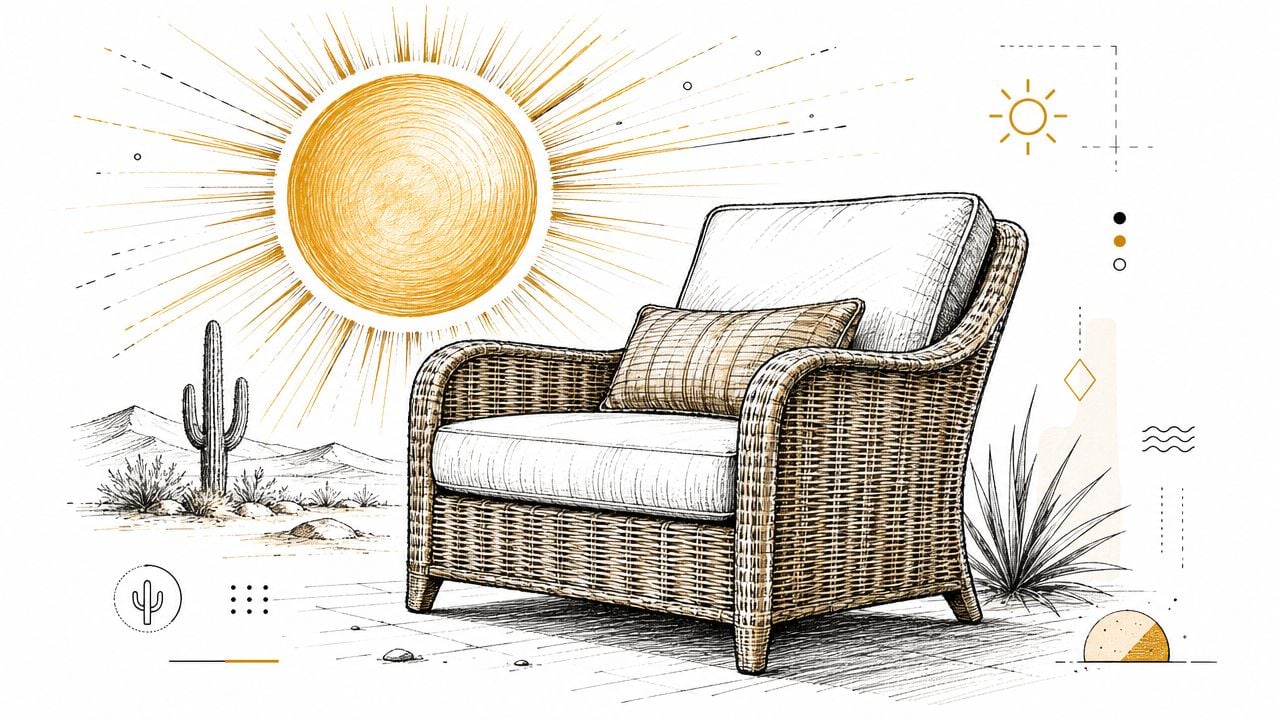
That's the filter buyers in West Texas and Southeastern New Mexico should use first. Most buying guides still lean toward broad ideas like style, seating count, or price. But this outdoor wicker category overview points to an important gap: shoppers in hot, high-UV climates need to focus more on UV-resistant materials and fade-proof fabrics than aesthetics alone.
What sun damage looks like in real life
UV wear doesn't always start with obvious breakage. It often shows up gradually.
- Color loss: Dark woven surfaces can begin looking washed out.
- Dry-looking strands: The wicker may start appearing chalky or tired.
- Surface brittleness: Lower-quality material can lose flexibility.
- Hot-touch discomfort: Some finishes absorb and hold heat more aggressively than others.
By the time a set looks clearly worn, the material has often been under stress for a while.
What buyers should prioritize
The best outdoor wicker furniture for sunny climates tends to share the same traits.
Synthetic wicker made for exposure
Outdoor-grade resin wicker is the safer direction for open-air patios. Buyers should avoid assuming all synthetics are equal. A better woven material will hold its shape and appearance longer under direct light than bargain-grade alternatives.
Frame quality that matches the climate
Heat and sun put steady pressure on every material in the set, not just the woven exterior. A poor frame under good-looking wicker still leads to disappointment.
Cushion fabrics that won't become the weak link
Cushions often fail before the frame does. For bright climates, fade resistance matters just as much as softness. That's one reason many homeowners furnishing enclosed and semi-enclosed outdoor spaces also compare fabrics and seating styles in guides like choosing furniture for a 3 season room, where exposure levels can vary from filtered light to heavy afternoon sun.
In a hot, bright climate, the wrong patio furniture usually doesn't fail all at once. It wears out one weak material at a time.
Why this matters more than style trends
A sun-heavy climate changes the buying equation. A patio set that looks slightly less dramatic but uses stronger materials is often the better purchase than a more fashionable set built with shortcuts. Buyers feel that difference later, when the weave still looks tight, the frame still feels solid, and the cushions haven't turned into the first replacement project.
For exposed spaces, UV performance isn't a bonus feature. It's the first test.
Comfort and Style Cushions Layouts and Sizing
Good outdoor wicker has to do more than survive. It has to invite people to stay outside longer.
That's where many patio purchases fall short. The frame may be acceptable and the weave may look good, but the cushions flatten too quickly, the seating depth feels off, or the layout leaves the space awkward and underused. A smart purchase also considers ownership over time. As noted in this discussion of wicker patio furniture value, long-term cost matters more than sticker price alone, and investing in quality cushions and covers up front helps avoid repeat replacement cycles.
Start with cushions, not throw pillows
Cushions do most of the daily work. They affect comfort, appearance, and how often the furniture gets used.
Shoppers should look for these signs of a better cushion package:
- Outdoor-ready fabric: The fabric should be intended for sun exposure and everyday use.
- Supportive fill: Seats should feel supportive, not hollow or overly soft.
- Clean fit: Cushion covers should sit neatly without loose, sagging corners.
- Replaceable practicality: It helps when covers and inserts can be maintained without turning the whole set into a problem.
A patio chair can look generous online and still feel shallow or stiff in person. Cushion quality often decides that difference.
Measure the patio the way people move through it
A patio shouldn't be packed wall to wall with furniture. It also shouldn't leave everyone drifting around a too-small seating cluster in the middle of empty concrete.
A useful approach is to measure for movement first, then seating second.
Conversation setup
This works well for smaller patios or covered corners. A loveseat or sofa paired with chairs creates a natural face-to-face arrangement. Add a coffee table only if there's still enough room to move comfortably around it.
Lounge layout
For homes that use the patio as a second living room, a sectional can define the space well. This approach needs enough room for entry paths and side access, especially near doors, grills, or steps.
Flexible grouping
Some outdoor spaces need seating that can shift as the occasion changes. Separate chairs and modular pieces are often easier to rework than one oversized statement set.
Buyer check: If the layout looks good only from one angle, it probably isn't planned well enough for daily life.
Pay attention to proportion
Arms that are too narrow can feel skimpy. Seats that sit too low can make standing up less comfortable, especially for older family members or frequent guests. Back height, arm width, and seat depth all affect whether the furniture feels substantial or decorative.
Neutral woven finishes often make long-term sense because they leave room to refresh the look with pillows, planters, rugs, and seasonal accents. A balanced setup usually feels calmer than one where every piece competes for attention.
When layout help saves time
Some homeowners know exactly what they want. Others have the right pieces in mind but aren't sure how to scale them to the patio. That's where a product category with real options can help narrow the field. Miller Waldrop Furniture & Decor outdoor furniture collections give shoppers a place to compare patio seating styles, materials, and configurations against the space they're furnishing.
The most satisfying outdoor rooms usually don't come from buying the biggest set. They come from matching comfort, scale, and traffic flow to the way the space gets used.
Protecting Your Investment Maintenance and Care
High-quality outdoor wicker is fairly easy to live with, but it still benefits from regular care. Dust, pollen, and windblown debris settle into the weave. Cushions take the brunt of sun and everyday use. Covers matter more in dry, dusty climates than many shoppers expect.
A simple care routine that works
Most homeowners do well with a short seasonal routine:
- Brush or vacuum the weave: Remove loose dirt from the creases before it grinds in.
- Wipe down the frame and wicker: Use a soft cloth and mild cleaning approach.
- Check the feet and contact points: These spots often show wear first on rough surfaces.
- Store or cover cushions when not in use: Keeping fabric out of constant exposure helps preserve appearance.
That last step does a lot of work. Covers don't just help with rain. They reduce direct sun exposure and keep dust from settling deep into the furniture between uses.
Don't ignore the finish details
If surrounding outdoor pieces need touch-up or repainting, finish selection matters. Homeowners comparing coatings and color retention can get useful context from this guide on selecting finishes for outdoor furniture, especially when coordinating mixed-material patios.
Wood accents in the same outdoor area need different care than wicker. For anyone mixing materials, this advice on caring for teak furniture outdoors helps prevent one part of the patio from aging well while another gets neglected.
The goal of maintenance isn't perfection. It's keeping small issues from becoming expensive ones.
A few consistent habits usually matter more than any deep-cleaning marathon done once a year.
Your Wicker Furniture Questions Answered
Can resin wicker stay outside year-round?
In many cases, yes. Outdoor-grade resin wicker is designed for outdoor use. Even so, year-round exposure is not the same as year-round neglect. Covers, occasional cleaning, and cushion storage still make a meaningful difference.
How can shoppers spot better weave quality?
Look for consistency. The weave should appear tight, even, and deliberate across the arms, back, and base. Loose spacing, uneven lines, or abrupt pattern changes often signal lower build quality.
Is darker wicker a bad choice in sunny climates?
Not necessarily, but it's worth thinking about heat and visible fading. Color is part of the decision, not the whole decision. Material quality and cushion fabric usually matter more than shade alone.
Can different wicker pieces be mixed together?
Yes, if the scale and tone relate well. Matching exactly isn't always necessary. What matters is that the seat heights, arm styles, and overall visual weight feel intentional together.
What matters more, the weave or the frame?
For longevity, the frame usually decides more than the woven surface. The weave shapes the look. The frame determines whether the furniture stays dependable.
The best outdoor wicker furniture isn't the set with the flashiest listing. It's the one built for the climate, scaled for the space, and comfortable enough to use often. Shoppers in Lubbock, Hobbs, and Ruidoso usually benefit most from seeing materials in person, testing seat comfort directly, and asking clear questions about frame construction, cushion quality, and outdoor exposure.
For homeowners ready to compare materials, test comfort, and find patio furniture that fits the way the space is used, Miller Waldrop Furniture & Decor offers outdoor furnishings, design guidance, and in-store help in Lubbock, Hobbs, and Ruidoso. A visit to the showroom can make it much easier to judge weave quality, seating comfort, and scale before bringing a set home.