

Top Bar Table Guide: Choosing the Perfect Height & Style

A lot of homeowners reach the same point with one awkward spot in the house. It might be a narrow kitchen wall that feels wasted, a breakfast nook that's too tight for a standard dining set, or a game room corner that needs a place for snacks, cards, or coffee. The space needs to work harder, but it also needs to look intentional.
That's where a top bar table often solves the problem better than a full dining table. Its taller profile can create a casual landing place for quick meals, conversation, or laptop time without making the room feel crowded. For renters, first-time buyers, and growing families, that kind of flexibility matters.
A tall table can also change how a room feels. It turns an underused edge of the kitchen into a social perch. It gives a media room a natural gathering point. It creates a coffee spot by a window without asking for the footprint of a traditional set. The challenge is choosing one that fits the space, the seating, and daily life.
Table of Contents
- Elevate Your Space with the Perfect Bar Table
- Decoding the Lingo Bar vs Counter, Pub vs Bistro
- Getting the Dimensions Right Sizing and Stool Pairing
- Choosing Materials and Finishes for Your Lifestyle
- Styling and Placing Your Bar Table at Home
- Find Your Perfect Bar Table in Lubbock, Hobbs, or Ruidoso
Elevate Your Space with the Perfect Bar Table
A top bar table earns its place when a room needs function without heaviness. In many homes, the issue isn't a lack of square footage everywhere. It's one stubborn zone that won't cooperate with standard furniture. A tall table can turn that problem area into one of the most useful spots in the house.
Consider a common setup. The kitchen opens to the living area, but there isn't room for a full breakfast table and chairs. A standard-height set can block movement and make the room feel chopped up. A bar-height table creates a lighter visual footprint and gives the household a place to sit, snack, work, or talk while dinner finishes.
A good bar table doesn't just fill empty space. It gives the room a job.
That's why this furniture category works well in more than one kind of home. In an apartment, it can become the main eat-in area. In a family home, it can support overflow seating when guests drop by. In a game room, it can anchor the whole layout without taking over.
Why a tall table solves a different problem
A traditional dining table is built for longer, lower, more formal seating. A top bar table creates a different rhythm. People gather there for coffee before work, homework after school, appetizers during a game, or a quick meal between errands.
Some spaces also benefit from the sense of lift. The taller surface helps a small corner feel active instead of forgotten. That simple shift can make a home feel more finished.
What matters most before shopping
The smartest choice starts with the room's real challenge.
- If the space is narrow, the table needs to preserve movement.
- If the room feels flat, height can add energy.
- If the table will handle daily meals, comfort and cleanup matter as much as looks.
- If several generations will use it, accessibility and stool choice deserve extra thought.
A well-chosen top bar table isn't about copying a restaurant look. It's about choosing a piece that makes everyday life easier and gives the home a more natural place to gather.
Decoding the Lingo Bar vs Counter, Pub vs Bistro
Furniture shopping gets confusing fast because several terms point to similar-looking pieces. Shoppers often hear bar height, counter height, pub table, and bistro table used almost interchangeably. They aren't always the same thing, and that small wording difference can lead to buying the wrong stools or ending up with a table that feels off in the room.
Why the terms get mixed up
A top bar table is generally treated as a bar-height table. Most furniture guides place it at 40 to 42 inches tall, while counter-height tables usually fall at 34 to 36 inches. Bar-height seating is usually around 28 to 30 inches for comfortable pairing, as noted in this bar table height guide.
That difference sounds small on paper. In a room, it changes almost everything. The seating posture is higher, the visual line is more raised, and the table tends to feel more social and less formal.
A counter-height table sits lower. It often blends more easily with kitchen counters and can feel more relaxed for everyday dining. A bar-height table feels more lifted and more hospitality-inspired.
Table Height Comparison Finding Your Fit
| Table Type | Typical Table Height | Recommended Stool or Chair Height |
|---|---|---|
| Bar-height table | 40 to 42 inches | 28 to 30 inch bar stools |
| Counter-height table | 34 to 36 inches | Lower counter-height seating |
The words pub and bistro add another layer. In many product descriptions, pub table usually refers more to style and use than a strict technical rule. It often means a smaller, higher table meant for casual dining or drinks. Bistro table usually points to a compact table, often round, designed for a small footprint and intimate seating. Either one may be bar height or another height depending on the design.
Practical rule: The safest way to shop isn't by name alone. It's by the actual table height and the seat height it requires.
That's why shoppers can save themselves frustration by checking dimensions before falling in love with a finish or shape. A “pub” label doesn't guarantee bar height. A “bistro” table may be petite, but not necessarily tall.
For a closer look at where bar-height dining makes sense in the home, this article on reasons to consider bar-height dining helps connect those measurements to real-life use.
Getting the Dimensions Right Sizing and Stool Pairing
The right dimensions do more than keep a table from looking awkward. They decide whether the space feels comfortable every day. A top bar table can look perfect online and still fail at home if the stool height is off or the traffic flow gets pinched.
Start with height, not style
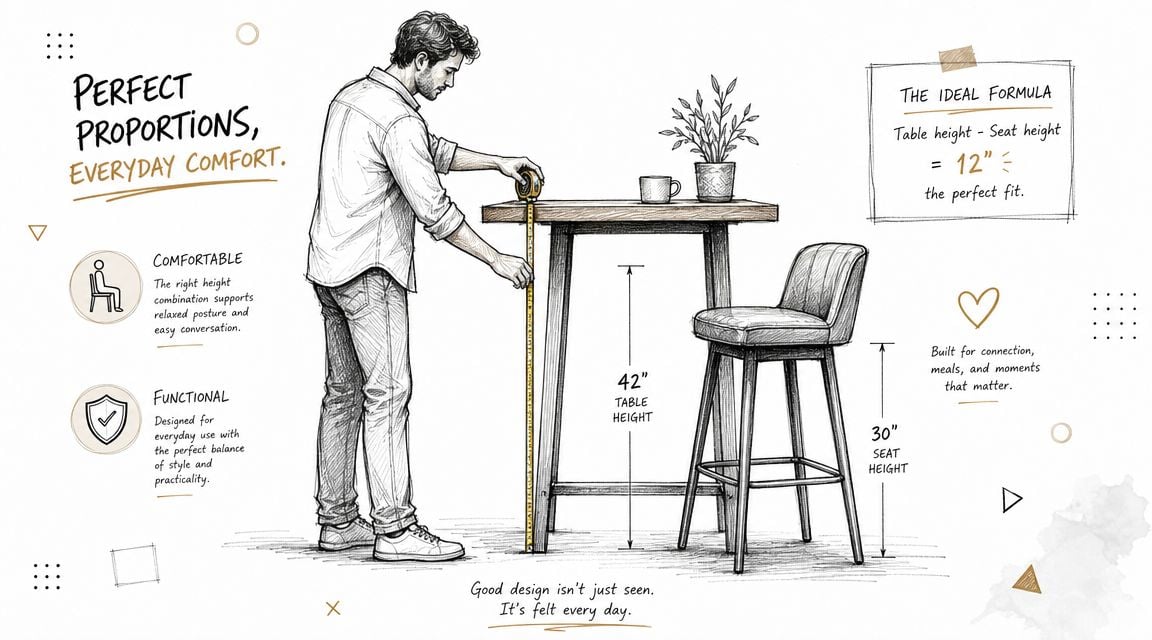
Bar-height tables are typically 40 to 42 inches tall, while standard dining tables are usually 28 to 30 inches tall. That extra elevation changes the seating experience and pairs best with about 30-inch bar stools, according to this bar-height dining table sizing reference.
That source also notes another practical benefit. The taller setup can improve sightlines in open-plan kitchens by keeping seated eye level above standard countertop furniture. In plain terms, the room can feel more connected and less visually chopped into layers.
The first measurement to confirm is the vertical pairing.
- Table first: Confirm that the table is in the bar-height range.
- Seat second: Choose stools made for that table height, not just stools labeled “tall.”
- Comfort third: Make sure the sitter's knees don't crowd the underside.
For households that use the table for work as well as meals, posture matters. This outside resource offers expert advice for ergonomic seating that can help shoppers think through seat height, foot support, and how long someone can comfortably stay there.
Measure the room like a designer would
Once height is settled, the next question is footprint. The table has to fit the wall, corner, or nook without forcing everyone to squeeze sideways to get around it. A compact room usually benefits from a slimmer rectangle or a small round top, while a more open area can handle a broader piece with more visual weight.
A simple way to plan is to map the table zone before buying.
- Mark the floor area with painter's tape.
- Pull out nearby doors and drawers to make sure nothing collides.
- Walk the path around the taped outline as if carrying plates, groceries, or a laundry basket.
- Add stool space to the test, especially if stools won't slide fully under the table.
If a taped outline already feels tight, the actual furniture won't feel better once it arrives.
Shape matters too. A round top softens tight corners and makes conversation easy. A square top works well in compact breakfast areas. A rectangular top bar table often suits a wall, island edge, or longer room where the goal is to create a multi-seat landing zone.
For shoppers comparing heights before committing to a full dining setup, this counter-height dining set example can help clarify whether the household prefers a counter-height style or a true bar-height posture.
Choosing Materials and Finishes for Your Lifestyle
A top bar table has to do more than fit the room. It has to survive the way the household lives. The surface sees coffee mugs, takeout containers, homework, elbows, keys, and the occasional last-minute work setup. The right material choice makes the table easier to live with long after the first impression wears off.
Match the surface to daily use
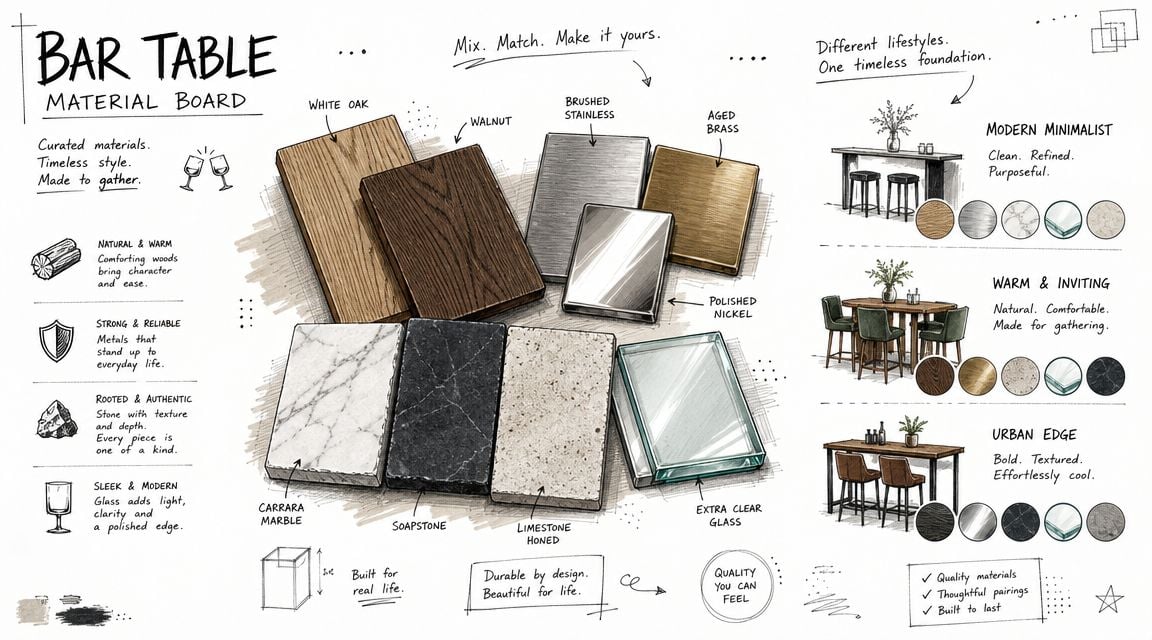
Wood remains a favorite because it brings warmth and visual depth. It can lean farmhouse, traditional, transitional, or modern depending on the shape and stain. In homes that want a welcoming look, wood usually makes the easiest bridge between the kitchen, living area, and nearby décor.
Some households need a more forgiving surface. If the table will handle regular meals, kids' projects, or frequent cleanup, a finish that hides fingerprints and minor wear can be easier to maintain than a glossy or delicate top. A heavily distressed surface may also reduce the stress of everyday use because small marks tend to blend in.
Stone-look and laminate-style tops can be practical when easy wipe-down care is a top priority. Mixed-material designs also work well. A wood-look top with a darker base can add character without demanding constant upkeep.
A useful way to narrow the field is to ask three questions.
- Will the table be used every day or mainly for entertaining?
- Will the surface see messy meals, craft supplies, or laptop use?
- Does the household want a table that hides wear or one that shows natural aging?
Choose the base and finish with the room in mind
The base often gets less attention than the top, but it changes the personality of the piece. A chunky wood base feels grounded and traditional. A slimmer metal base usually feels lighter and more urban. Trestle and pedestal forms can affect how easy it is to pull stools in and out.
For homes with a lot of visual texture already, a simpler base may keep the room from feeling busy. In a plainer room, a table with stronger grain, contrast, or metal detail can become the feature that wakes the space up.
The most successful finish isn't the one that looks dramatic in a product photo. It's the one that still feels right after a month of real life.
A warm finish often works because it plays well with several decorating directions at once. That's one reason shoppers often look for versatile wood tones rather than highly specific fashion colors. For anyone comparing wood species and how they behave in everyday furniture, this guide on the best wood for tables offers a practical starting point.
One product style that fits this conversation is the Ashley Stuman dining bar table, a warm-finish bar-height table that suits a range of interiors from relaxed traditional spaces to casual modern homes. It's the kind of piece that works best when the household wants one table to handle coffee, appetizers, and everyday seating without looking overly themed.
A final material note matters for family homes. Sharp edges, highly reflective glass, and precious finishes can look beautiful but demand more attention. A slightly softened profile and a durable finish often make the table easier to use for years, especially in busy shared spaces.
Styling and Placing Your Bar Table at Home
A top bar table works best when it answers a real need in the home. The strongest layouts don't treat it as a novelty. They use it to solve a spacing issue, define a zone, or add function where standard furniture can't.
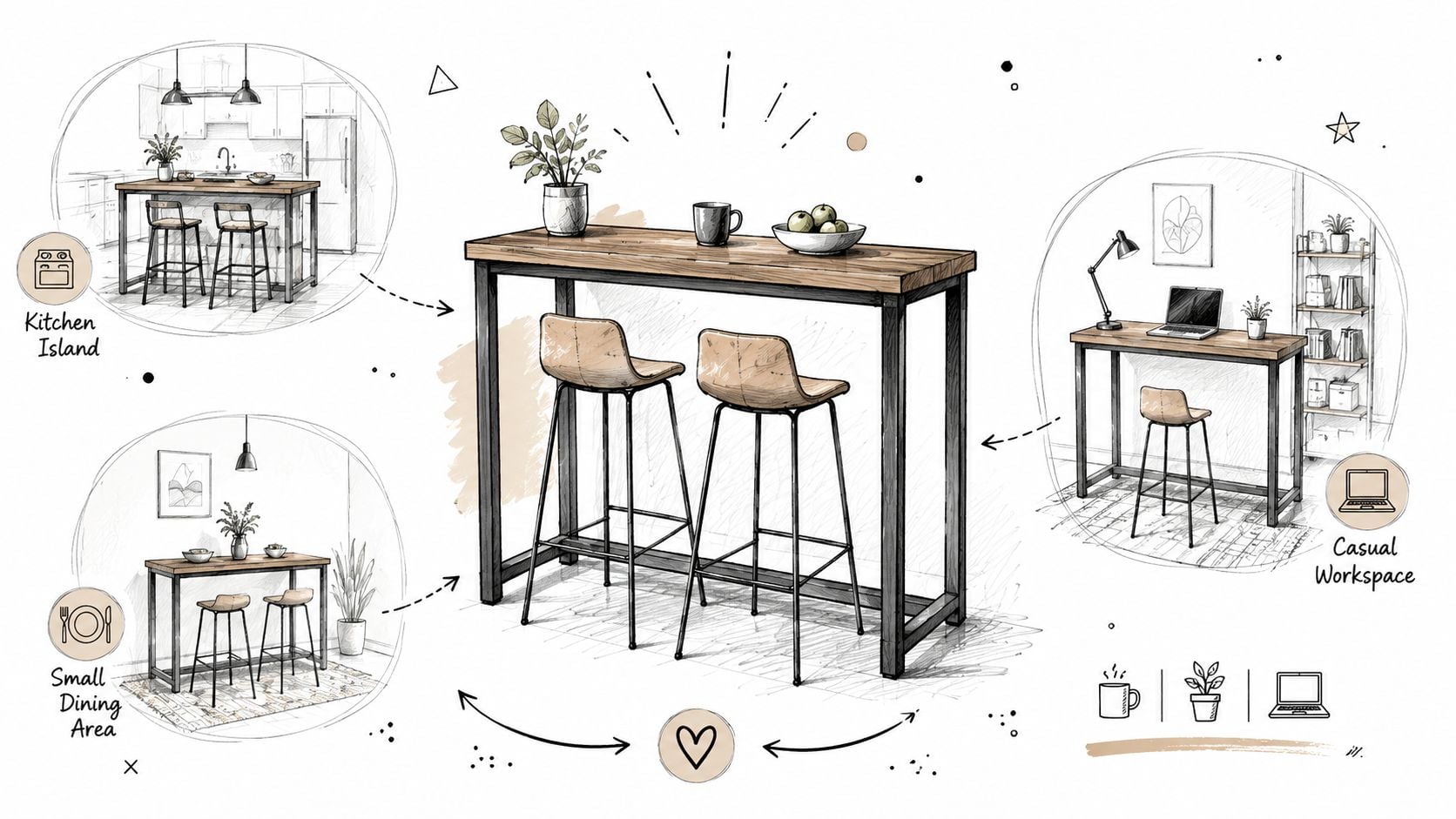
Where a top bar table works best
One of the most useful placements is along a kitchen edge. A narrow wall or transition area can become a breakfast perch instead of dead space. In a small open-concept home, that placement helps create a clear activity zone without building a visual barrier.
Another strong use is near a window. A compact bar table and two stools can turn an overlooked corner into a coffee spot or evening wind-down space. Because the table sits higher, the view often feels more engaged and less tucked away.
Game rooms and living areas also benefit from bar-height furniture. It creates a natural place for snacks, cards, and conversation that feels distinct from the sofa area. For households building out an entertaining corner, this ROCKS guide to creating a home bar offers useful ideas for organizing the surrounding setup.
There are also less obvious placements that work well.
- Home office overflow: A bar table can serve as a casual laptop station in a multipurpose room.
- Entry transition zone: In a larger entry, it can function like a tall console with more utility.
- Flexible family zone: In a kitchen-dining hybrid, it can become the spot for quick meals while the main table handles longer gatherings.
How to style it so it feels like part of the home
The key is balance. If the table is tall and visually active, the styling around it should stay controlled. A simple centerpiece, a nearby lamp, or coordinated stools can make the setup feel considered without crowding the top.
Bar height can also shift how a room feels socially. A design source notes that this height can improve social visibility and energy in active zones, but it can also feel less private and less universally accessible than lower dining formats, as discussed in this bar-height tradeoff perspective. That matters in real homes. A family that loves casual entertaining may enjoy the buzz of a raised setup, while a household focused on long, quiet dinners may prefer a lower table elsewhere.
A bar table tends to shine in active spaces. It isn't always the right answer for every meal, but it can be the right answer for the room.
The finishing touches should reflect how the space will be used. If it's a coffee station, a tray and small lamp may be enough. If it's a game-night hub, stools with backs and a durable top make more sense than decorative accessories. If it sits near the kitchen, repeating nearby wood tones or metal finishes helps it feel tied into the larger room.
Find Your Perfect Bar Table in Lubbock, Hobbs, or Ruidoso
Photos can help narrow options, but bar tables are one of those categories that benefit from an in-person test. Height changes comfort more than many shoppers expect. A finish that looks warm on a screen might read cooler in real light. A stool may look right next to a table and still feel wrong once someone sits down.
That's why the last step should be hands-on. Shoppers can check whether the edge feels comfortable on the forearms, whether the base leaves enough leg space, and whether the scale works with the rest of the room they're building. These are small details, but they shape daily satisfaction.
For homeowners in West Texas and Southeastern New Mexico, local showroom access makes that decision easier. Visiting in person allows shoppers to compare silhouettes, surface finishes, and stool pairings with more confidence than a product photo can provide. It also helps families think through practical questions such as whether the table suits quick breakfasts, longer conversations, or occasional work-from-home use.
Why an in-person visit changes the decision
A top bar table has to match the body as much as the room. The right one feels stable, proportionate, and easy to live with. The wrong one may still look attractive, but it can become the seat no one chooses.
An in-person visit also helps with style clarity. Sometimes the room needs a warm wood top to soften hard kitchen finishes. Sometimes it needs a darker metal base to connect with lighting and hardware already in the home. Seeing those materials in person usually settles the question fast.
A practical next step for local shoppers
For shoppers in Lubbock, Hobbs, and Ruidoso Downs, the most useful move is to bring a few room measurements, a photo of the space, and a short list of how the table will be used. That turns browsing into a more confident selection process.
Miller Waldrop Furniture & Decor offers curated showroom shopping, design guidance, custom order options, flexible financing, and delivery support for households that want to make the final choice with more certainty. That's especially useful for furniture categories like bar tables, where proportions and comfort matter as much as color and style.
A well-chosen bar table can turn an awkward corner into a favorite gathering spot. To explore styles in person and get help matching the right height, finish, and seating for a real home, visit Miller Waldrop Furniture & Decor.