


Beachy Area Rugs: Your Coastal Oasis Guide


A lot of homeowners start in the same place. They want a room that feels lighter, calmer, and easier to live in. They're drawn to the ease of a coastal look, but they don't want a home that feels themed, fragile, or hard to maintain once real life shows up with dusty shoes, pets, snack spills, and bright West Texas or Southeastern New Mexico sun.
That's where the rug matters more than often realized. A beachy rug isn't just decoration. It often sets the color palette, softens the room, and decides whether the space feels relaxed or fussy. The right choice can make a living room feel settled, a bedroom feel restful, and an entry feel more intentional the moment someone walks in.
Table of Contents
- Your Guide to Creating a Coastal Escape at Home
- Decoding the Beachy Rug Aesthetic
- Choosing Your Foundation Material and Construction
- Sizing and Placing Your Rug for Perfect Flow
- Styling Your Space Coastal Mood Board Ideas
- Keeping Your Coastal Rug Beautiful in Our Climate
Your Guide to Creating a Coastal Escape at Home
Some rooms look good in photos but fall apart in daily life. The sofa works, the wall color works, and the lighting works, yet the room still feels unfinished. Often, the missing piece is underfoot.
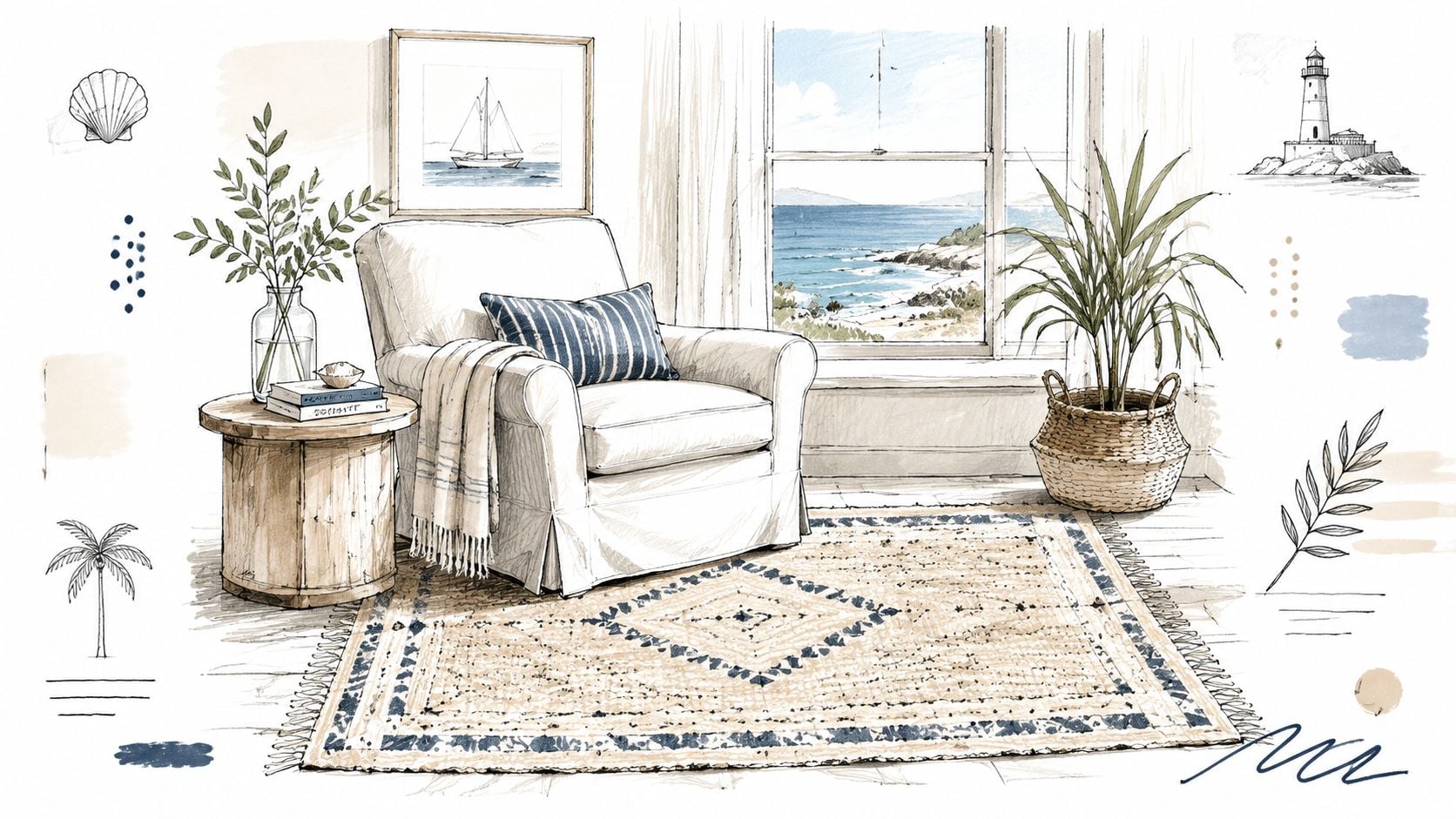
A beachy area rug gives a room its first signal. It can suggest driftwood, sea glass, sun-washed linen, or weathered boardwalk texture without using a single shell print. That's why the rug should be chosen early, not last. Once the rug is right, furniture, art, and accent pieces usually become easier to select.
This style also isn't a passing niche. The global area rugs market was valued at USD 11.77 billion in 2024 and is projected to reach USD 17.38 billion by 2032, growing at a CAGR of 5.00%, according to Data Bridge Market Research's area rugs market report. That growth reflects how many households are prioritizing home aesthetics alongside durable, style-specific choices.
Practical rule: A coastal room feels believable when the rug looks like it belongs to the architecture and the lifestyle, not just the color scheme.
For families in this region, that balance matters. A rug has to hold up to everyday traffic, changing seasons, and the kind of dry dust or tracked-in debris that can make a delicate rug feel like a bad decision in a hurry. A soft blue pattern may look lovely online, but if the pile is too deep or the fiber is too fussy, the room can become harder to maintain than anyone wants.
That's why the strongest beachy interiors usually start with a practical question, not a decorative one. What does this room need to handle every day?
The rug as the room's anchor
A good beachy rug can do several jobs at once:
- Set the tone: It can make a room feel airy, grounded, relaxed, or refined.
- Define the zone: In open living spaces, it helps furniture feel connected instead of scattered.
- Support daily life: It can soften sound, add comfort, and help hide everyday wear depending on the weave and color.
- Guide the rest of the design: Once the rug's texture and palette are chosen, the rest of the room usually starts to make more sense.
When shoppers understand that role, they stop looking for a “cute coastal rug” and start choosing a foundation that supports the whole room.
Decoding the Beachy Rug Aesthetic
A beachy rug doesn't need starfish, anchors, or rope borders to read coastal. In fact, many of the most current coastal rooms avoid obvious motifs altogether. They lean on texture, softness, and a palette that feels sun-washed rather than themed.
That shift is why the most useful design question isn't “Does this look beachy?” It's “What kind of coastal feeling does this create?”
Texture creates the first impression
Texture usually does more work than pattern in a coastal room. A woven surface, a subtle stripe, or a rug that mimics the look of natural fiber can suggest shoreline materials without becoming literal. That's one reason many shoppers are drawn to rugs that look sandy, nubby, or softly faded.
A strong coastal room often mixes smooth and rough surfaces. If upholstery is soft and structured, a textured rug adds needed contrast. If furniture already has visible wood grain or woven accents, a simpler rug can keep the room calm.
For readers refining their overall look, this overview of coastal design style ideas can help clarify whether the room is heading rustic, classic, or more polished.
Beachy style works best when it whispers through materials and color, not when it announces itself with novelty.
Color should feel collected, not busy
Beach-inspired palettes usually draw from a familiar set of references:
- Sandy neutrals: beige, oat, flax, driftwood, warm ivory
- Water tones: soft blue, sea glass green, faded aqua
- Sky and surf contrast: crisp white with muted navy
- Sun-softened accents: pale coral, shell pink, weathered gold
The key is restraint. A rug with too many competing colors can make a room feel less serene. A quieter palette gives the rest of the room room to breathe.
Pattern can be subtle
Many people assume “beachy” means printed motifs. Often, the opposite is more effective. A stripe, a heathered weave, a faded geometric, or even an almost-solid rug with visual depth can feel more refined and more lasting.
Recent retail trend language points in that direction too. Nourison's coastal and beach rug style page describes collections with phrases like “refined style,” “serene interiors,” and “warmth, texture,” which points toward refined coastal styling rather than overt seaside imagery.
That's useful for real homes. A neutral textured rug can still feel coastal in July, but it also works in November, during the holidays, and years later when tastes evolve. That kind of staying power is what turns a good purchase into a smart one.
Choosing Your Foundation Material and Construction
The prettiest rug in the showroom can still be the wrong rug for the room. Material and construction decide how a rug feels underfoot, how it handles wear, and how much effort it asks from the household.
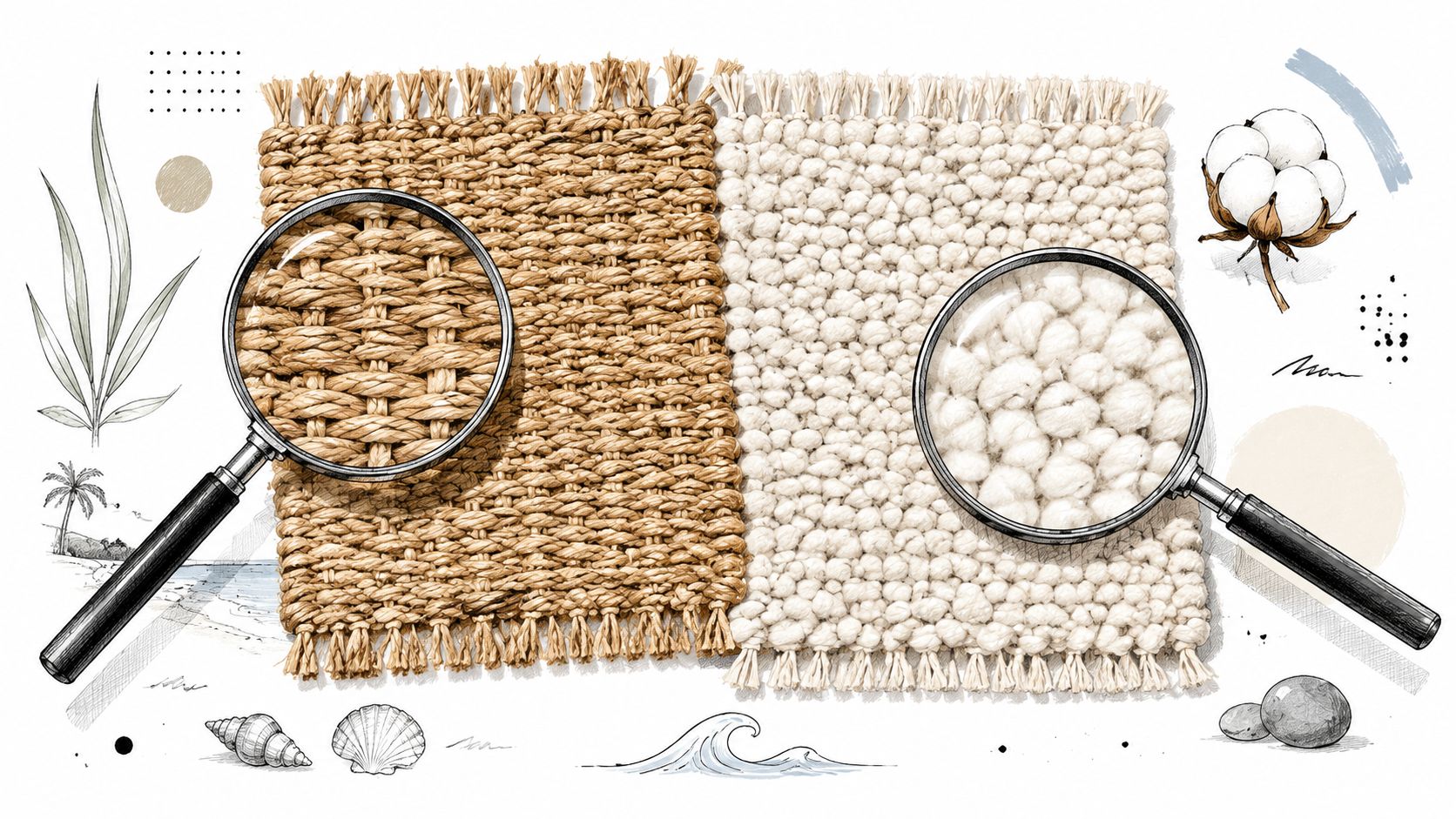
Why material matters more than motif
Beachy rugs have a long practical history, not just a decorative one. They're often made from natural fibers like cotton or durable synthetics like UV-stabilized poly silk, which are known for moisture resistance, stain resistance, and durability in busy spaces, as noted in this beach house rug guide from Cottage & Bungalow. That durability is one reason these rugs have remained a standard choice in high-traffic beach-home settings for over a century.
For everyday homes, the same logic applies. The household should choose material first, then look for the style that fits.
Someone furnishing a calm primary bedroom may value softness. Someone styling an entry or vacation property may care more about easy cleanup and lower maintenance. Both goals are valid. The best rug is the one that matches the room's actual use.
For shoppers who like practical, natural materials beyond the home, resources on fiber performance can be helpful in general. For example, this piece on stylish go-anywhere bags shows how texture, durability, and ease of use often matter as much as appearance when choosing everyday materials.
Beachy Rug Material Comparison
| Material | Feel & Texture | Best For | Care & Durability |
|---|---|---|---|
| Cotton | Soft, casual, relaxed | Bedrooms, quieter living spaces, layered looks | Comfortable and approachable. Better for lower-spill areas than messy zones. |
| Wool | Plush to softly tailored, depending on weave | Living rooms, bedrooms, spaces where comfort matters | Strong underfoot feel and warmth. Usually asks for more intentional maintenance. |
| Jute or sisal look | Textured, earthy, natural | Spaces that need a grounded coastal look | Excellent visual texture. Works best where moisture and frequent spills are less of a concern. |
| Polypropylene or indoor-outdoor synthetic | Cleaner, more performance-driven feel | Entryways, dining areas, patios, rentals, homes with pets or kids | Easier to clean, more forgiving with sand, spills, and routine wear. |
| Machine-washable synthetic blends | Soft but practical | Family spaces, play areas, under small dining setups | Built for easier cleanup and lower stress. Great where messes happen often. |
A simple way to match material to room
Some rooms need softness first. Others need resilience first. That difference can simplify the decision.
- Choose natural-feeling fibers when the room needs comfort, warmth, and a quieter visual texture.
- Choose low-maintenance synthetics when the room sees shoes, food, pets, or frequent cleanup.
- Choose indoor-outdoor construction when a rug may face moisture, sand, or heavy seasonal use.
- Choose washable construction when convenience matters more than a luxury handfeel.
A common point of confusion is whether a rug has to be made of natural fiber to look coastal. It doesn't. Many high-performing synthetics now capture the relaxed, textured look that people want from beachy area rugs while being much easier to maintain. That makes them a practical fit for homes that need style without fuss.
Sizing and Placing Your Rug for Perfect Flow
A well-chosen rug can still feel wrong if it's too small. That's one of the most common design mistakes in coastal interiors. The room may have the right palette and furniture, but the rug looks like it's floating instead of anchoring the space.
Retail assortments for beachy rugs commonly center on 5×7, 8×10, and 9×12 sizes, and those formats are standard benchmarks for living rooms and bedrooms. Retail listings also emphasize indoor/outdoor and machine-washable constructions for easier sand removal and moisture resistance, as seen in Walmart's coastal area rug assortment overview.
Living rooms that feel anchored
In a living room, the rug should usually connect the seating. That often means at least the front legs of the main upholstered pieces rest on the rug. When furniture sits completely off the rug, the layout can feel disconnected.
A practical starting point looks like this:
- 5×7: Often works in smaller conversation areas or compact rooms.
- 8×10: A common choice for standard living rooms where the rug needs to connect a sofa and chairs.
- 9×12: Helpful when the room is more open and the rug needs to hold a larger furniture grouping together.
For readers who want a clearer planning process before they shop, this guide on how to measure for an area rug can help map the room with fewer surprises.
A rug should make furniture feel placed on purpose. If the room still feels scattered, the rug is often too small.
Bedrooms and dining areas that work harder
Bedrooms need a different kind of logic. The rug should create a soft landing where feet naturally step down. In many rooms, that means the rug extends beyond the bed enough to be seen and felt on the sides and at the foot.
Dining rooms ask for clearance. Chairs should stay on the rug as they move back, or the setup can feel awkward and noisy. In casual coastal dining spaces, a low-pile or easy-clean construction usually makes more sense than a deep, plush rug that traps crumbs and drags on chair legs.
A few placement reminders help:
- Match the rug to movement. High-traffic paths need more durability and often a flatter weave.
- Respect the room shape. Long narrow rooms often look better with rugs that reinforce the room's proportions.
- Let the rug define the function. In open layouts, one rug can establish the lounge zone while another marks the dining area.
On patios or covered outdoor areas, the same principle applies. The rug should define the conversation or dining group, not sit awkwardly beneath only a coffee table. Scale always matters more than trend.
Styling Your Space Coastal Mood Board Ideas
The most appealing coastal rooms don't copy a theme. They combine a few strong ingredients and let texture do the storytelling.
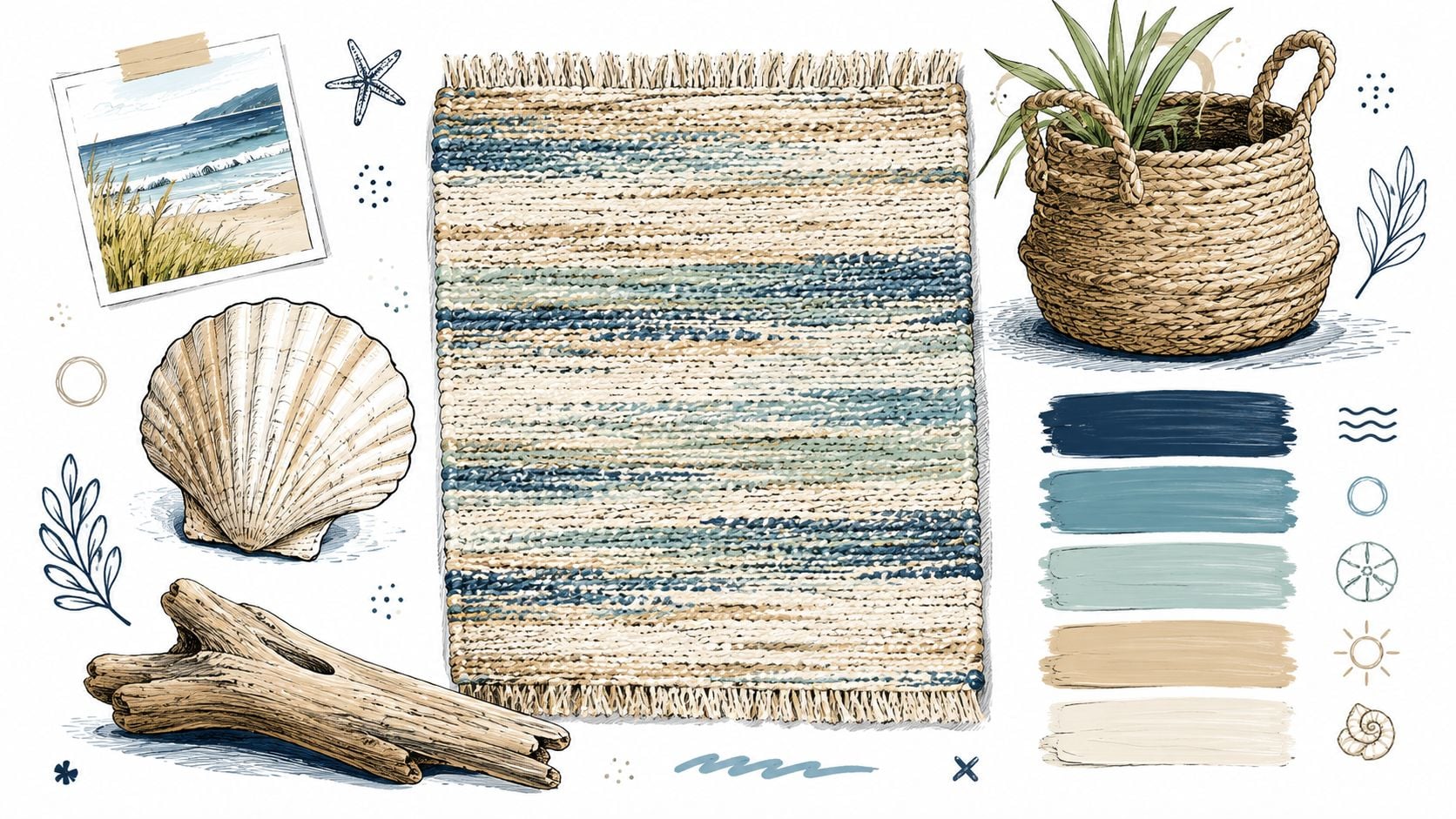
Recent style direction supports that approach. Retailers increasingly describe coastal collections with phrases such as “refined style,” “serene interiors,” and “warmth, texture,” as shown on Nourison's coastal and beach rugs page. That language reflects a move toward quieter, more elegant rooms.
Serene Sand and Sky
This look starts with a rug in soft oat, warm ivory, or a faded blue-gray. The texture should be visible but not rough. A subtle stripe, tonal pattern, or woven effect works well.
The rest of the room follows that softness. Light wood finishes, slipcovered seating, and a few blue accents keep the space calm. Ceramic lamps, linen drapery, and a single organic shape on the coffee table usually do more than a shelf full of ocean-themed accessories.
A living plant can help this version feel fresh rather than flat. Readers who want help balancing greenery with furniture and accessories may enjoy this guide for plant parents to style greenery.
Modern Marina
This version uses stronger contrast. A navy and ivory rug, a crisp linear pattern, or a textured flatweave with structure can give the room a more refined coastal character.
Furniture lines are cleaner here. Woods may skew medium-tone rather than weathered. Metal accents can be warm and understated. The room still feels breezy, but it has more edge and definition.
This is often a smart path for homeowners who like coastal calm but don't want the room to feel too casual.
Rustic Shoreline
Rustic coastal style leans into tactile materials. Think sandy neutrals, woven surfaces, weathered woods, and upholstery that feels relaxed rather than formal. A rug with visible texture becomes the grounding piece.
This is also where natural-fiber looks shine. The room may include woven baskets, pottery, chunky throws, and softened finishes that suggest timeworn ease. If a homeowner wants to explore rug options alongside furniture and accents, the rugs collection at Miller Waldrop Furniture & Decor can serve as one practical starting point for coordinating the foundation of the room with the rest of the space.
The most successful coastal rooms usually have one clear idea. Soft and airy, crisp and tailored, or rustic and textured. Once that direction is clear, the rug becomes much easier to choose.
Keeping Your Coastal Rug Beautiful in Our Climate
A beachy rug in West Texas or Southeastern New Mexico doesn't face salt air in the same way a true beach house does, but it still deals with stress that matters. Strong sunlight, fine dust, busy entry points, and dry debris can all wear on the fibers and alter the look over time.
That means maintenance should be part of the buying decision, not an afterthought. Some rugs ask for simple routine care. Others need more intention if the household wants the texture and color to stay attractive.
Daily habits that protect the look
For coastal interiors, a medium pile of 10 mm to 15 mm offers a useful balance between comfort and trapping grit, according to Kapetto's coastal rug guide. That range can feel comfortable underfoot without holding onto as much debris as deeper pile options.
A few habits make a visible difference:
- Vacuum with the fiber in mind: Textured natural-fiber looks may need gentler, more careful passes than performance synthetics.
- Use a rug pad: It helps support the rug, reduces shifting, and can improve how the rug wears over time.
- Treat entry rugs like workhorses: These areas benefit from lower-pile, easier-clean constructions instead of delicate weaves.
- Keep direct sun in mind: Bright windows can gradually affect color, especially in the same exposed areas day after day.
For households comparing indoor and outdoor performance, this roundup of outdoor rug considerations is useful when a room blurs the line between patio, sunroom, and interior living space.
When to clean and when to rotate
One of the simplest maintenance habits is rotation. The same coastal guide recommends rotating the rug 180 degrees every six months to distribute wear and UV exposure more evenly. That's a small task that can help the rug age more gracefully in sunny rooms.
Wool rugs in coastal-style environments may also need professional cleaning every 12 to 18 months, which is more frequent than the 24-month cycle noted there for typical urban homes. Even outside a true coastal setting, that guidance is a helpful reminder that textured, comfort-focused rugs often need a care plan.
A rug lasts longer when the household chooses for the room honestly. Performance first in messy zones, softness first in restful zones.
That honesty is what helps a home feel beautiful and livable at the same time. The right beachy area rug doesn't just deliver a mood. It supports the pace of the household, the climate outside, and the way the room is used every day.
A room with a coastal feel should look relaxed and function well. Miller Waldrop Furniture & Decor helps homeowners and renters in West Texas and Southeastern New Mexico compare rugs, furniture, and room layouts in person, with guidance on size, texture, and everyday practicality. For anyone trying to choose a beachy rug that can handle real life while still creating a calm, refined space, their showrooms and design support can make the decision clearer.