

Cheap Ottomans with Storage: A 2026 Buyer’s Guide

The living room usually tells the whole story. A throw blanket is draped over one arm of the sofa. The remotes are missing again. A stack of magazines has migrated to the floor. Then company comes over, and the room suddenly needs one more seat and one less mess.
That's exactly why cheap ottomans with storage keep showing up in smart homes across West Texas and Southeastern New Mexico. They solve two problems at once. They hide clutter and add function without asking for a big footprint or a big budget.
Cheap doesn't have to mean flimsy. It means shopping with better questions, better measurements, and a sharper eye for construction. The demand for multifunctional pieces is clearly growing. The global storage ottoman market was valued at $4.2 billion in 2025 and is projected to reach $6.1 billion by 2034, reflecting stronger interest in furniture that works harder in everyday spaces, according to storage ottoman market data.
Table of Contents
- Find Smart Storage and Style on a Budget
- How to Choose an Ottoman That Lasts
- Measure Twice Buy Once for Perfect Fit and Function
- From Footrest to Focal Point Styling Your Ottoman
- Shop Local Find Quality Ottomans Near You
- Your Smart Shopper Checklist for Storage Ottomans
Find Smart Storage and Style on a Budget
A storage ottoman earns its place fast. One piece can hold blankets, tame toy clutter, give tired feet a landing spot, and offer extra seating when family drops by. That's a lot of work from a single item, especially in apartments, smaller living rooms, guest rooms, and multipurpose spaces.
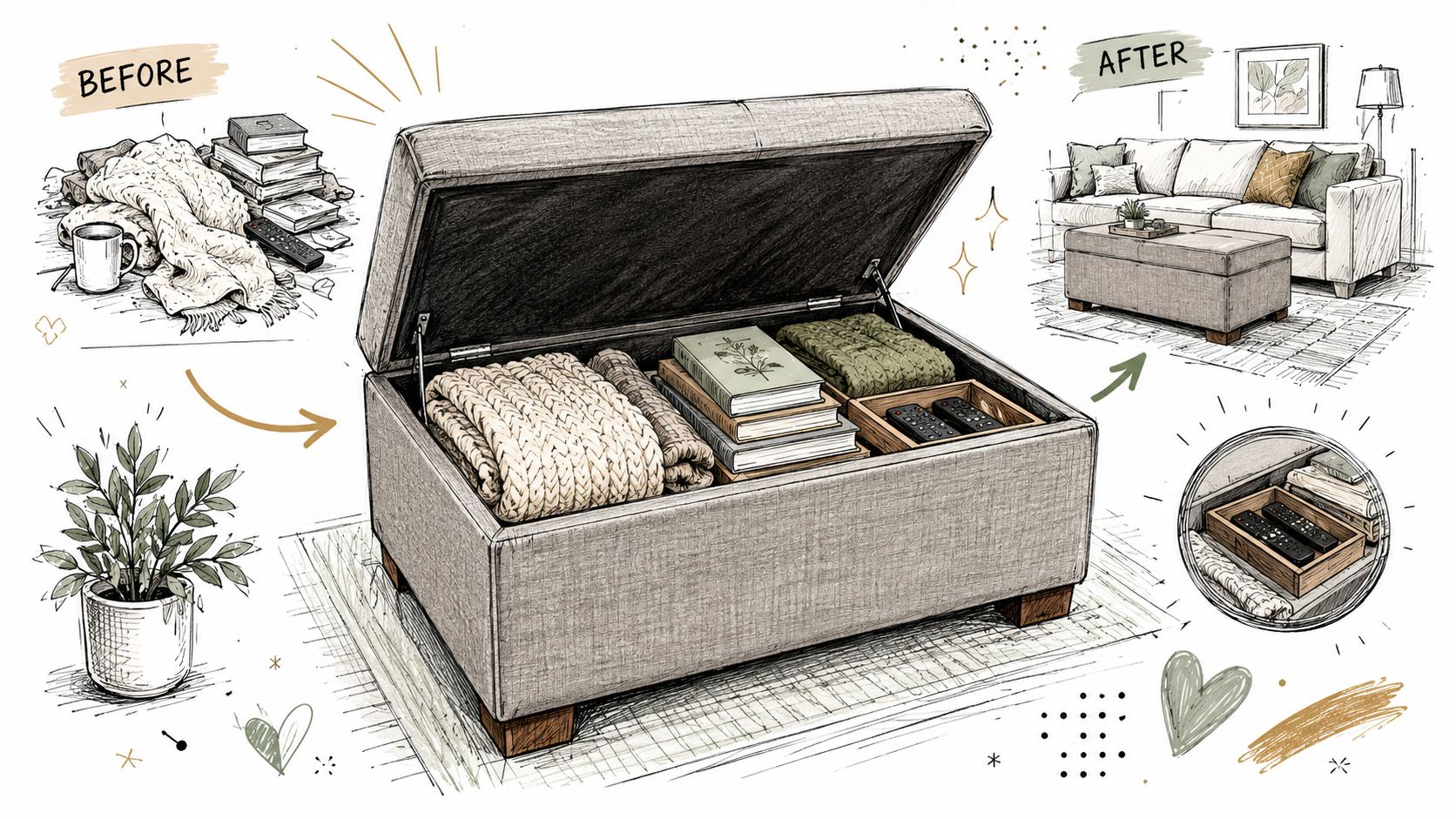
The best budget shoppers don't chase the lowest sticker. They look for usable storage, stable seating, and a shape that fits the room. That's how a cheap ottoman with storage turns from an impulse buy into a daily-use piece.
A practical room usually needs a few small upgrades working together. For renters and first-time homeowners trying to stretch a decorating budget, these stylish budget decor hacks pair well with a storage ottoman because they focus on solving visual clutter without overcrowding the space.
A good ottoman should make a room feel calmer within a day. If it doesn't hide the mess and improve the layout, it's the wrong one.
Some homes need a classic bench shape at the end of a bed or under a window. Others need a living-room piece that doubles as a coffee table. A good example of that broader category is a bench seat with storage, which works especially well when a room needs both concealed storage and a cleaner furniture line.
Why shoppers are leaning this way
- Less wasted space because one piece handles storage and seating
- Cleaner sight lines since blankets, games, or pet items can disappear under the lid
- More flexibility when the room has to shift from everyday living to hosting guests
The shoppers making the best choices aren't buying more furniture. They're buying furniture that does more.
How to Choose an Ottoman That Lasts
Looks matter. Construction matters more. Many cheap ottomans with storage look attractive online, then disappoint the minute someone sits on them, lifts the lid, or loads them with real household items.
Start with the frame
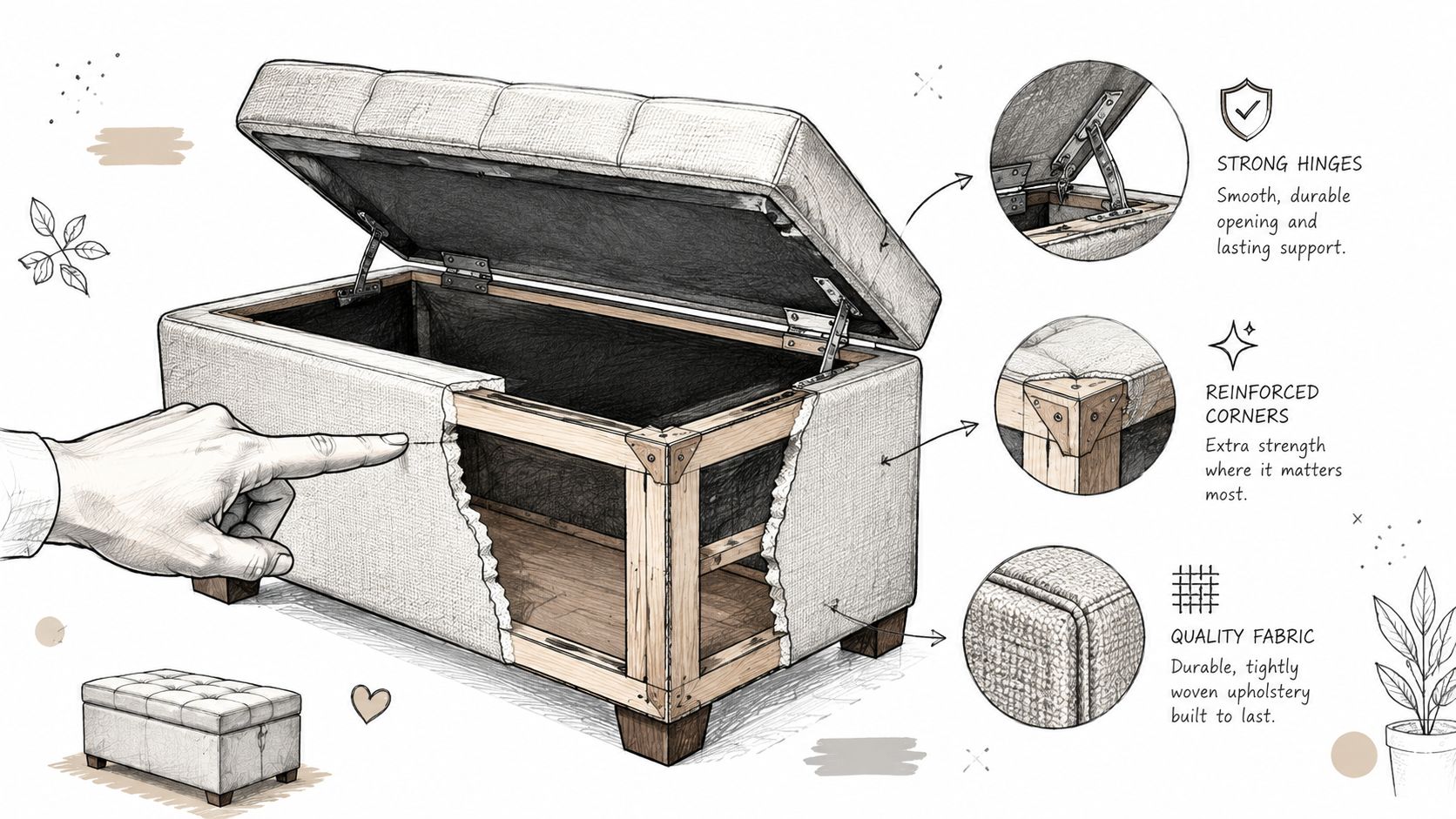
The frame is the whole game. If the base is weak, nothing on top of it matters. A high-density engineered storage ottoman with a solid plywood base must support a minimum static load of 660 pounds to maintain structural integrity for dual-user seating, based on commercial model testing details.
That number gives shoppers a useful benchmark. It doesn't mean every affordable ottoman meets that standard. It means the stronger ones are built with seat use in mind, not just decorative use.
A sturdy ottoman usually shows a few clues:
- Plywood or solid structural parts instead of vague “wood composite” language
- A firm lid that doesn't flex under hand pressure
- Cleanly finished seams and corners that suggest the frame underneath is square
- Stable legs or base contact so it doesn't wobble on a hard floor
Practical rule: If the top bows when pressed by hand in a showroom, it won't get stronger at home.
Pay attention to the lid and hardware
The lid gets ignored by a lot of shoppers, and that's a mistake. The lid is where budget shortcuts tend to show up first. A weak top can warp, feel spongy, or sit unevenly after regular use.
Look for a lid that opens smoothly and closes without scraping the fabric or shifting off-center. Hinged lids are often easier for everyday use because they stay attached and feel more controlled. Lift-off tops can still work well, but they should feel balanced and easy to remove without dragging on the upholstery.
A few quick tests in person help a lot:
- Open it fully. The lid shouldn't twist.
- Close it slowly. It should sit flush.
- Press the center and edges. Weak spots usually reveal themselves right away.
Choose upholstery for real life
Fabric choice should match the household, not a trend photo. A textured woven fabric can hide daily wear nicely in a family room. A smoother surface is often easier to wipe down in an entry or bedroom. Tufting looks polished, but deep tufting can make tray styling less practical if the ottoman will double as a tabletop.
The smartest buy is usually the one that fits the room's real workload. If kids will climb on it, guests will sit on it, and blankets will live inside it, durability beats delicate detailing every time.
Measure Twice Buy Once for Perfect Fit and Function
The quickest way to waste money is buying an ottoman that's the wrong scale. Too tall, and it feels awkward against the sofa. Too wide, and the room gets cramped. Too small, and it looks like an afterthought that still doesn't solve the clutter problem.
Start with the room's traffic flow. People need to move around the ottoman without bumping knees or rerouting every path through the living room. In tighter homes, that matters as much as the storage itself.
Match the ottoman to the room's job
A family room ottoman usually needs to do three things well. It should work as a footrest, hold a tray when needed, and store the loose items that usually end up on the floor.
A bedroom ottoman has a different assignment. It may hold spare bedding, off-season layers, or decorative pillows while also acting as a bench. Entry use is different again. That piece may need to open quickly for bags, dog gear, or shoes while still looking tidy by the front door.
This quick guide helps:
| Room | Best shape tendency | Main priority |
|---|---|---|
| Living room | Rectangular or oversized square | Seating plus everyday storage |
| Bedroom | Bench style | Linens and soft goods |
| Entryway | Narrow bench or compact rectangle | Fast access and clean-up |
Check interior design, not just exterior size
Exterior dimensions don't tell the full story. The inside construction matters. The internal storage volume of a budget-grade rectangular ottoman is maximized when it uses a specific tray-top design that avoids the dead zone effect, where foam compression over shallow storage hurts lid flushness and stability, according to this tray-top ottoman design analysis.
That matters because two ottomans can look nearly identical from the outside and perform very differently once they're loaded with real household items.
The better budget ottoman doesn't just look roomy. It gives usable depth without making the top feel unstable.
Before buying, shoppers should check these points:
- Bring the room measurements and include nearby furniture spacing
- Measure sofa seat height so the ottoman feels natural as a footrest
- List what's going inside such as throws, board games, pillows, or pet supplies
- Check lid clearance if it will sit under artwork, in front of a bed, or near a wall
A good fit feels intentional. A bad fit makes the room work harder than it should.
From Footrest to Focal Point Styling Your Ottoman
A storage ottoman shouldn't look like a compromise. It can carry the room visually if it's styled with purpose and placed where it helps daily life.
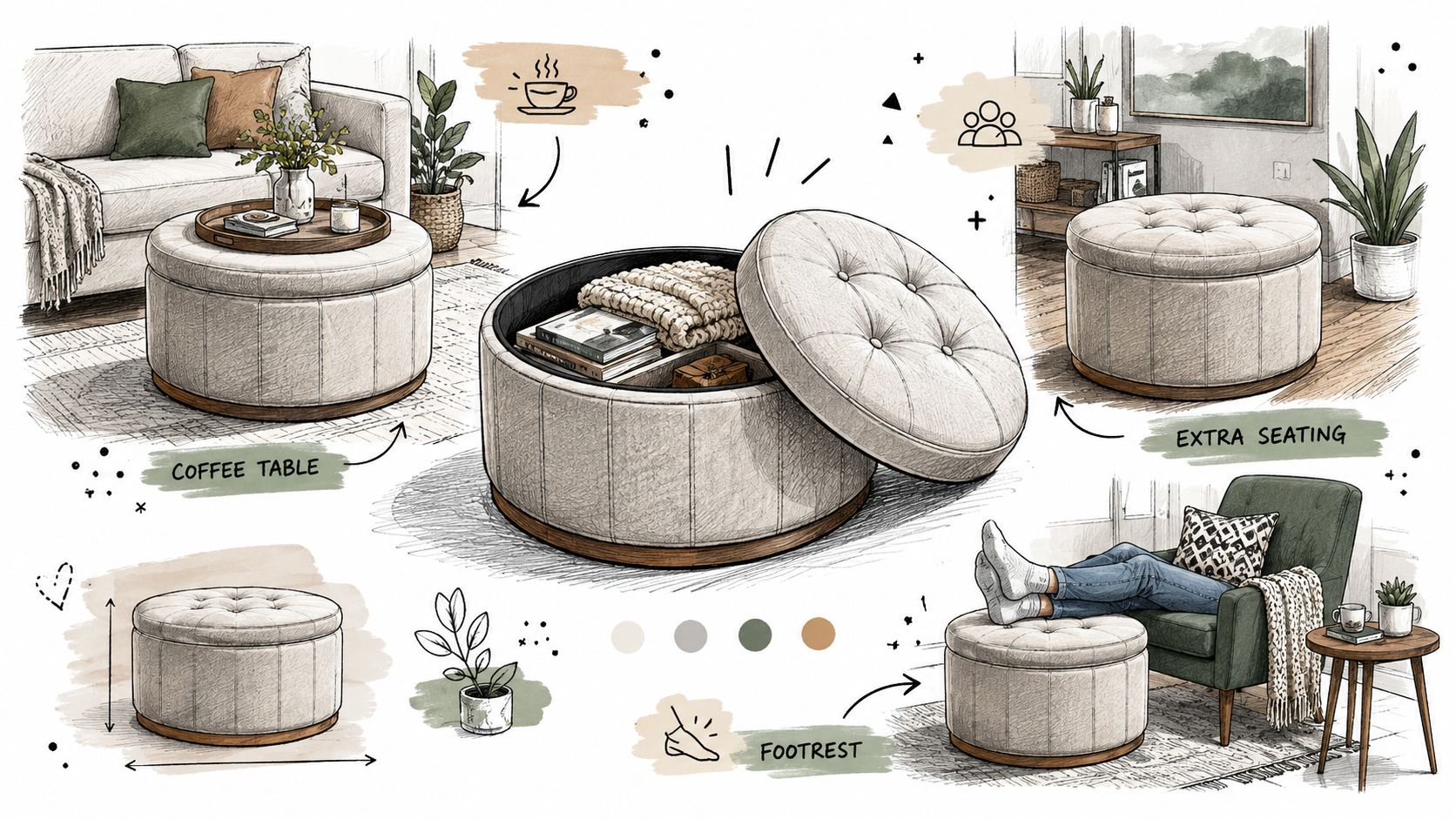
In the living room
A rectangular ottoman centered in front of a sofa often works better than a hard coffee table for households that want softer edges and flexible seating. Add a tray, and the surface becomes useful for drinks, a candle, or a couple of books. Remove the tray, and it's back to being a footrest or overflow seat.
For shoppers who like the function of a cocktail table but want more softness, a coffee table with storage drawers can solve a similar problem in a different form. The right choice depends on whether the room needs a padded top or a firmer surface.
In the bedroom or entry
At the foot of the bed, an ottoman bench can anchor the room and hide the pile that usually ends up on a chair. In an entryway, it gives people a place to sit while shoes go on, and it keeps everyday clutter from spilling into the living room.
A few styling ideas work almost every time:
- Use a tray to create structure on top
- Repeat the room's fabric story with a tone that relates to the rug, drapery, or pillows
- Choose legs or a base that match the visual weight of nearby furniture
- Don't overload the top because the piece needs to stay easy to use
Good styling starts with function. If the ottoman is hard to open because the top is buried under decor, the room has gone backward.
Shop Local Find Quality Ottomans Near You
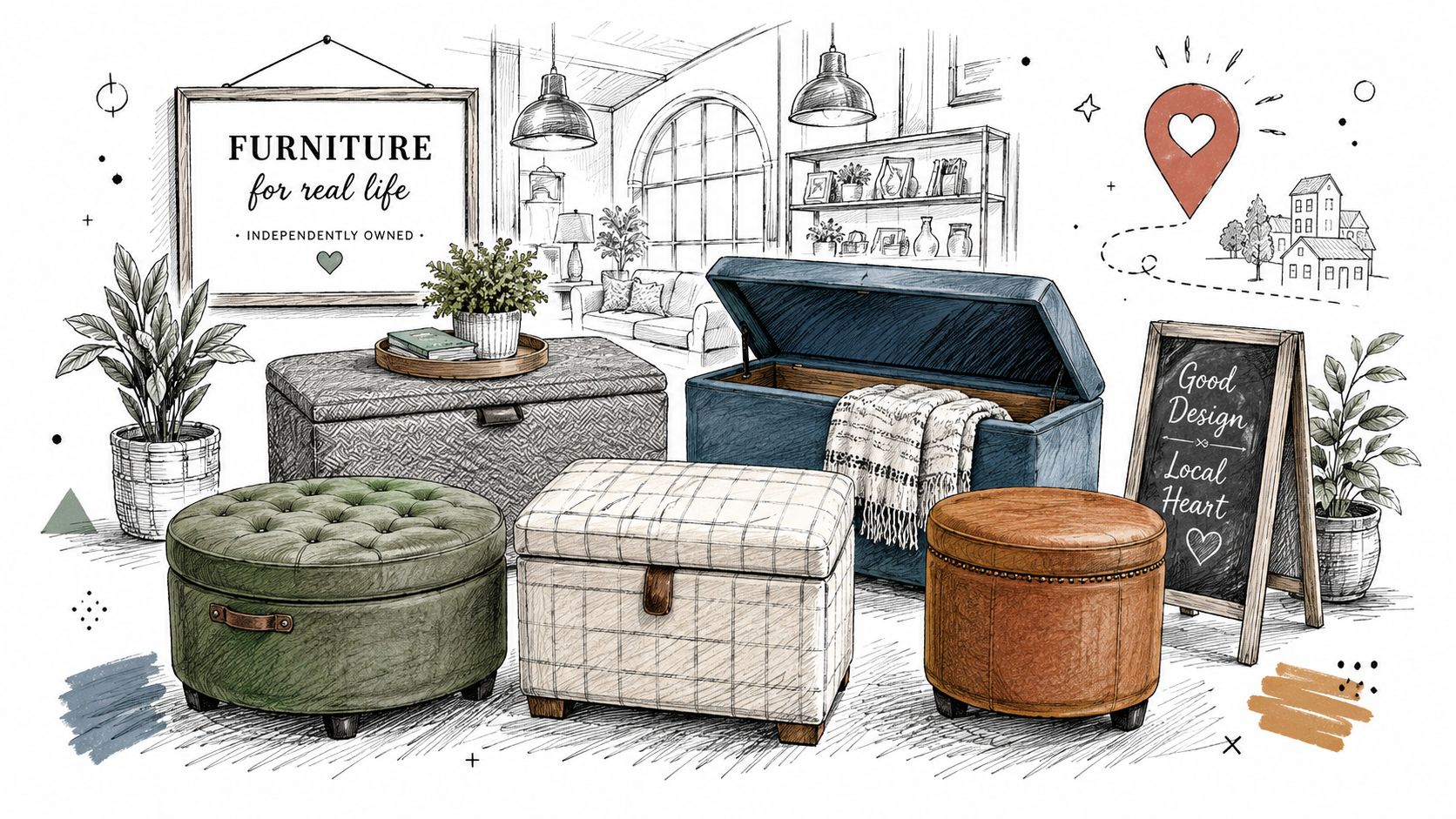
Local shoppers have an advantage when they use it. They can sit on the ottoman, open the lid, inspect the stitching, and decide whether it feels dependable before money changes hands. That beats guessing from a product photo and hoping the construction matches the description.
Why local shopping makes more sense
Many shoppers ask how much weight a cheap storage ottoman can safely hold, but product listings often skip structural details. Ottomans under $100 often use frames that fail under dynamic loads, and retailers rarely disclose that clearly, according to this analysis of budget storage ottoman information gaps. That's exactly why in-person shopping matters.
West Texas and Southeastern New Mexico homes also tend to be used hard. Furniture gets lived on. Kids perch on it. Guests use it as a seat. Pets claim it. A storage ottoman in Lubbock, Hobbs, or Ruidoso Downs can't just look nice in a photo. It needs to hold up in an actual household.
A bargain isn't a bargain when it cracks, sags, or stops closing right after the room starts depending on it.
Long-standing local retailers also tend to curate with real homes in mind. They know shoppers want practical scale, durable fabrics, and options that fit both starter spaces and established homes. That kind of selection is more useful than scrolling through endless listings with vague construction notes.
What to test before taking one home
A showroom visit should be hands-on. Shoppers should sit on the piece, check for sway, lift the lid, and look underneath if possible. A dependable ottoman should feel settled and square, not hollow or shaky.
One practical example is the Tuttle Storage Ottoman, which is a storage ottoman option shoppers can review in the home decor category when they want a product-level reference point while narrowing shape and style preferences.
A smart local buying routine is simple:
- Test the seat feel because some tops are decorative only
- Inspect the interior for usable space and cleaner finishing
- Ask about delivery and fit if the piece is going upstairs, into an apartment, or through a tight doorway
- Compare the ottoman to the room photos on a phone so scale decisions stay grounded in reality
For households trying to stretch every furniture dollar, local expertise is a tool. It helps avoid buying the same problem twice.
Your Smart Shopper Checklist for Storage Ottomans
A good storage ottoman should earn its footprint every day. It should hide clutter, offer dependable seating, and fit the room without crowding it. If a piece can't do those jobs, the low price isn't the win it looks like.
The checklist
Bring this list when shopping for cheap ottomans with storage:
- Check the frame material. Look for signs of sturdier construction and avoid vague descriptions that tell shoppers nothing about seat strength.
- Test the lid. Open it, close it, and press on the center and edges. The top should feel stable and sit evenly.
- Think about the intended contents. Blankets, toys, books, seasonal pillows, and pet supplies all need different kinds of space.
- Match the scale to the room. The ottoman should relate to the sofa, bed, or entry wall without blocking movement.
- Decide how it will be used most. Footrest, coffee-table substitute, bench, toy storage, or extra seating. One use usually leads the decision.
- Review the upholstery critically. A beautiful fabric that can't handle the household isn't a smart budget choice.
- Sit on it before buying if possible. Decorative and functional ottomans are not the same thing.
Buy for the hardest day in the room, not the best photo of the room.
Confident shoppers don't need the cheapest option. They need the piece that works, lasts, and makes daily life easier.
For shoppers ready to see options in person, Miller Waldrop Furniture & Decor gives West Texas and Southeastern New Mexico households a practical next step. Browse the showroom selection, test the construction, and use the design team as a tool to find a storage ottoman that fits the room, the budget, and the way the home lives.