

Modular Sofas for Small Spaces: A Buyer’s Guide

A small living room can make you feel like every choice is a compromise. The sofa is too deep. The walkway disappears. The room that looked workable when it was empty suddenly feels tight once real life moves in.
That’s why modular sofas for small spaces make so much sense. They let you solve the room you have, not the room a standard sofa assumes you have. In apartments, townhomes, first houses, and downsized living rooms across West Texas and SE New Mexico, that flexibility matters.
The category is growing for a practical reason. The modular sofa market was valued at $4.5 billion in 2023 and is projected to reach $7.8 billion by 2031, reflecting demand for adaptable furniture that works for smaller homes and changing lifestyles, according to ShelfTrend’s modular sofa market analysis. If you’re trying to make one room feel open, comfortable, and finished, that trend makes perfect sense.
A modular sofa also gives you more freedom after the sofa is in place. Once the seating works, wall decor starts to matter more, especially in a compact room where every visual choice carries weight. If you’re refining the room beyond furniture, this guide to purchasing artworks is a useful companion for choosing pieces that fit the scale and mood of the space.
Reclaiming Your Living Space
One of the most common small-space problems isn’t a lack of square footage. It’s a room that fights you. A window lands in the wrong spot. One wall is short. The entry path cuts through the seating area. A standard sofa can fit on paper and still make the room frustrating to use.
That’s where modular design earns its keep. Instead of forcing one large piece into an awkward footprint, you work with separate components that can adapt to corners, windows, and daily routines. In practice, that means the sofa can serve the room instead of dominating it.
Small rooms don't need less comfort. They need better proportions and smarter placement.
In homes with tighter layouts, I’ve seen the same shift happen again and again. The room starts to feel calmer once the seating stops acting like a block and starts acting like a system. A chaise can define a lounge corner without swallowing the entire room. A movable armless seat can open a traffic path that used to feel pinched.
What modular solves better than standard sofas
- Awkward corners: Corner units let you use dead space instead of losing it.
- Changing needs: You can split pieces for guests, movie night, or a new apartment layout.
- Visual bulk: Lower-profile modules usually read lighter than one oversized sofa.
- Real-life flexibility: A sofa that can evolve with a move or a growing family is easier to live with for the long haul.
The goal isn’t to fill every inch. It’s to make the room feel usable, open, and like it belongs to you.
Measure Your Room for Maximum Livability
A small living room can look workable until real life starts. The front door swings open. Someone cuts through to the kitchen. Sun hits the window wall all afternoon, so the only comfortable TV angle shifts. In a lot of West Texas and SE New Mexico homes, the room itself is not the problem. The trouble starts when the sofa blocks how the room needs to work.
Start with how the room is used
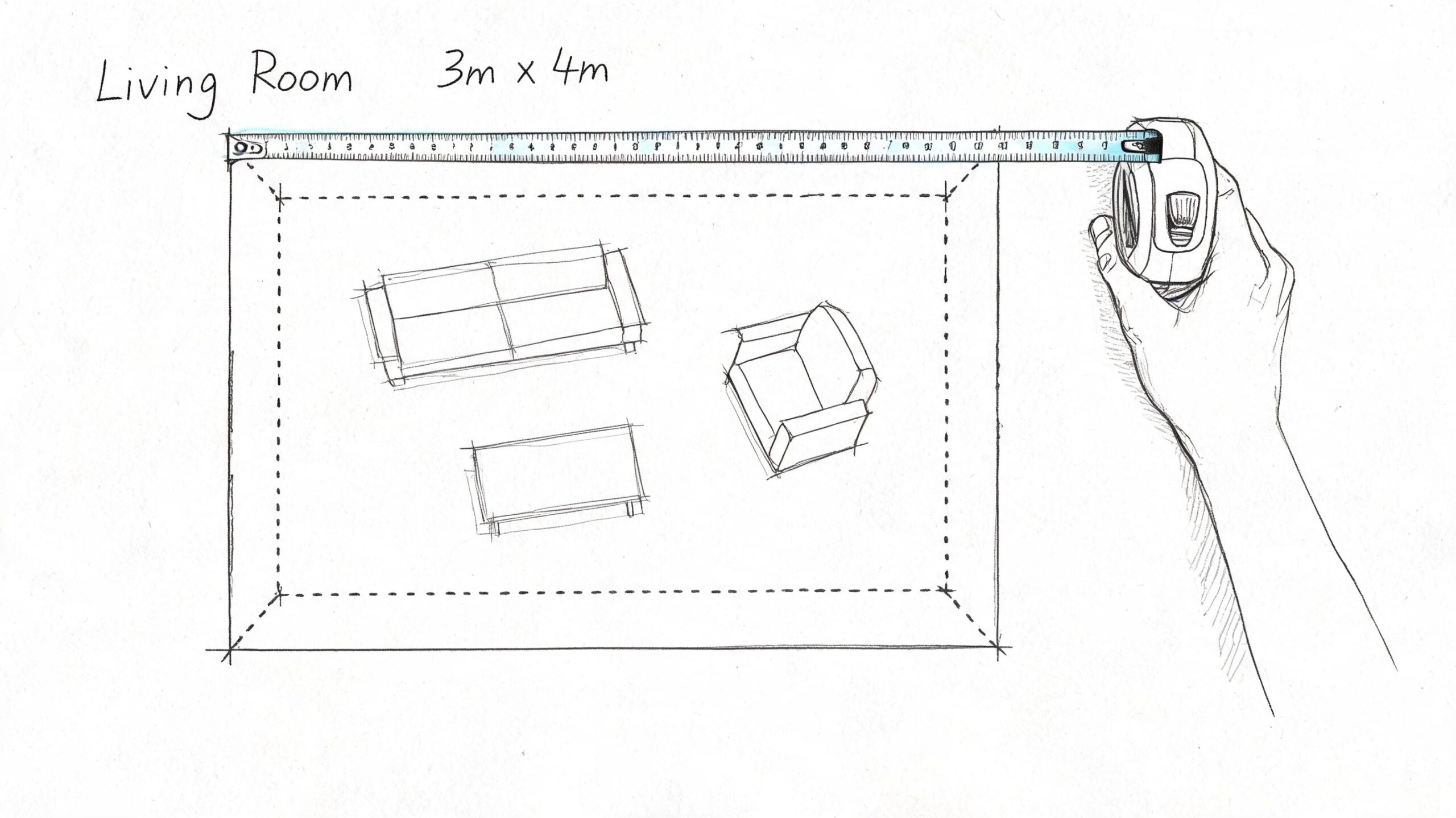
Measure the wall where the sofa may sit, but do not stop there. Good sizing decisions come from the whole room. Record the full width and depth, then mark every fixed element that limits placement: doors, windows, floor vents, radiators, outlets, and any path people use more than once a day.
Access matters too, especially for renters and families who expect to move again. Modular seating earns its place here because separate pieces are usually easier to carry through apartment stairs, narrow halls, and tight entry turns than one long sofa frame.
Then check the clearance around the seating area. The National Kitchen & Bath Association recommends at least 36 inches for a walkway, with 42 to 48 inches working better in paths used regularly by more than one person, according to these NKBA kitchen and bath planning guidelines. Living rooms are not kitchens, but the circulation rule applies. If the route past the sofa feels tight on paper, it will feel worse once people, bags, pets, and side tables enter the picture.
Practical rule: A sofa belongs in the room only if people can pass through it naturally every day.
Use painter’s tape before you buy
Tape the full footprint on the floor, including the chaise or corner unit. Then test the room the way you live in it.
Walk in with groceries. Open the nearest door fully. Sit where the end table would go. Check whether the taped outline crowds a vent or covers part of the window trim. In bright rooms, I also tell clients to sit in their usual spot at the time of day the sun is strongest. Glare changes which wall makes sense for seating and TV placement.
If the room also serves as movie space, work viewing distance into the layout before you order. A home theater dimensions calculator can help you sort out screen placement and seating depth at the same time.
Measure in the order that prevents mistakes
- Wall length first: This sets your realistic maximum width.
- Room depth second: This shows whether a chaise will leave enough usable floor space.
- Entry access third: Measure the front door, stair landings, hallway turns, and interior openings before you fall in love with a setup.
- Circulation last: Confirm that everyday walking paths stay open once the sofa is in place.
For a clearer step-by-step checklist, use Miller Waldrop’s guide to measuring for a sectional couch.
Choose the Right Configuration and Features
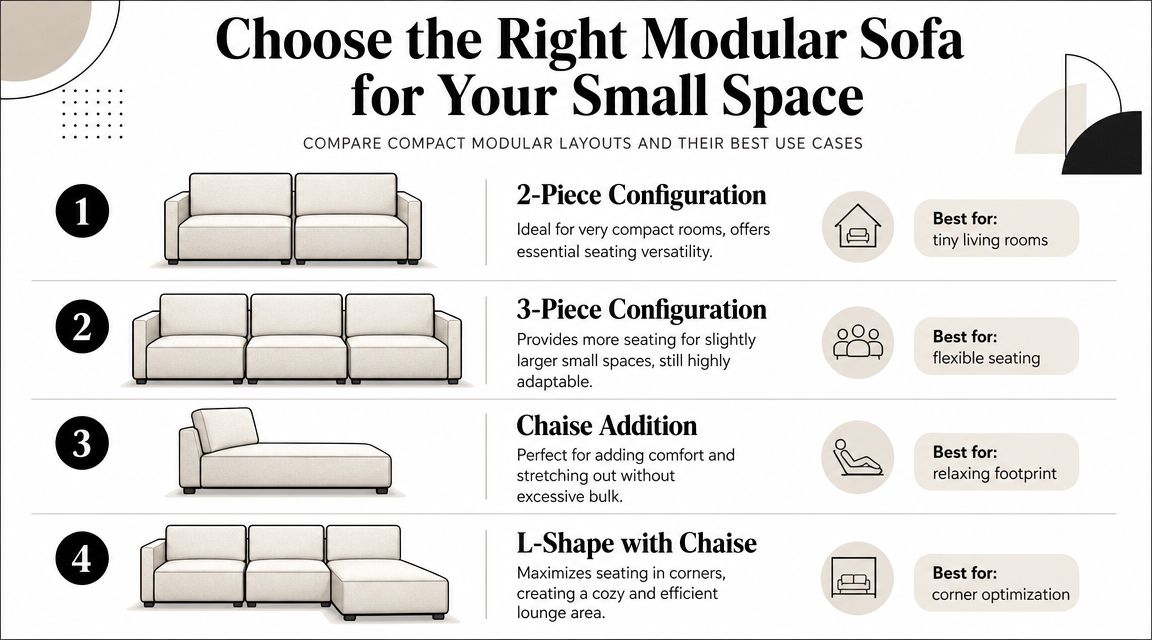
A good modular sofa earns its floor space every day. In smaller homes and apartments across West Texas and SE New Mexico, the right setup usually starts with restraint. A 2 to 3-piece layout often gives families the seating they need without swallowing the room.
Match the configuration to how you live
Straight configurations suit narrow rooms and apartment walls where every inch of width matters. An L-shape can turn an awkward corner into usable seating. A chaise is often the smartest upgrade for small spaces because it adds lounging comfort without forcing you to dedicate space to a full second sofa wing.
That choice also matters if you expect to move in a year or two. Renters usually do better with fewer, more flexible modules that can be rearranged in the next place instead of one oversized setup that only works in the current room.
If your living room also handles guests, homework, and movie nights, features like hidden storage or a sleeper function can pay off. Storage keeps blankets, chargers, and extra pillows from piling up in plain view. Sleeper modules are helpful in homes where there is no true guest room.
For a plain-English breakdown of how pieces connect and reconfigure, this overview of modular sectionals is useful.
Don’t ignore what’s inside the sofa
In a small room, the sofa gets more use and more scrutiny. Seat support, cushion density, and connector strength matter because there is nowhere for a weak spot to hide.
GoodBed’s sectional sofa buying advice recommends paying close attention to frame quality, suspension, and cushion construction before focusing on looks. That matches what I see on showroom floors. The corner seat and the connection points usually reveal the quality level faster than the center cushion does.
If a modular sofa feels loose in the showroom, it usually won't tighten up at home.
Look for modules that stay aligned when someone drops into the seat, shifts their weight, or gets up one-handed while holding a child or a bowl of popcorn. In family rooms, that stability matters more than a long feature list.
Fabric choices that work harder
Fabric is where small-space buyers often overspend in the wrong direction. Color gets all the attention, but daily performance decides whether you still like the sofa two years from now.
In our region, I usually steer people toward fabrics that can handle three things well. Friction from everyday use, cleanup after spills, and sunlight from large windows. Rooms in West Texas get bright fast, and the wrong upholstery can fade or dry out sooner than buyers expect.
The Wirecutter guide to couches recommends durable, tightly woven fabrics for households that need easier upkeep and better wear over time. That is a sound filter for small homes with kids, pets, or frequent visitors.
Here’s a simple comparison to narrow your options:
| Fabric Type | Best For | Visual Effect |
|---|---|---|
| Performance fabric | Kids, everyday lounging, frequent use | Soft and approachable |
| Tightly woven microfiber | Pet households, easier hair removal | Clean and structured |
| Crypto-leather hybrid | Spill-prone homes, pets, high-contact seating | Sleek and slightly dressier |
| Textured woven fabric | Adult households focused on style | Adds depth, can look more relaxed |
| Velvet look fabrics | Low-pet rooms where texture matters most | Rich and dramatic |
One more practical note. If you like a bolder sofa color, keep the larger visual statement on the walls instead of the upholstery. This pop-culture wall art guide is a useful reference for adding personality without locking your biggest furniture piece into a trend you may tire of.
Features worth paying for
Some upgrades earn their keep. Others only look good on a tag.
- Chaise storage: Useful for blankets, games, and the clutter that builds up in compact living rooms.
- Removable or cleanable covers: Helpful for families and pet owners, especially if the cushion design does not trap debris in deep seams.
- UV-conscious upholstery: Smart for sun-drenched rooms where direct light hits the same seat every afternoon.
- Stable connectors: A modular sofa should stay together during normal daily use, not creep apart across the rug.
Miller Waldrop Furniture & Decor carries customizable sectionals such as the Evian II 3Pc Sectional. Pieces in that category make sense for buyers who want a softer sectional look with enough flexibility to fit a smaller room well and still work in a future home.
Layout Tricks to Make Your Space Feel Bigger
A modular sofa can fit perfectly and still leave the room feeling flat if the surrounding layout doesn’t support it. Small-space design is often about perception. The room needs breathing room, sightlines, and a few pieces that visually lighten the load.
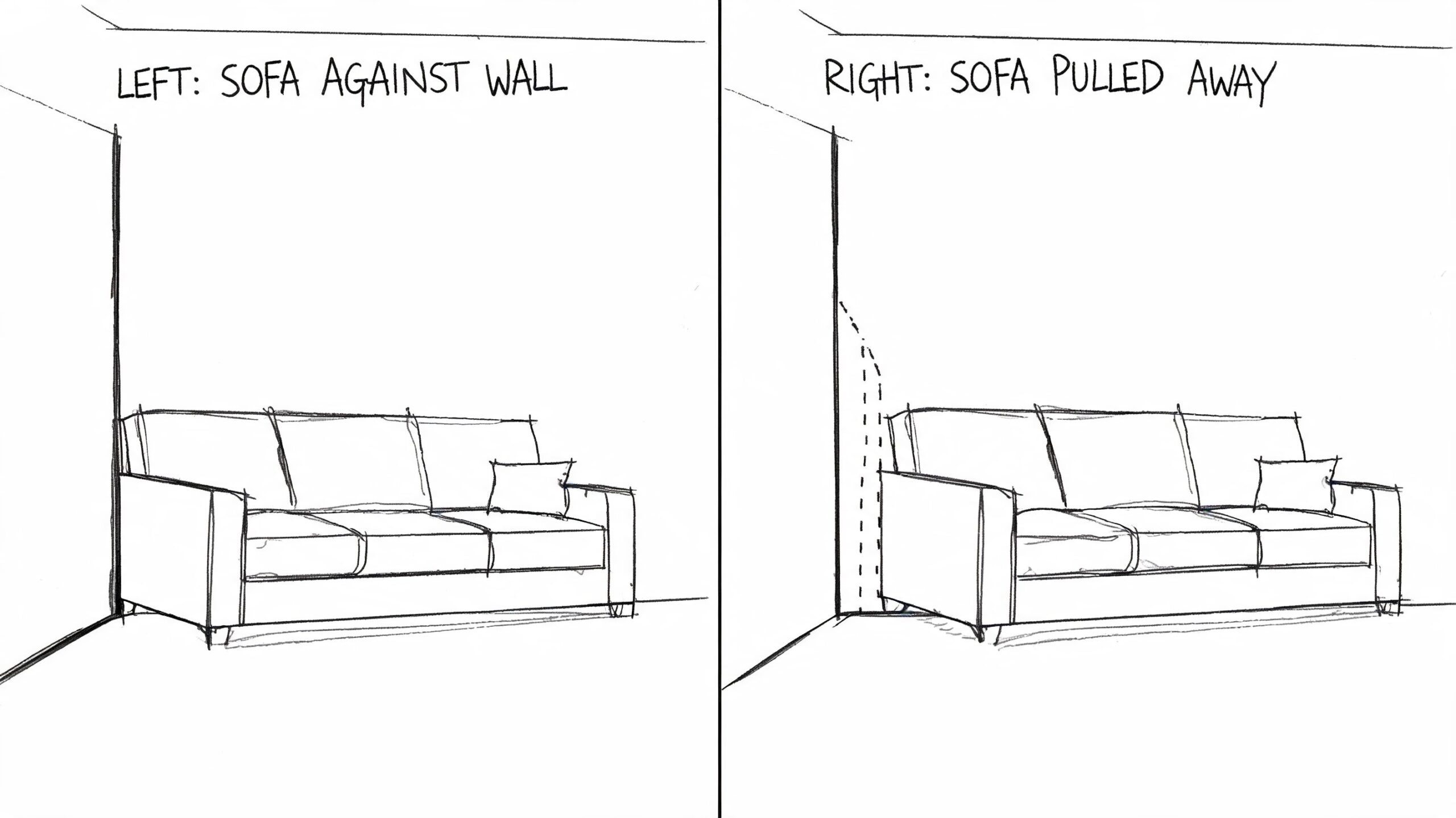
Pull the sofa off the wall if the room allows it
People often push every piece tight to the perimeter, hoping that more open center floor will make the room feel bigger. Sometimes it does the opposite. Pulling the sofa forward even a little can create depth and keep the room from feeling pressed flat against the walls.
Low-profile modular sofas help here because they preserve sightlines. You can reinforce that effect with tall curtains, a slim floor lamp, or shelving that draws the eye upward.
Choose supporting pieces that move easily
The coffee table matters more than people expect. In a tight room, round tables are often easier to move around than large rectangles. Nesting tables are even better when you need flexibility without extra bulk.
Try these layout upgrades:
- Use leggy furniture: Visible floor under chairs and tables helps the room read more open.
- Anchor with the right rug: A rug should connect the seating area, not float awkwardly in the middle.
- Keep side tables slim: Heavy end tables can crowd a compact layout fast.
- Leave visual quiet: Not every corner needs furniture.
A small room usually feels larger when a few things are intentionally left out.
Wall decor can also help a room feel finished without adding floor clutter. If you’re balancing furniture with a stronger focal wall, this pop-culture wall art guide offers useful ideas on scale, placement, and keeping the room cohesive.
How to Invest in a Sofa That Lasts
Flexibility is the selling point of modular seating. Durability is the part that decides whether you still like it years later. In renter households, growing families, and homes where layouts change often, wear usually shows up first at the connectors, seams, and frame joints.
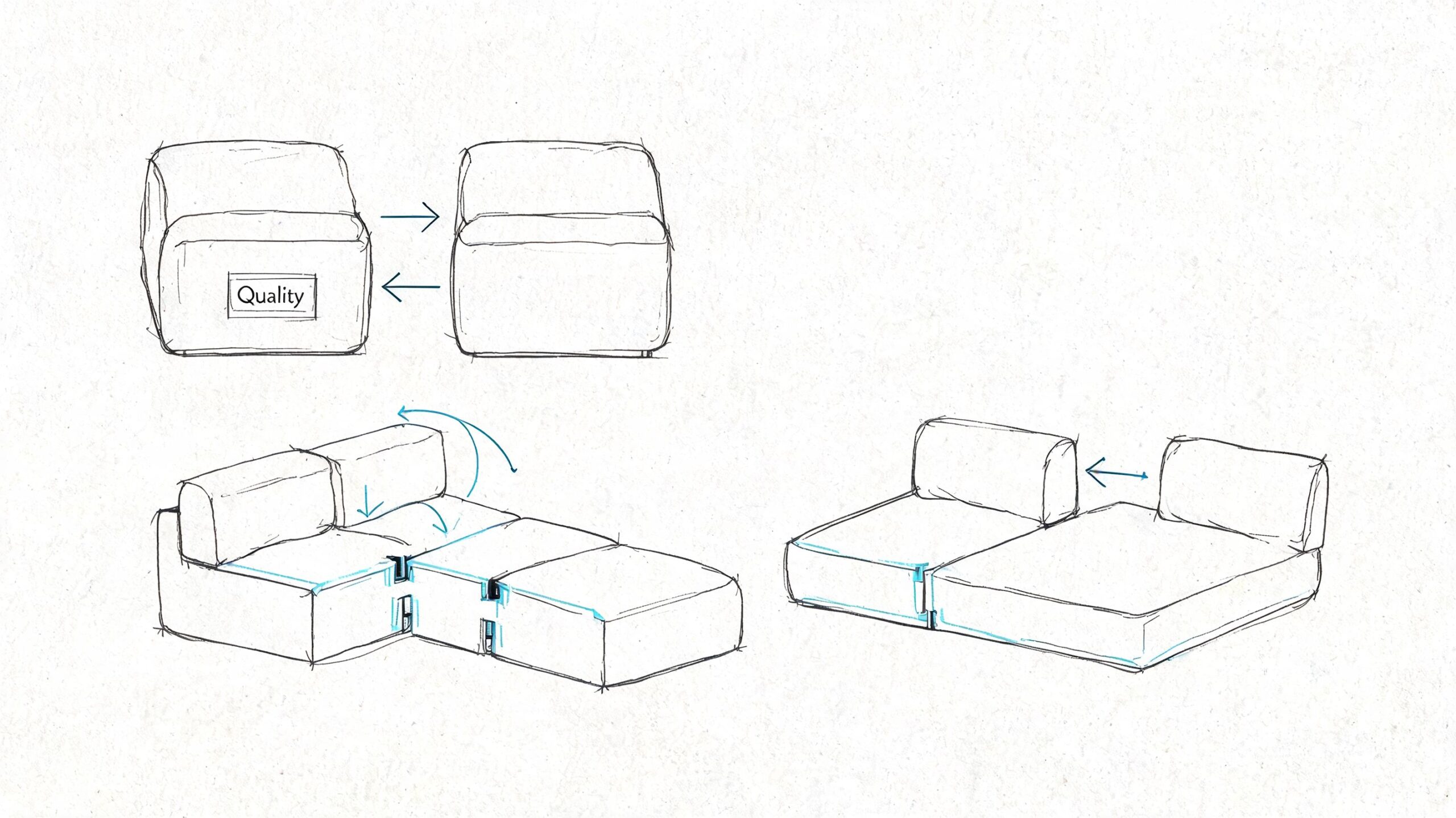
A 2025 durability study found that 62% of modular sectionals showed joint loosening after 50 reconfigurations, according to The Soffie collection page summary. That doesn’t mean modular is a bad choice. It means construction quality matters much more than marketing language like “endlessly adaptable.”
What usually holds up and what usually doesn't
Lower-quality modular sofas often fail in predictable ways. The pieces separate too easily. Fabric at the seams starts looking tired before the cushions are worn out. Arms and backs can develop movement that makes the whole sofa feel temporary.
Better-built options tend to share a few traits:
- A sturdier frame: Less flex means less long-term wobble.
- Reliable connectors: The modules should lock together with confidence.
- Durable upholstery: The fabric has to survive friction where sections meet.
- Consistent seat feel: Every module should feel similar, not softer in one spot and firmer in another.
Why in-person testing matters
This is one category where touching the product tells you a lot. Sit down fast. Shift your weight. Stand up from the corner seat. If the modules drift, tilt, or creak, pay attention. Those small signs become daily annoyances.
For shoppers comparing upholstery options, this guide to choosing upholstery fabric can help narrow the field between comfort, cleanability, and long-term wear.
The same practical logic applies to brand selection. Options from manufacturers known for stronger construction, including custom-order choices from lines such as Flexsteel and La-Z-Boy, are often worth closer inspection when you expect to move, rearrange often, or put the sofa through heavy family use. That’s less about prestige and more about reducing the chance that flexibility turns into premature wear.
Buy the modular sofa you can live with after the novelty wears off, not just the one that looks clever on day one.
A good small-space sofa should still feel supportive after repeated seat swaps, cleaning sessions, and room refreshes. That’s what long-term satisfaction looks like.
If you’re weighing modular sofas for small spaces and want help sorting through size, layout, fabric, and long-term durability, Miller Waldrop Furniture & Decor offers a practical next step. Visit a showroom in Lubbock, Hobbs, or Ruidoso Downs to compare sectionals in person, test seat comfort and connectors, and explore custom-order options that fit your room instead of forcing your room to fit the sofa.