

10 Gallon Trash Can: Your Guide to the Perfect Fit


A lot of homes end up with the wrong trash can because it was chosen last. The bathroom bin is too small and needs constant emptying. The kitchen can is so bulky it interrupts the walkway. The office basket works fine functionally, but it looks like an afterthought next to carefully chosen furniture and lighting.
That's why a 10 gallon trash can deserves more attention than it usually gets. It sits in a useful middle ground. It's large enough for moderate daily waste, but still compact enough to work in tighter rooms, secondary kitchens, mudrooms, offices, and concealed cabinet solutions. A well-chosen one can make a room feel calmer, cleaner, and better resolved.
This size also reflects a long design logic. The modern standardized household bin grew out of sanitation reforms, including Paris's Poubelle Law of 1883, which required covered containers. By the 1950s, the move from heavy metal bins to lighter plastic helped establish practical consumer sizes that balanced capacity with easy handling in daily life, as outlined in this history of the trash can. For anyone settling into a new house or trying to reduce visual clutter before a move, it also helps to simplify your move preparation before deciding what kind of waste setup each room needs.
For homeowners in West Texas and New Mexico, where homes often need to work hard for family life, entertaining, dust control, and visual simplicity, this is a practical design choice. A trash can shouldn't fight the room. It should support it. Smart storage choices help with that, and so does learning how to solve clutter issues once and for all.
Table of Contents
- The Unsung Hero of a Tidy Home
- Decoding the 10-Gallon Trash Can
- Finding the Perfect Placement in Your Home
- Choosing Your Ideal Material and Mechanism
- Your Blueprint for Selecting the Right Model
- Styling, Care, and Finding Your Can at Miller Waldrop
The Unsung Hero of a Tidy Home
Most rooms feel unfinished when the trash solution is wrong. A polished guest bath with a flimsy open bin loses its sense of care. A small kitchen with a large can in plain view starts to feel crowded, even when everything else is thoughtfully selected. The issue usually isn't trash itself. It's scale, placement, and visual weight.
A 10 gallon trash can often fixes that tension because it lands between too little and too much. It can handle everyday use without dominating the room. That makes it especially useful in homes where every square foot has to work harder, including townhomes, apartments, guest spaces, and compact family kitchens.
A trash can is one of the few household items used every day and judged every time someone walks into the room.
That's why this isn't just a utility purchase. It's part of the room's rhythm. In a hardworking household, the right can reduces emptying frequency, keeps walkways clearer, and supports a more composed look. In a staged home or rental, it can also help a space feel less temporary.
Designers tend to look at three things first:
- How often it will be used: A home office and a prep kitchen don't ask for the same access or durability.
- What people see first: An exposed can needs to relate to cabinetry, flooring, hardware, or nearby furniture.
- How the room moves: If the can interrupts a cabinet door, traffic path, or cleaning routine, it won't feel right for long.
For many households, the 10 gallon range hits a practical sweet spot. It's not the loudest object in the room, but it has an outsized effect on how tidy the room feels.
Decoding the 10-Gallon Trash Can
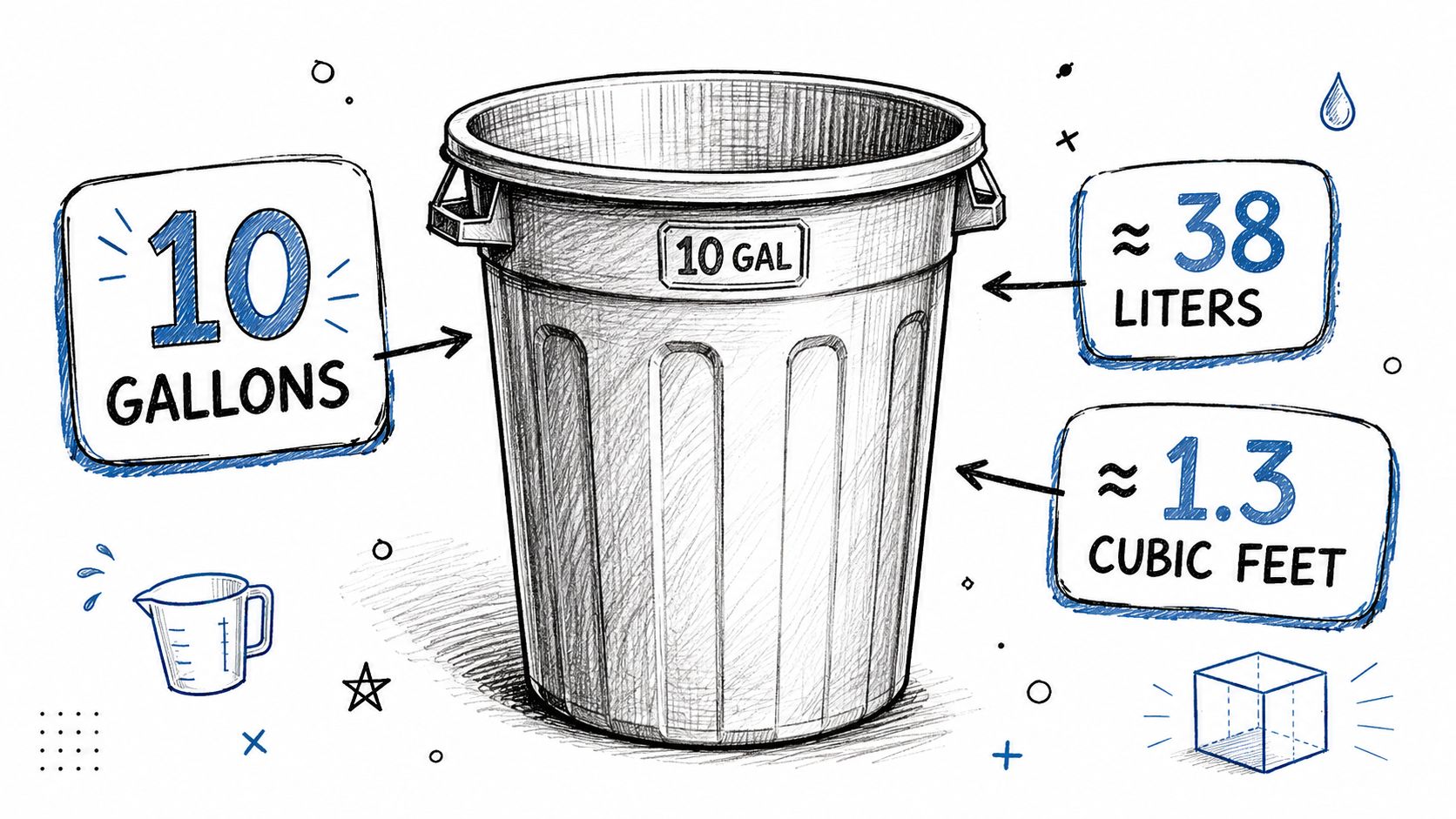
A 10 gallon trash can sits in a useful middle range, but the gallon label alone does not tell you whether it will work in your home. What matters is how that volume is shaped, how much floor area it claims, and whether the proportions suit the room.
That distinction matters in design projects across West Texas and New Mexico, where many homes ask one room to do several jobs at once. A kitchen may need clear circulation for cooking, school bags, and grocery unloading. A mudroom may also function as a laundry pass-through. In spaces like these, the right trash can is the one that fits the routine without adding visual clutter.
Volume is only half the story
I tell clients to treat capacity as the starting point, not the answer. Two cans can hold roughly the same amount of waste and behave very differently once they are placed against cabinetry, beside a desk, or near a vanity.
A 10 gallon model usually makes sense for daily household use that falls between a small office basket and a full-scale kitchen bin. That is why this size shows up so often in secondary kitchens, laundry rooms, home offices, and compact primary kitchens where a larger can would feel heavy in the layout.
For homes with tighter work zones, smart kitchen efficiency upgrades often start with better space planning around daily-use items. Trash storage is part of that equation.
Practical rule: Buy for footprint first, then capacity.
Why shape changes everything
Shape determines whether a can feels compact or awkward. A round can often reads softer and less rigid in an open room, but it usually gives up more usable floor space. A rectangular can tends to sit more neatly beside cabinets, islands, and built-ins because it uses corners better.
Height matters too. A taller profile can reduce the footprint, which helps in narrow areas, but it can create lid-clearance problems under counters or shelves. A wider opening is easier to use during busy kitchen prep, though it can feel more visually present if the can stays in plain view.
Those trade-offs become obvious quickly:
- Round cans suit open placements where a softer outline looks more intentional.
- Rectangular cans fit narrow runs, cabinet edges, and alcoves more efficiently.
- Tall, slim cans save floor area but need vertical clearance.
- Lower, broader cans can be easier to access, though they take up more visual width.
In practice, this is the point where measurements save you from an expensive mistake. Check width, depth, height, and lid swing before you buy. In a well-designed room, a trash can should support the layout subtly, not force the room to work around it.
Finding the Perfect Placement in Your Home
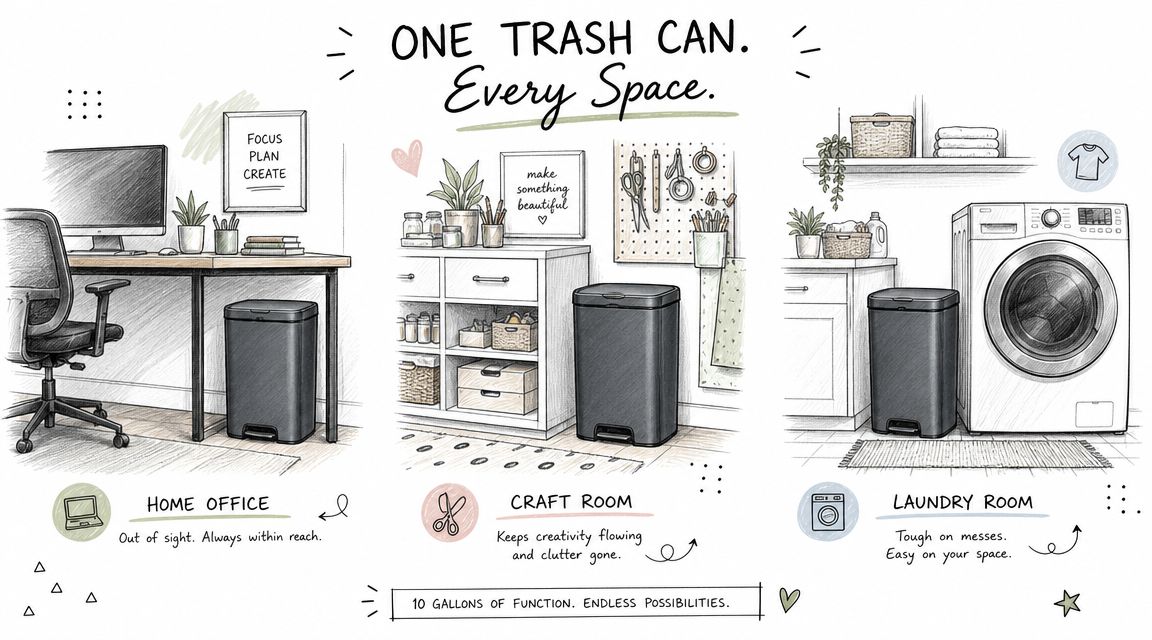
Placement decides whether a 10 gallon trash can feels intentional or inconvenient. In many homes, this size works best not as the default answer for every room, but as the precise answer for a few stubborn spaces.
Where this size works especially well
The most successful placements usually share one trait. They need moderate capacity without sacrificing sightlines.
A 10 gallon trash can often earns its place in:
- Compact kitchens: Especially where a larger can would crowd a base cabinet run or narrow the path between island and counter.
- Home offices: Large enough to avoid daily emptying, small enough to tuck beside a desk or credenza.
- Laundry rooms and mudrooms: Useful for lint, packaging, pet-related waste, and daily household overflow.
- Guest suites or flex rooms: A can that looks more refined than a standard utility basket helps these rooms stay polished.
- Dedicated recycling zones: This size works well beside a primary waste can when sorting light recyclables.
For households in Lubbock, Hobbs, or Ruidoso Downs, practical placement matters even more when rooms serve multiple purposes. A breakfast area may also function as homework station and package drop zone. A guest room may double as office space. In those homes, smaller-scale utility pieces support better daily flow.
A well-planned kitchen depends on that kind of thinking, especially when hidden storage and traffic clearance are both priorities. These ideas align closely with ways to make your kitchen more efficient.
Hidden solutions for cleaner sightlines
One of the most useful shifts in this category is the move toward furniture-integrated trash storage. Recent product trends show more tilt-out cabinets and similar concealed designs that help a 10 gallon can blend into kitchens, living areas, and offices rather than sit visibly in the room, as shown in this example of a 10 gallon hidden trash cabinet.
That's a major design advantage in smaller homes and open layouts. A can that disappears behind a cabinet front preserves cleaner lines and reduces the visual clutter that exposed plastic or metal bins can create.
Hidden trash storage works best when the enclosure is easy to access, easy to wipe down, and sized for the liner and lid style being used.
What usually doesn't work is forcing concealment where there isn't enough clearance. A tilt-out or enclosed option needs space to open smoothly. It also needs enough airflow and easy access for bag changes. If the concealed solution becomes awkward, people stop using it correctly.
The best placement balances access, hygiene, and appearance. When all three line up, a trash can stops feeling like a compromise.
Choosing Your Ideal Material and Mechanism
Material and lid style shape the daily experience more than most shoppers expect. A can may fit the room perfectly and still be annoying to use if the lid is fussy, the finish shows every mark, or the liner catches every time it's removed.
Material choices that change the experience
Plastic remains a practical choice for many homes because it's lightweight, durable, and easy to clean. It also makes sense for utility spaces, craft rooms, kids' areas, and concealed applications where appearance matters less than function.
Stainless-look or metal-finish cans work better in exposed areas where the trash can needs to relate to appliances, plumbing fixtures, or cabinet hardware. They tend to look more finished in kitchens and guest-facing spaces, but they also ask for more upkeep if fingerprints or smudges are a concern.
Galvanized designs can suit rustic, industrial, or utility-driven interiors, especially when a more tactile finish fits the room. For homeowners who want a furniture-style concealed option instead of a standalone can, one applicable piece is the Uttermost Othniel Tilt-Lid Wastebasket Cabinet, which frames waste storage as part of the room's furnishings rather than as exposed utility.
Lids and access styles to compare
The right mechanism depends on waste type and room behavior.
- Step-on lids: Good for kitchens, bathrooms, and any spot where hands-free use matters.
- Swing tops: Fast and convenient for light waste, though they don't always offer the strongest odor containment.
- Open tops: Best for dry office waste, wrapping rooms, or secondary paper bins.
- Tight-seal or enclosed lids: More useful where food waste or odor control matters.
Some design features solve real handling problems, not just style questions. Certain vented commercial models are marketed as making liner removal up to 50% easier, which highlights how much friction and vacuum resistance can affect everyday use in a trash can, according to this product listing for a vented 10 gallon can.
For anyone dealing with food waste or pet-related odors, Shiny Go Clean Madison's odor control guide offers useful general principles for choosing a more sealed style and maintaining it well.
If a can is hard to open, awkward to clean, or frustrating to empty, the room won't stay tidy for long.
10-Gallon Trash Can Feature Comparison
| Feature | Best For | Pros | Cons |
|---|---|---|---|
| Open top | Offices, craft areas, dry waste | Fast access, simple to clean, visually light | Weaker odor control |
| Swing top | Shared spaces, light daily waste | Easy drop-in use, tidy appearance | Can feel less stable, not ideal for heavier waste |
| Step-on lid | Kitchens, bathrooms, pet areas | Hands-free use, cleaner operation, more contained look | More moving parts to maintain |
| Rectangular body | Tight layouts, cabinetry, narrow walls | Efficient footprint, easier to align with furniture | Can look boxier if left exposed |
| Round body | Open corners, casual utility zones | Softer profile, simple placement | Uses more floor area in tight rooms |
| Vented interior design | Heavier bag loads, frequent liner changes | Easier bag removal, less struggle during emptying | Often more utility-focused in appearance |
Your Blueprint for Selecting the Right Model
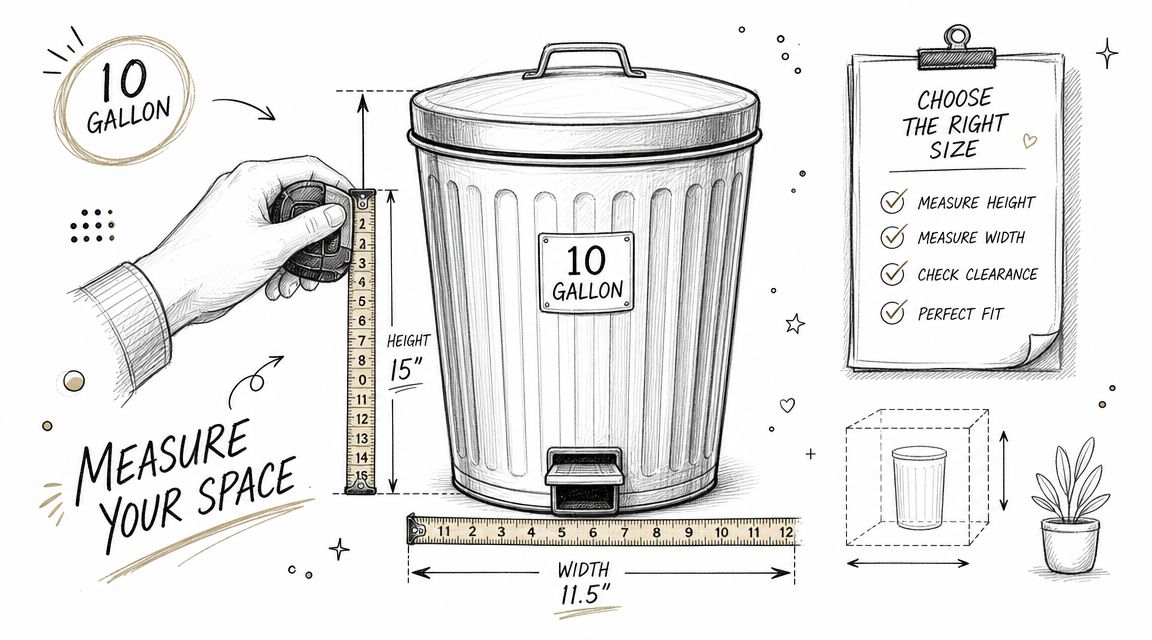
The simplest way to choose the right 10 gallon trash can is to work backwards from the room. Not from the finish. Not from the product photo. From the actual conditions of use.
Start with the space, not the product listing
Measure the width, depth, and height of the exact spot first. Then account for clearance. A can might technically fit under a counter and still fail once the lid opens or the bag has to be removed.
A short checklist helps:
- Mark the footprint on the floor: Painter's tape or a sheet of paper helps visualize the can's base.
- Check movement around it: Cabinet doors, appliance doors, and nearby stools all need room.
- Look at sightlines: If the can will stay visible, confirm it doesn't become the first thing seen from the doorway.
- Test access with one hand: A trash can should be easy to use while carrying scraps, paper, or laundry lint.
Choose the liner and handling details carefully
Bag fit is one of the most common points of frustration. For a 10 gallon trash can, the typical match is a 10 to 13 gallon liner because the extra capacity gives enough slack for rim overlap and tying, as explained in this liner-sizing guide. That same source notes the size is generally well suited to moderate household or office waste.
The extra slack matters. A too-tight bag slips inside the can or tears during removal. A slightly roomier one stays in place and handles the shape of the opening better.
A smart buying checklist should also include:
- Liner compatibility: Look for enough overhang to wrap securely at the rim.
- Cleaning ease: Smooth interiors and removable buckets save time.
- Odor strategy: Kitchens and enclosed cabinets benefit from tighter lids and regular wiping.
- Handling comfort: If the can will be emptied often, lighter materials and easier bag removal matter.
Buy the trash can for the hardest part of using it, not for the easiest part of owning it.
That usually means designing for bag changes, wipe-downs, and daily traffic. Those are the moments that determine whether the can remains a good fit six months later.
Styling, Care, and Finding Your Can at Miller Waldrop
A trash can works best when it supports the room's palette instead of interrupting it. In a warm kitchen, darker tones or concealed cabinet storage often blend more naturally than bright exposed plastic. In a bathroom, a metal finish can relate nicely to faucets, mirrors, or lighting. In a home office, a matte neutral usually disappears better than a glossy surface.
Make utility look intentional
The goal isn't to make a trash can decorative. It's to make it feel integrated.
A few design cues help:
- Repeat a finish nearby: Match black hardware, warm wood, or metallic accents already in the room.
- Use concealment where the room is highly visible: Open-plan living areas benefit from furniture-style waste storage.
- Avoid oversized scale: Even a good-looking can feels wrong if it dominates a small wall or walkway.
- Pair it with other hardworking storage: In entryways, offices, and multipurpose rooms, a trash solution often works better alongside closed storage such as a bench seat with storage.
Keep it easy to live with
Maintenance should be simple enough to repeat. Regular wipe-downs, prompt liner changes, and occasional deodorizing do more for long-term freshness than complicated routines. For readers curious about household cleaning basics, this overview of malt vinegar cleaning effectiveness is a useful reminder that not every common pantry ingredient is ideal for every surface.
For homeowners across West Texas and Southeastern New Mexico, the right 10 gallon trash can is less about the label and more about the fit. It should suit the room, support the routine, and respect the design choices already in place. When that happens, even a utility item helps the home feel more finished.
Miller Waldrop Furniture & Decor can help homeowners and renters in Lubbock, Hobbs, and Ruidoso Downs choose pieces that make daily life cleaner, calmer, and more functional. Whether the goal is a hidden wastebasket cabinet, smarter storage for a busy entry, or furniture that brings order to a compact room, Miller Waldrop Furniture & Decor offers the design guidance and curated home solutions that help turn practical needs into a polished home.