


Mastering 10 Drawer Slides: Select, Install & Troubleshoot

A drawer that sticks every time it's full is usually not a “bad cabinet” problem. It's a slide problem, and with 10-inch drawer slides, the fix starts with matching the hardware to the drawer's depth, load, and front height before a single screw goes in.
The right slide turns a heavy drawer into controlled motion, and the wrong one turns the same drawer into a daily annoyance. That's why the details matter, especially when the drawer is carrying cookware, tools, files, or anything else that can push hardware beyond a casual, light-duty setup.
Understanding 10-Inch Drawer Slides
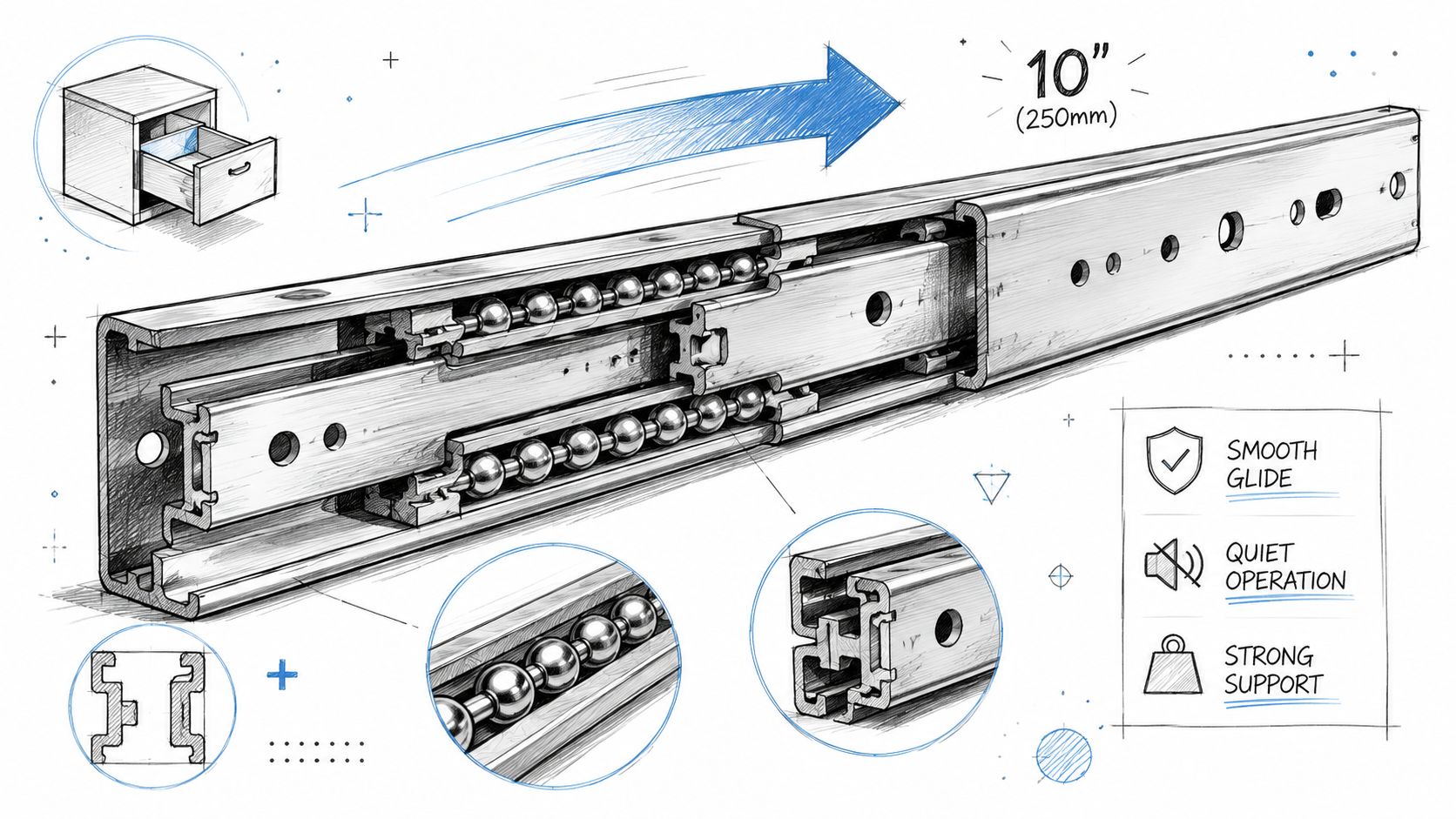
A 10-inch slide is more than a short rail screwed to a cabinet. It is a mechanical guide system with interlocking metal pieces that carry the drawer's load, reduce friction, and limit wear so the drawer opens and closes cleanly over years of use. In practice, the slide keeps the drawer from racking, dragging, or binding when the contents are packed unevenly.
Fit comes first. Slide length has to match cabinet depth, because the hardware does more than move the drawer, it controls how that drawer tracks through the opening. A 10-inch slide makes sense only when the cabinet depth and drawer layout support that length, instead of forcing a compromise that shortens travel or puts extra stress on the bearings.
What the hardware is actually doing
A drawer slide does not just help the drawer move, it carries the load, keeps motion aligned, and absorbs repeated cycling from normal use. That matters most in drawers that get opened hard and shut carelessly, because the slide has to turn that force into a straight path instead of a jerky one. Load rating is only useful if you treat it as a working limit, not a label. Put in a heavy stack of cookware, files, or tools, and the slide still has to stay within its real capacity once the drawer is fully extended and the stress on the slide is greatest. That is where good load calculations matter, especially for drawers that are deep, front-heavy, or used every day.
A full-extension slide gives access to the back of the drawer, which helps in shallow storage where items disappear behind the front row. A side-mount version is also easy to inspect and service, since the slide sits on the cabinet sides rather than hiding underneath.
The part many guides skip is the width-to-front-height relationship. A drawer can have the right depth and still perform badly if the front is too tall for the slide choice and the drawer box is too narrow to stay stable under load. Taller fronts add stress, and that extra stress is what makes a lightly built drawer feel loose, racked, or hard to close. For a homeowner comparing options, the key question is not just whether the slide fits, but whether the drawer shape and front height keep the load centered enough for the hardware to work properly.
If a project calls for office storage, a practical place to compare how hardware choices affect day-to-day use is choose 10-inch office slides. For built-in storage projects, even seating depends on the same layout logic. A bench with hidden storage has to respect drawer depth, front height, and cycle behavior just like a kitchen drawer, which is why this storage bench example is useful when planning furniture that has to work hard without feeling sloppy.
Practical rule: if the drawer feels rough on the bench before installation is finished, it will not improve after the cabinet is loaded.
Measuring Drawers for 10-Inch Slides
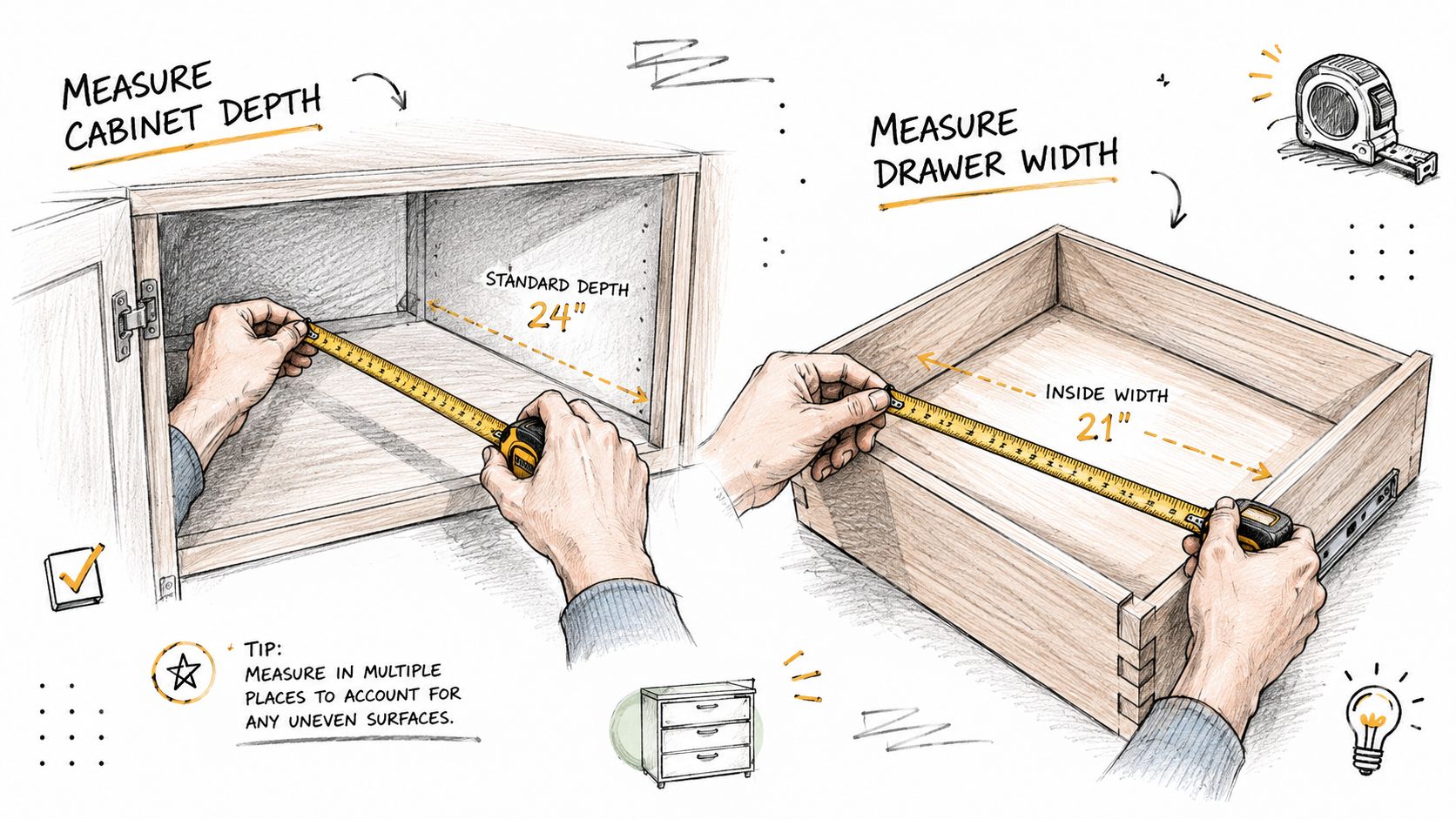
Measuring starts inside the cabinet, not on the face frame, trim, or drawer front. The key dimension is the interior cabinet depth from the inside front face to the inside back of the box, and the slide should match that depth or be slightly shorter (Maxave). That little bit of discipline saves a lot of returns, because a slide that's too long can't disappear into the cabinet cleanly.
The next measurement is the drawer box itself. The slide has to work with the actual drawer body, not the decorative front, so the drawer box width and height matter when the hardware needs clearance and stability. For replacement work, the old drawer can mislead people if the front overlays the box more than expected.
How to measure without guessing
Start with a tape measure and measure straight back from the cabinet's inside front face to the inside back. If the cabinet is out of square, a level helps show whether the box is leaning, because a tilted carcass can make a perfectly good slide look faulty during testing.
Then check the drawer opening and the drawer box together. A drawer that clears on the bench but binds in the cabinet usually has a side-wall or back-panel mismatch, not a bad slide. That's the kind of detail that gets overlooked when the focus stays only on length.
The cleanest habit is to write down every dimension before ordering. On a custom project, that record makes it much easier to compare the cabinet opening, drawer body, and slide envelope without mixing up the visible front with the working box.
If the drawer is part of a built-in storage piece, the same approach applies to the hidden compartment layout. The measurement logic behind building drawers for cabinets is the same whether the drawer sits in a kitchen run or inside a bench base.
Measure the box, not the promise of the box. The slide only respects the actual dimensions on the wood.
Choosing Slide Types and Load Ratings
A 10-inch slide can be the right length and still be the wrong hardware. The mount style, extension type, and load rating all change how a drawer behaves once it is filled, and a short drawer that holds dense items can still punish a weak slide. A 10-inch full-extension ball-bearing drawer slide is commonly specified at a 100-lb load rating in catalog-level product data, which makes it a useful benchmark for heavier kitchen, office, or utility drawers (TCH).
That rating is a starting point, not a finish line. The drawer box stiffness, mounting geometry, and extension style all work together, so a lightweight utility drawer and a file drawer are not asking the slide to do the same job. A drawer for pantry goods may need a different setup than a pull-out inside a coffee table with storage drawers, where access and concealment matter more than brute capacity.
| Comparison of 10-Inch Drawer Slide Types | Mount Style | Load Rating | Soft-Close |
|---|---|---|---|
| Side-Mount Ball-Bearing | Side cabinet walls | Commonly used for heavier duty applications | Available on some models |
| Side-Mount Standard | Side cabinet walls | Lower than heavy-duty ball-bearing options | Less common |
| Undermount Soft-Close | Under the drawer | Varies by model and drawer construction | Common |
| Basic Roller Style | Side or bottom supported | Best for lighter use | Less common |
How to match type to the drawer
Side-mount slides are straightforward when access and serviceability matter. They stay visible when the drawer is open, but that visibility makes inspection easier, which helps in a house where a drawer gets used hard every day.
Soft-close hardware changes the feel of the drawer more than the label suggests. It slows the final movement and reduces slam impact, but it also asks for cleaner alignment and tighter installation discipline than a basic slide.
The overlooked issue is not style, it is use. A pantry drawer storing dry goods is not the same as a utility drawer loaded with heavy containers, and the slide choice should reflect that difference. For someone organizing a pantry layout, designing a thoughtful kitchen pantry is a good reminder that storage planning starts with what the drawer will hold.
Load rating should also be checked against the drawer opening and the front-to-height proportions of the box. On a 10-inch slide, a drawer that is too tall for its width can rack under load, especially if the front is heavy or the contents shift forward. The slide may be rated for the weight, yet the box still needs enough sidewall support and a sensible height so the front does not twist as it comes out.
A practical product example is a 10-inch full-extension, side-mount, ball-bearing slide such as this GS4200 10 model, because it shows how one hardware style combines access, support, and a familiar mounting layout.
Load rating matters more than length alone. A short slide can still fail early if the drawer is heavy, stiff, or built with weak box joints.
Gathering Tools and Preparation
Good prep prevents most of the frustration people blame on the slide. A drill, drill bits, a countersink bit, a tape measure, a pencil, a level, a square, and a driver bit set cover the core job, because the slide only performs well if the cabinet and drawer are marked accurately before fastening.
A template jig can help if multiple drawers need to line up in a run, especially when the fronts have to sit visually consistent. For fastener selection and clean mounting work, Quality low profile fasteners for contractors are worth keeping in mind when the screw head needs to sit neatly without interfering with travel.
What to check before drilling
Look for cracked drawer sides, swollen cabinet walls, and old screw holes that have lost bite. If the wood is soft or stripped, fix the substrate first, because a perfectly aligned slide won't stay aligned if the mounting point fails.
Keep the workspace clear enough to open the drawer fully and test both members of the slide. That simple habit makes it easier to catch a tilt, a twist, or a bad setback before everything is locked in place.
A quick dry fit also helps spot friction points that aren't obvious on paper. If the slide drags during hand movement, the cabinet or drawer may need a small correction before the final screws go in.
Installing 10-Inch Drawer Slides
Start by confirming the drawer size against the slide envelope. For 10-inch drawer slides, the common installation rule is to size the drawer width as the slide length plus 10 inches for drawer fronts up to 6 inches tall, and once the front height exceeds 6 inches, the width is capped at about 18 inches (Knape & Vogt). That rule matters because exceeding the width and front-height envelope can increase side load and hurt smooth travel.
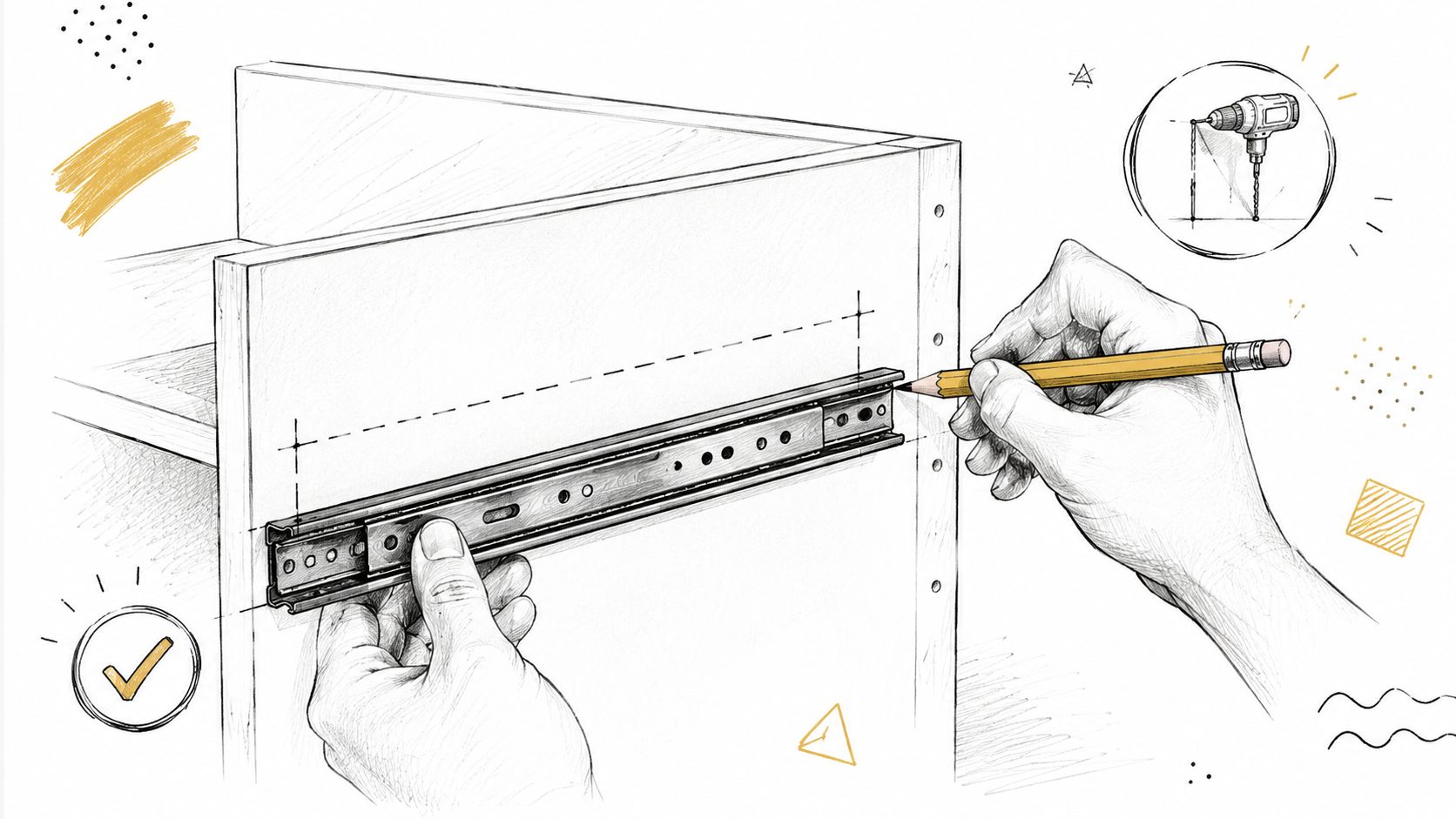
Mark the cabinet mounting line first, then transfer that reference to the drawer side so both members land level with each other. If the cabinet is uneven, level the slide to the working reference, not to the crooked wall, because the drawer has to move true even if the cabinet carcass isn't perfect.
The order that avoids rework
Drill pilot holes before driving any screws. Pilot holes reduce splitting and help the screw seat where it was marked, which is especially important in plywood edges or older cabinet stock that doesn't forgive overdriving.
Secure the cabinet member first, but don't fully lock every screw until the member is checked for level and parallel alignment. Then attach the drawer member and test the motion before final tightening, because tiny shifts are easier to correct while the hardware is still adjustable.
If the drawer binds, resist the urge to force it closed. A forced close can bend a bearing path or hide a mounting mistake that should've been corrected at the bench.
Uneven cabinet walls are common in older rooms, and they're not a reason to quit. They're a reason to trust the level and square instead of the wall face, then shim only where needed so the slide track stays true.
Once both members are installed, open the drawer fully and close it several times under normal hand pressure. The movement should feel even from start to finish, without a grab at the midpoint or a tilt near the end of travel.
Common Mistakes and Troubleshooting
The most common failure is a drawer that looks right but tracks wrong. That usually means the slide is out of plane, the drawer box is racked, or the front height is asking the hardware to carry more side pressure than it should. A drawer that jerks or tilts is often a measurement issue, not a hardware defect.
Another mistake is overdriving screws. When a screw head bites too far or distorts the slide member, the bearing can lose its smooth path and create a sticky spot that feels like poor quality even when the slide itself is fine.
Many guides focus on fit and installation but rarely address real-world load margins. Understanding the drawer's actual use weight is key to avoiding premature wear or failure (YouTube).
What to fix first
If the drawer binds, check level, parallel spacing, and screw depth before replacing the slide. That order saves time because the issue is often alignment, not a bad rail.
If a soft-close drawer slams or won't catch properly, look for inconsistent closing force and a cabinet member that's shifted during fastening. Soft-close mechanisms are less forgiving, so a small misalignment can show up as a big performance problem.
When the drawer carries tools, cookware, or files, load margin matters as much as movement. A slide that works when empty may still fail early if the drawer is consistently packed near its limit, so the effective fix can be choosing a stronger slide, not just tweaking the current one.
Replacement makes sense when the track is visibly damaged, the bearings feel gritty after cleaning, or the drawer box has lost stiffness. At that point, adjustment won't restore a smooth path, because the hardware no longer has a stable surface to run on.
Professional Installation Options from Miller Waldrop
A clean install is one thing. A clean install that matches the room, the drawer weight, and the cabinet's actual condition is another. Miller Waldrop Furniture & Decor brings 70 years of craftsmanship to home furnishing and service work across Lubbock, Hobbs, and Ruidoso Downs, which helps when a project needs measured, careful hardware selection instead of guesswork.
That kind of support matters when a drawer slide problem sits inside a larger furniture decision. Their design expertise, Low Price Promise, and financing options give homeowners a straightforward path when they want help choosing, fitting, or ordering the right solution for a storage piece that has to work every day.
For a project that needs the right fit the first time, contact Miller Waldrop Furniture & Decor and ask for help with 10 drawer slides selection, measurement, or installation guidance.