


How To Tell If Mattress Is Too Firm


You go to bed tired, but you wake up sore. Your shoulder feels jammed, your hips feel bruised, or your hand has that pins-and-needles sensation that disappears after you get moving. A lot of people assume that means they just need to “get used to” the mattress, or that a firmer bed must automatically be better for support.
That isn’t always true.
When a mattress is too firm, your body usually tells you in very specific ways. The trick is knowing how to read those signals. After helping mattress shoppers across West Texas and Southeastern New Mexico, I’ve found that people feel less overwhelmed once they stop guessing and start testing. You don’t need a lab. You need a clear process.
Your Guide to Unlocking a Better Night's Sleep
A too-firm mattress usually doesn’t announce itself with one dramatic symptom. It shows up as a pattern. You wake up stiff. You shift positions all night. You sleep better in a guest room, on vacation, or even on the couch, then come back home and feel the problem again.
That’s frustrating because the mattress may seem fine at first touch. It might even feel supportive when you first lie down. But sleep happens over hours, not minutes. Pressure builds slowly. Alignment problems show up by morning.
Your body gives better feedback than a showroom label ever will.
The good news is that learning how to tell if mattress is too firm is a skill. Once you know what to look for, you can separate a true firmness problem from a pillow issue, an aging mattress, or a bed that needs time to settle.
I always tell people to start with curiosity, not panic. If you’re waking up with jaw tension or upper-body discomfort tied to poor sleep posture, resources on natural sleep solutions for TMJ patients can also help you think about how the whole sleep setup works together, not just the mattress alone.
What you’re really trying to solve
You’re not chasing a mattress that feels soft or firm in the abstract. You’re trying to find a surface that lets your body rest without pressure buildup and without forcing your spine out of position.
That means asking practical questions:
- Where do you hurt: Shoulder, hip, neck, lower back, or hand?
- When does it happen: Right away, after a full night, or only in one sleep position?
- What changes it: Movement, pillow adjustment, or sleeping somewhere else?
Those answers matter more than mattress marketing language. Once you know your pattern, the next step gets much easier.
Common Symptoms of an Overly Firm Mattress
The clearest signs usually show up where your body makes the most contact with the bed. If those areas can’t sink in enough, the mattress pushes back too hard and creates pressure instead of relief.
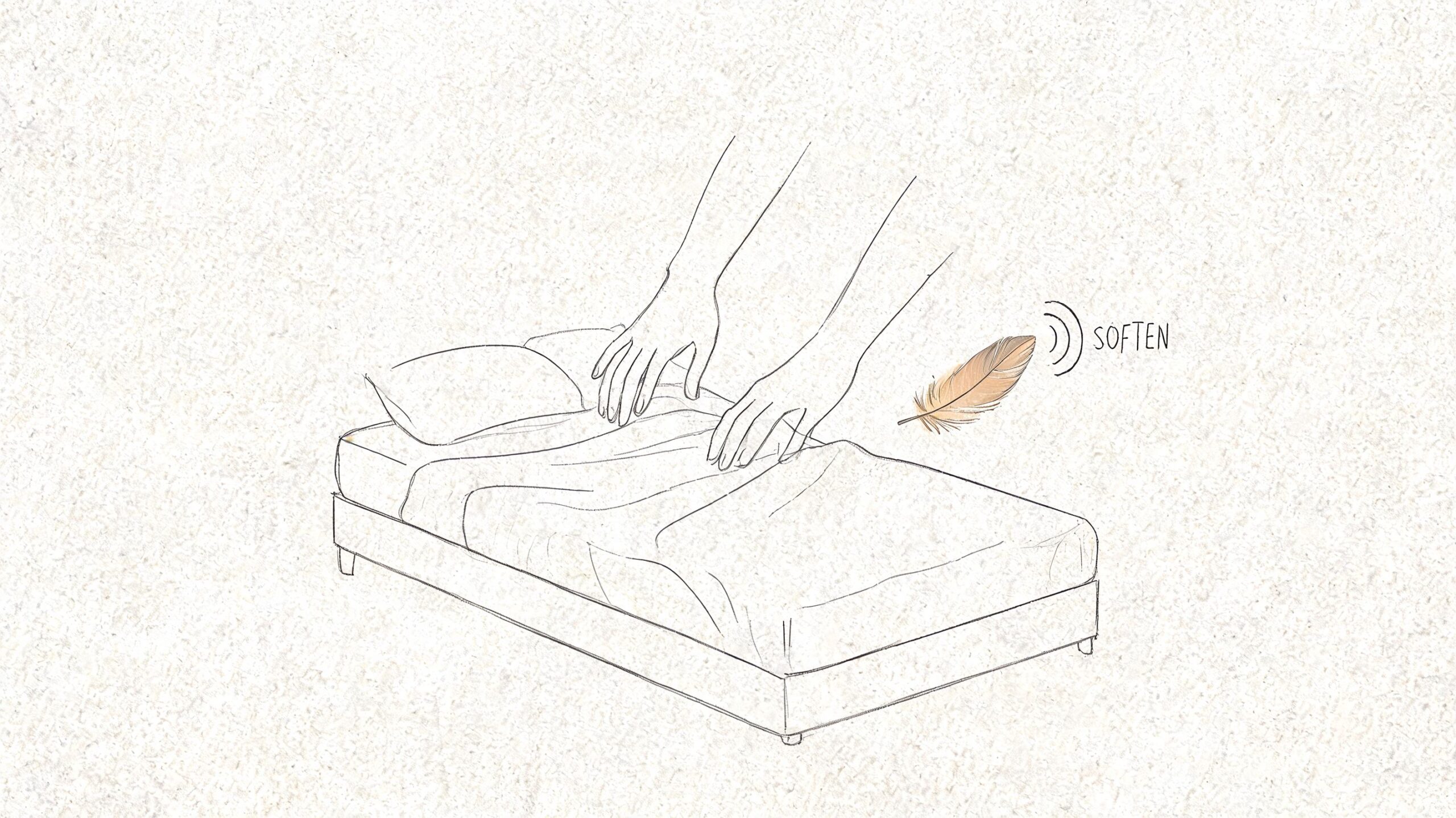
According to Mattress Miracle’s firmness guide, the primary diagnostic markers for excessive mattress firmness are morning numbness or tingling in the arm or hand, localized stiffness at the shoulder and hip, and morning soreness in the neck or lower back caused by spinal misalignment where firm mattresses create pressure points.
The symptoms that point to too firm
If your mattress is too firm, these are the signals I’d pay attention to first:
- Arm or hand numbness: This is especially common for side sleepers. If your shoulder can’t sink into the comfort layers, pressure can build through the arm overnight.
- Shoulder and hip pressure: This feels localized, not vague. People often describe it as a “jammed” or “bruised” feeling at the points that carry the most weight.
- Neck soreness in the morning: If your body is being pushed out of a natural line, your neck can end up compensating.
- Lower back soreness with surface pressure: A very firm mattress can leave some body types feeling held up too rigidly instead of supported.
Practical rule: Pressure-point pain is usually more specific than the discomfort from a mattress that’s too soft.
How this differs from a too-soft mattress
People often get this wrong. They wake up sore and assume any soreness means they need more firmness. Sometimes the opposite is true.
A mattress that’s too soft often makes you feel like you’re sinking, struggling to turn, or folding into the bed. A mattress that’s too firm usually creates a sense of impact and pressure at contact points. Instead of feeling swallowed, you feel perched on top of the surface.
That difference matters. If your shoulder and hip feel compressed, and the discomfort eases after you get up and move around, firmness is a strong suspect. If pain is persistent or you’re dealing with an orthopedic issue beyond the mattress itself, guidance like Joint Ventures PT for orthopedic pain can help you think through when body mechanics and medical care need attention too.
Side sleepers usually notice it first
Side sleepers are the first group I watch for this problem. Their shoulders and hips need room to settle into the top of the mattress. If they can’t, the body has nowhere to go. Pressure builds, circulation gets cranky, and sleep becomes a cycle of tossing and repositioning.
Back sleepers can feel a too-firm mattress as tension through the lower back or a sense that the bed doesn’t “meet” the body evenly. Stomach sleepers are a little different, which we’ll get into later, because their support needs are firmer by nature.
How to Test Your Mattress Firmness at Home
You don’t need special equipment to get useful answers. A simple at-home check can tell you whether your mattress feels firm because it’s new, firm because it’s mismatched to your body, or firm because the support underneath has changed.
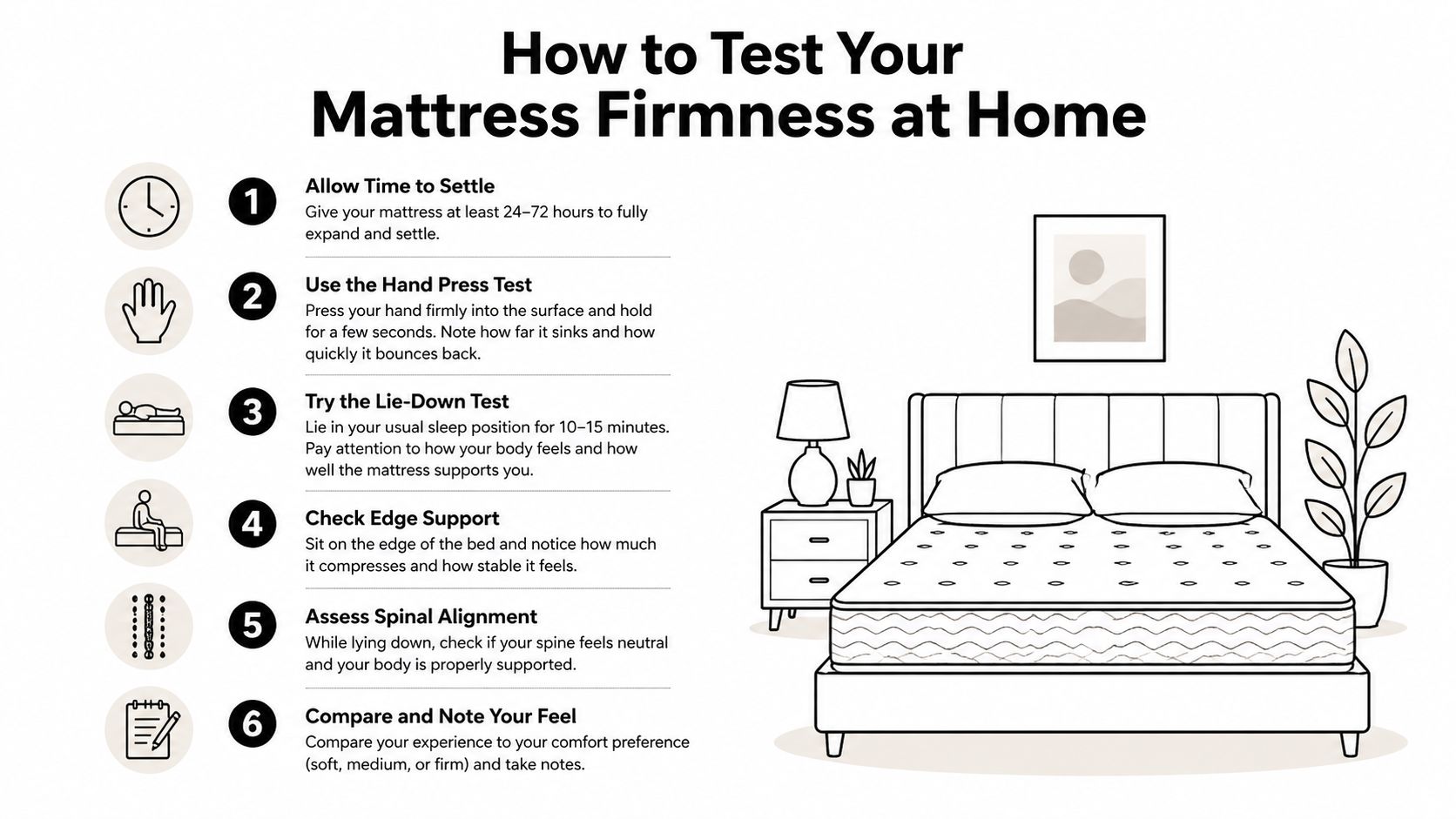
Start with a pressure point check
Lie down in your usual sleep position, not the position that looks neat in a showroom. Stay there long enough to notice what your body is doing.
Ask yourself:
- Where do I feel pressure first
- Do my shoulders or hips feel blocked from sinking in
- Am I already wanting to shift positions to get relief
If pressure builds quickly at the shoulder or hip, that’s useful information. Don’t overthink it. Your first instinct is often accurate.
If a mattress feels “fine” for a minute but irritating after you settle in, that difference matters.
Try the hand gap test
This works well for back sleepers. Lie on your back and slide a hand into the space beneath your lower back.
- If there’s a large open gap, the mattress may be too firm for your shape because it isn’t contouring enough.
- If your hand is tightly pinned with no natural curve, the surface may be forcing you too flat.
- If the contact feels even and supported, the firmness may be closer to right.
This isn’t a perfect diagnostic by itself, but it gives you a quick read on whether the mattress is meeting your body or making your body adapt to it.
Use the sag test to rule out wear
If your mattress seems too firm in one area and strange in another, check whether you’re dealing with wear instead of firmness.
Place a straight edge, such as a metre stick, across the area where you usually sleep. According to the clinical guidance in the verified data, depressions exceeding 3 cm indicate structural wear requiring replacement rather than firmness adjustment.
That distinction is important. A worn mattress won’t be fixed by softening the top. If the structure underneath has changed, comfort accessories may only mask the problem.
Keep a short sleep log
For several nights, jot down a few notes in the morning:
- Sleep position used most often
- Where you felt pain or numbness
- Whether symptoms eased after moving
- Whether one side of the bed feels different
Patterns show up quickly. Once you’ve got a few mornings of honest observations, it becomes much easier to decide whether you need patience, an accessory, or a different mattress altogether.
Finding the Right Firmness for Your Sleep Position
There’s no universal “best” firmness. The right feel depends on how you sleep, where you carry pressure, and whether your mattress lets the heavier parts of your body settle in without throwing the spine off line.
According to Tom’s Guide’s mattress firmness discussion, mattress firmness evaluation depends heavily on sleeping position. Side sleepers generally need more pressure relief, while stomach sleepers typically require a medium-firm to firm mattress (a 6-8 on a 1-10 scale) to prevent spinal misalignment. In-store testing should mimic your primary sleep position to be effective.
Firmness Guide by Sleep Style
| Sleep Position | Ideal Firmness | Why It Works |
|---|---|---|
| Side sleeper | Softer feel with more pressure relief | Helps shoulders and hips sink in enough to reduce pressure points |
| Back sleeper | Balanced, supportive feel | Supports the body without leaving the lower back unsupported or overextended |
| Stomach sleeper | Medium-firm to firm | Helps keep the midsection from dropping too far and straining the lower back |
| Combination sleeper | Responsive, middle-ground feel | Makes it easier to move while still offering support in more than one position |
Why side sleepers struggle on extra-firm beds
Side sleeping concentrates pressure into narrower contact points. Your shoulder and hip need room to compress the comfort layers. If the mattress resists too much, your body can’t settle naturally and your spine may tilt or twist to compensate.
This is one reason a mattress can feel “supportive” in the store but miserable overnight. Pressure relief is harder to judge in a quick test unless you stay in your actual sleep position.
Why stomach sleepers usually need more firmness
Stomach sleepers are different because their midsection tends to pull the spine downward if the bed is too soft. That’s why firmer support often works better for them. The goal isn’t hardness for its own sake. The goal is keeping the torso from sagging.
Back sleepers usually land in the middle. They need enough contouring to support natural curves, but not so much softness that the hips sink out of alignment.
The right mattress doesn’t force every body into the same shape. It adapts enough to support your shape.
For readers dealing with more specific spinal considerations, PosturaZen's guide to dextroscoliosis sleep is a useful companion read because it highlights how sleep position and alignment can interact when the spine already has unique demands.
Why body type changes the feel
The same mattress won’t feel the same to every person. A lighter sleeper may feel like they’re lying on top of a firmer surface, while someone heavier may engage deeper layers and describe the exact same mattress very differently.
That’s why I encourage people to use position-based testing instead of labels alone. If you want a practical next step, Miller Waldrop’s guide on how to choose mattress firmness is a helpful way to compare feel, support, and sleep style before you shop.
Practical Solutions for an Overly Firm Mattress
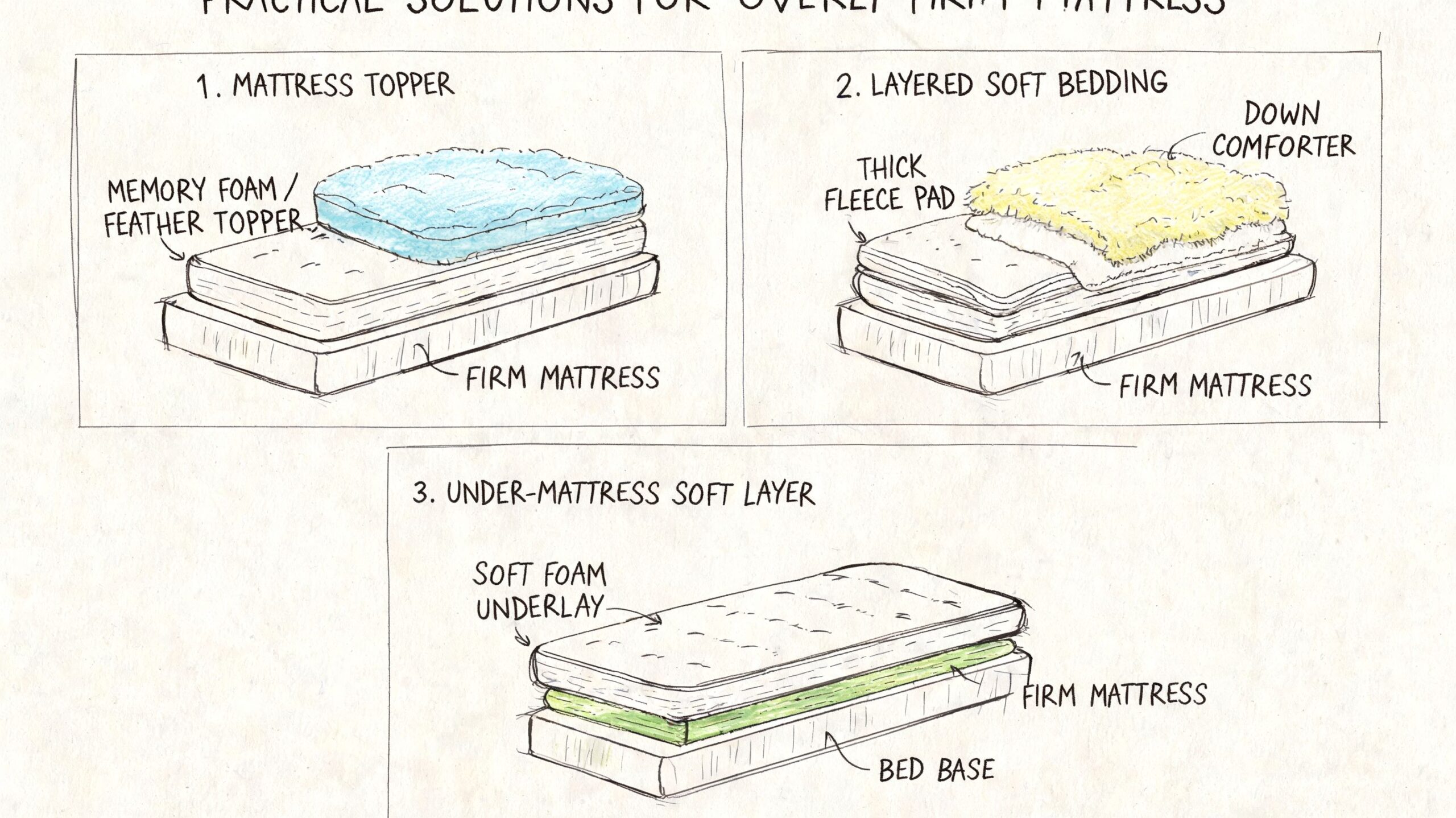
If you’ve decided your mattress is too firm, don’t jump straight to replacing it. A step-by-step approach is often more effective. You want to solve the problem with the smallest change that works.
First, decide whether the mattress is still in break-in
This is the step a lot of shoppers skip. According to Texas Mattress Makers’ article on firm new mattresses, new mattresses have a break-in period and often feel firmer at home than in the showroom. It can take 30-60 nights of consistent use for the materials to soften and conform to your body, so it's important to differentiate between a mattress that needs breaking in and one that is the wrong firmness from the start.
That changes the decision tree quite a bit.
- If it’s night one or week one, patience may be the smartest move.
- If you’re well into regular use and symptoms are unchanged, it may be a true mismatch.
- If the showroom model felt softer, remember that display beds are often more broken in from repeated testing.
What usually helps
If the mattress is structurally sound and too firm at the surface, these options are worth trying:
- A softer mattress topper: This is often the cleanest fix for pressure-point discomfort. It changes surface feel without replacing the support core.
- Pillow adjustment: A mattress can feel firmer than it is if your pillow height throws off your neck and shoulder position.
- Foundation check: If the base under the mattress is rigid or uneven, the whole setup can feel harsher.
One practical option is to browse mattress accessories, including toppers and related bedding layers, if your goal is to soften the sleep surface before considering a full exchange.
A topper can improve surface comfort. It won’t fix a mattress with structural wear.
What usually doesn’t help
Some fixes sound reasonable but don’t address the underlying issue.
- Ignoring a worn-out mattress: If the sag test shows structural wear, adding softness on top often creates a worse feel.
- Choosing based only on showroom touch: Pressing a hand into the mattress tells you very little about overnight pressure relief.
- Waiting endlessly without tracking symptoms: If your body keeps sending the same signals after a fair adjustment period, listen to it.
If you’re still in the early stage with a new bed, this guide on how to break in a new mattress can help you sort out what’s normal settling and what’s a sign the comfort level is off.
When to Consult a Miller Waldrop Sleep Expert
By this point, you should have a much clearer picture of what your body is telling you. You know where pressure shows up, how your sleep position affects firmness, and whether your mattress issue looks like break-in, mismatch, or wear.
That alone puts you ahead of most shoppers.
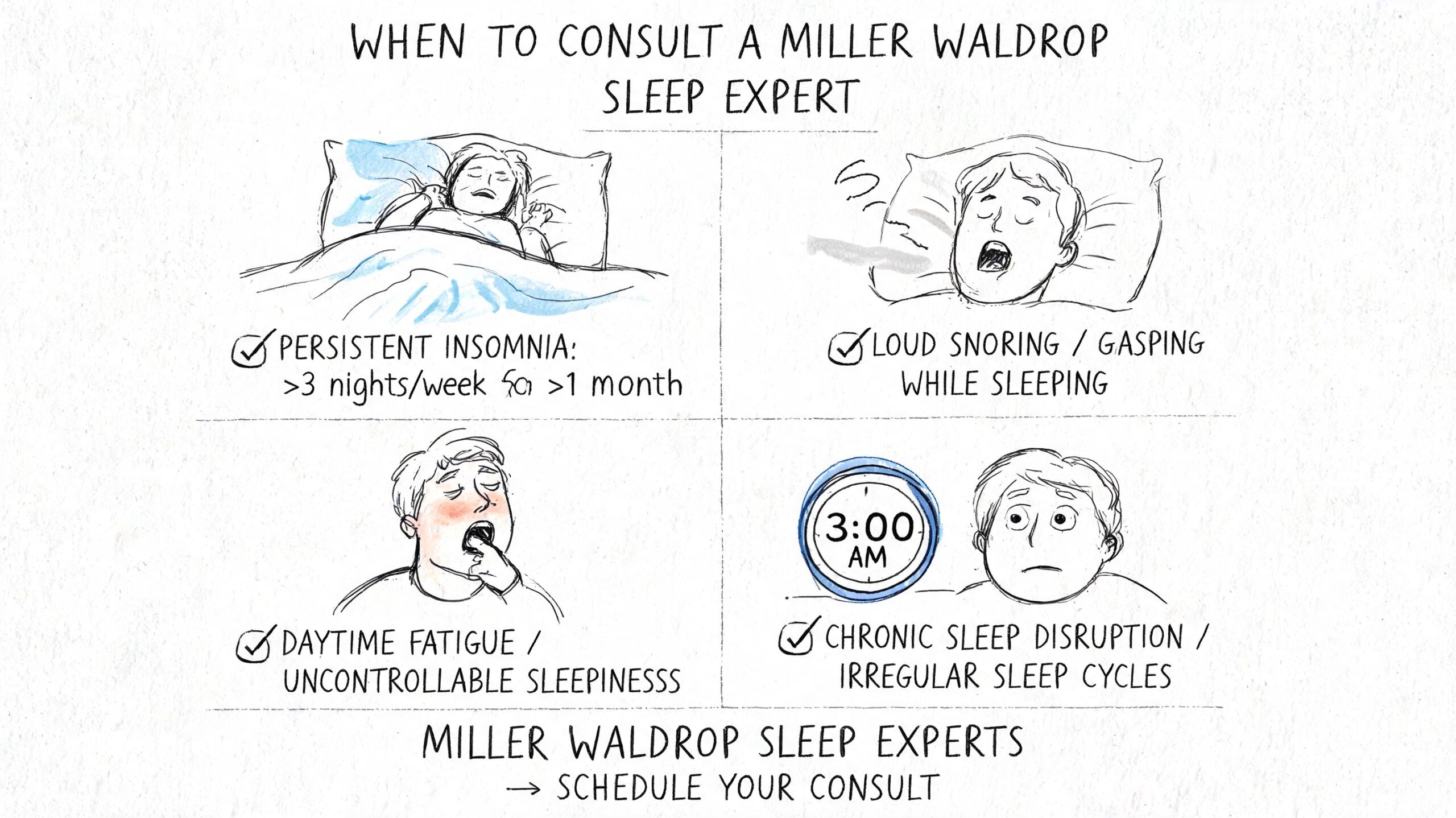
Still, there’s a point where expert input saves time. If your symptoms are mixed, if you and your partner experience the same mattress differently, or if every mattress in the store starts to feel similar after the third one, objective testing helps.
What expertise looks like in real terms
Professional mattress testing is much more precise than a simple comfort label. As outlined by RTINGS’ mattress firmness guide, professional mattress testing involves a break-in simulation using a 1,400 Newton roller, followed by precise load-deflection measurements. This objective data provides a more reliable firmness rating than subjective 1-10 scales.
That matters because two “firm” mattresses can feel very different once body shape and sleep position enter the picture.
Signs it’s time to get help
A showroom visit makes sense when:
- Your pain pattern is consistent: You keep waking with the same pressure-point issues.
- Your at-home testing gave mixed results: You’re not sure whether the issue is firmness, wear, or setup.
- You share a bed with someone who sleeps differently: One person’s ideal feel may not work for the other.
- You want a more informed try-before-you-buy process: Testing with guidance is better than guessing.
If you’re getting ready to shop, Miller Waldrop’s advice on how to shop for mattress is a practical place to start so you can walk in knowing what questions to ask and what your body needs.
If your mattress feels too firm, you don’t have to stay stuck between “just live with it” and “buy a new one today.” Start with the symptoms, test what you have, and use that information to make a smart next move. When you’re ready for hands-on guidance, visit Miller Waldrop Furniture & Decor to explore mattress options, sleep accessories, and in-store help that turns guesswork into a clearer fit for better sleep.